Introduction
Most vacuums last about 8 years, but the real range is wider. A basic upright vacuum may work for 5 to 8 years, while a well-kept canister or central vacuum may last 10 to 20 years. Cordless stick vacuums often have a shorter service life because their batteries lose capacity over time.
For households in the United States, the best estimate depends on the vacuum type, floor mix, cleaning schedule, storage, and access to replacement parts. A vacuum used every day in a home with pets faces more wear than one used once a week in a small apartment.
A good care plan can help a vacuum last longer. Empty the bin before it is packed, replace filters as directed, clear hair from the brush roll, and fix small faults before they damage the motor.
How Many Years Does a Vacuum Cleaner Last?
A typical household vacuum lasts 5 to 10 years. Some machines fail sooner, while durable models can run well beyond 10 years with regular care.
The table below gives useful planning ranges. These are estimates, not guarantees. The exact model, parts supply, and use pattern matter more than the category alone.
| Vacuum type | Common service life | Main factor that limits life |
|---|---|---|
| Basic upright | 5–8 years | Motor, belt, brush roll, or cord |
| High-quality upright | 8–12 years | Parts wear and motor condition |
| Canister vacuum | 8–12 years | Hose, wheels, seals, and motor |
| Cordless stick vacuum | 3–8 years | Rechargeable battery |
| Robot vacuum | 3–6 years | Battery, wheels, sensors, and software support |
| Handheld vacuum | 3–6 years | Battery or small motor |
| Central vacuum system | 12–20 years or more | Power unit and installed tubing |
These ranges describe normal household use. A vacuum used in a commercial setting may need repair much sooner. A lightly used machine may last longer, but long periods without use can still harm batteries, belts, seals, and electronic parts.
The U.S. Department of Energy does not set one universal lifespan for every vacuum. Manufacturers also vary in their warranty periods and parts support. A warranty usually covers a limited defect period; it does not promise that every part will last for that many years.
The 8-year estimate needs context
The phrase “vacuums last eight years” is a useful rule of thumb, not a fixed service standard. It can hide major differences between machines.
For example, a corded upright has no rechargeable battery. If its motor remains healthy, a new belt, filter, hose, or brush roll may restore performance. A cordless stick vacuum may still look clean after five years, but its battery may hold only a small part of its original charge.
The best question is not only, “How old is my vacuum?” Ask instead:
- Does it still clean well?
- Can you buy the parts it needs?
- Is the repair safe and affordable?
- Does it meet your current cleaning needs?
What Affects a Vacuum’s Lifespan?
The biggest lifespan factors are workload, airflow, heat, maintenance, and parts quality. These factors often matter more than the purchase price alone.
How often you use it
Daily use creates more wear than weekly use. Each cleaning session can add stress to the motor, belt, brush roll, wheels, hose, and power cord.
A vacuum in a busy home may collect several times more dust and hair each month than one in a one-person home. More debris means more filter loading and a greater risk of blocked airflow.
The type of floors you clean
Carpet can place extra strain on a vacuum because the brush roll must work against fibers. Thick carpet may also restrict airflow if the cleaner head sits too tightly on the floor.
Hard floors are often easier on the brush system, but they can expose the vacuum to grit, pet litter, and other heavy particles. Fine dust can clog filters quickly, especially in homes with renovation dust or fireplace ash.
Never use a household vacuum for hot ash, wet spills, flammable liquids, or hazardous dust unless the manual specifically allows it. A standard home vacuum may spread fine particles or suffer motor damage.
Pets and long hair
Pet hair is one of the hardest materials for a vacuum to manage. Hair can wrap around the brush roll, clog the intake, block the hose, and reduce airflow.
Long human hair creates the same problem. If you do not remove it, the brush roll may slow down or stop. The motor then works harder and may run hotter.
Dust and moisture
Dust is normal. Moisture is often not.
A wet filter can restrict airflow and allow mold or odor to develop. Moist debris may also damage electrical parts. Use a wet/dry vacuum for liquid spills unless the vacuum maker clearly states that the model can handle them.
Fine powders, such as drywall dust, flour, or fireplace ash, can pass through or clog parts of a normal vacuum. They may also reach the motor. Use the tool designed for that material.
Build quality and repair support
A vacuum can last longer when the maker sells common parts such as:
- Filters
- Belts
- Hoses
- Brush rolls
- Batteries
- Wheels
- Power cords
- Bin seals
A low-cost machine may be worth repairing if the needed part is cheap. A costly machine may not be a good long-term choice if its battery or motor is sealed and unavailable.
Look for the model number before ordering parts. Two vacuums from the same brand may use different filters, batteries, or brush rolls.
How to Tell When a Vacuum Needs Repair
A vacuum often gives warning signs before it fails completely. Stop and inspect it when performance changes.
Weak suction
Weak suction usually points to a full bin, dirty filter, blocked hose, clogged cleaner head, or leaking seal. These causes are common and often easy to fix.
Check the following in order:
- Empty the dust bin or replace the bag.
- Inspect and clean the filters as the manual allows.
- Check the hose and intake for a blockage.
- Remove hair from the brush roll.
- Look for cracks or loose seals.
- Check whether the brush height is correct for the floor.
- Test the vacuum again.
If suction stays weak after these steps, the motor, fan, or internal seal may need service.
Burning smell
A burning smell is a warning, not a normal sign of strong cleaning. Turn off and unplug a corded vacuum at once. For a cordless model, stop using it and remove it from the charger.
A burning odor may come from:
- A jammed brush roll
- A slipping or broken belt
- A blocked air path
- An overheated motor
- A damaged wire
- A failing battery
Do not keep running the vacuum to see if the smell goes away. If you find no simple blockage, use an authorized repair service or replace the machine.
Loud noise
A new rattle, whine, grind, or squeal can signal a loose part, trapped object, worn bearing, damaged fan, or brush-roll problem.
Turn off the vacuum before checking the cleaner head. Do not place fingers near a moving brush roll. If the noise comes from the motor housing, do not open it unless you are qualified and the manual permits service.
The vacuum shuts off
Some vacuums shut down when they overheat. This safety feature may activate when airflow is blocked or a filter is dirty.
Let the vacuum cool. Then clear the bin, filters, hose, and brush roll. If it keeps shutting off after proper cleaning, the thermal protection system, battery, wiring, or motor may have a fault.
The battery runs down quickly
A cordless vacuum battery loses capacity with age and use. Shorter run time, sudden shutdowns, and long charging times can point to battery wear.
Battery life depends on the cell design, charge cycles, storage temperature, and cleaning mode. High-power modes use more energy and can make a healthy battery seem weak.
If the battery is replaceable, check the manual for the correct part. Do not use a damaged, swollen, hot, or leaking battery. Contact the manufacturer or a qualified service provider for safe disposal and replacement guidance.
How to Make a Vacuum Last Longer
Simple maintenance can extend useful life and keep cleaning performance steady. Follow the model manual first because parts and washing rules vary.
Empty the bin or change the bag early
Do not wait until a bag or dust bin is completely packed. A full container can reduce airflow and force the motor to work harder.
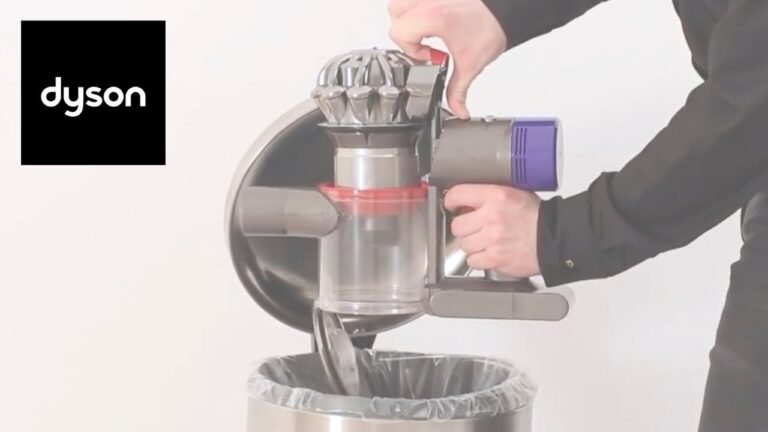
For bagless vacuums, empty the bin over a trash can. Keep your face away from the dust plume. People with asthma or allergies may prefer to wear a well-fitting mask or ask another person to empty it.
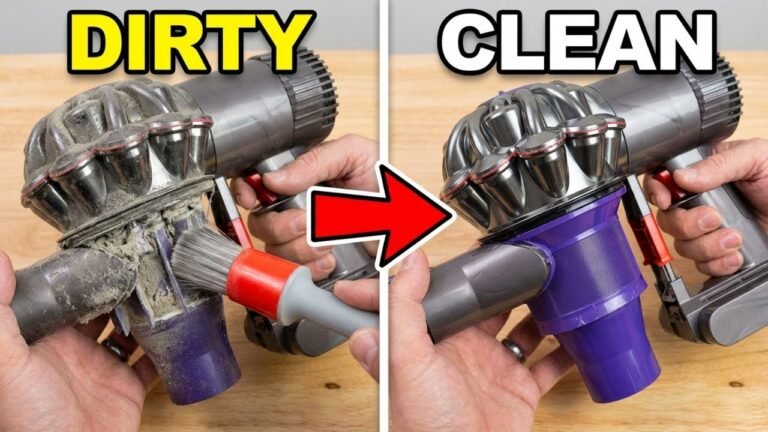
Clean filters on schedule
Filters catch dust before it reaches the motor and returns to the room. A blocked filter reduces airflow and can cause overheating.
Some filters are washable. Others must stay dry and be replaced. Never wash a filter unless the manual says it is washable. Allow a washable filter to dry fully before reinstalling it.
A wet filter can damage the vacuum and create an odor. If the vacuum uses a high-efficiency filter, use the correct replacement rather than a poor-fitting substitute.
Cut hair from the brush roll
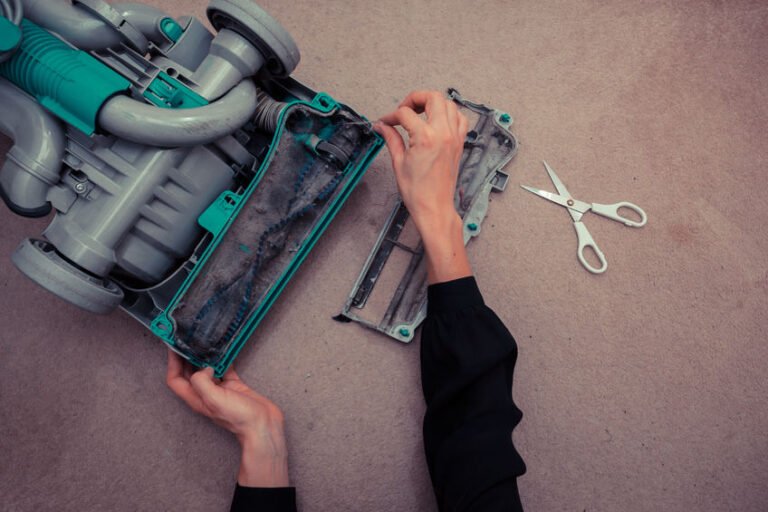
Inspect the brush roll often if you have pets or long hair in the home. Turn off and unplug the vacuum first.
Use scissors or the cleaning tool supplied with the vacuum. Cut along the brush roll, away from your fingers and the bristles. Remove the hair instead of pulling hard on the brush, belt, or end bearings.
Check the hose and cleaner head
A toy, sock, clump of hair, or large piece of debris can block the air path. Use a flashlight to inspect the hose and intake.
Do not push a sharp object through the hose. It may puncture the hose or damage a hidden seal. If the manual permits it, use a blunt tool or a flexible cleaning rod.
Store it in a dry place
Keep the vacuum away from rain, damp floors, extreme heat, and direct sunlight. Store a cordless vacuum and its battery according to the maker’s instructions.
Do not wrap the power cord tightly around the machine if this bends the cord at the plug or entry point. Repeated bending can damage the conductors.
Replace small parts before they cause larger faults
A worn belt, cracked hose, or damaged wheel can reduce performance. Replacing it early may protect the motor and cleaner head.
Use the model number when buying parts. A part that looks similar may not seal or fit correctly.
Is It Better to Repair or Replace a Vacuum?
Repair the vacuum when the fault is simple, parts are available, and the machine still meets your needs. Replacement makes more sense when the repair is costly, the motor or battery is failing, or the vacuum has several major problems.
Use this quick guide:
| Situation | Usually reasonable choice |
|---|---|
| Full bin, clogged filter, or tangled brush | Clean it |
| Broken belt, wheel, hose, or filter | Repair or replace the part |
| Old cordless battery with replaceable part | Replace the battery |
| Burning smell after clearing blockages | Professional diagnosis or replacement |
| Failed motor on an old low-cost vacuum | Often replace |
| Several faults at once | Compare repair cost with a new vacuum |
| Parts no longer available | Replacement may be more practical |
A simple cost check can help. Suppose a replacement hose costs $35 and a new vacuum costs $250. Repairing the hose may be sensible if the machine still cleans well. If a motor repair costs $180 on a 10-year-old vacuum with a worn cord and cracked seals, replacement may offer better value.
Do not judge only by purchase price. Include the cost of bags, filters, batteries, repair labor, and compatible accessories.
Repair safety matters
Unplug a corded vacuum before clearing a blockage or removing the brush roll. Do not bypass a thermal cutoff, fuse, switch, or other safety device.
If a vacuum has exposed wires, a damaged plug, smoke, a swollen battery, or repeated overheating, stop using it. Electrical repairs should be handled by a qualified technician unless the manufacturer gives a safe, clear procedure for the user.
Do Expensive Vacuums Last Longer?
An expensive vacuum may last longer, but price alone does not prove durability. A higher price may reflect stronger materials, better filtration, more features, longer support, or a larger marketing budget.
The useful evidence is more specific:
- Does the maker sell replacement parts?
- Is the battery replaceable?
- Does the warranty cover the motor or only selected parts?
- Are service instructions available?
- Is the machine designed for your floors and cleaning load?
- Can you find the model’s filters, belts, or bags several years after purchase?
A basic vacuum with available belts and filters can outlast a premium vacuum with a sealed battery and limited support. On the other hand, a well-built premium machine may justify its cost if it handles heavy use and can be repaired.
Treat long warranty claims with care. A warranty period shows the maker’s coverage terms, not a guaranteed lifespan. Read exclusions, labor limits, registration rules, and battery coverage before buying.
How Long Do Cordless Vacuums Last?
Cordless vacuums commonly last 3 to 8 years, but the battery often becomes the first major limitation. The body, motor, and cleaner head may remain usable after the original battery no longer provides enough run time.
Battery life can decline faster when you:
- Use maximum-power mode often
- Store the vacuum in high heat or freezing conditions
- Leave a damaged battery in service
- Run the battery fully flat again and again
- Ignore clogged filters and brush rolls
A cordless vacuum is easier to keep long term when its battery can be replaced. Before buying one, check whether the replacement battery is sold in the United States, whether the user can change it safely, and whether the battery has a separate warranty.
Do not place a swollen or hot battery in household trash. Follow local household hazardous-waste or battery-recycling guidance. The U.S. Environmental Protection Agency provides general information on used household battery recycling.
How Long Do Robot Vacuums Last?
Most robot vacuums last about 3 to 6 years in normal home use. Their shorter average life reflects more moving parts, small drive wheels, sensors, charging contacts, software support, and rechargeable batteries.
To extend a robot vacuum’s service life:
- Remove hair from the main brush and side brush.
- Clean sensors with a soft, dry cloth.
- Keep the charging area clear.
- Empty the bin before it becomes packed.
- Replace filters as directed.
- Keep cords, socks, and small objects off the floor.
- Keep the robot away from water unless the model supports wet cleaning.
A robot vacuum may need replacement even when the motor works if its battery, navigation system, wheels, or app support fails. Check the manufacturer’s support policy before buying a model that depends heavily on an app or cloud service.
When Should You Replace Your Vacuum?
Replace a vacuum when it is unsafe, no longer cleans well after basic maintenance, or costs too much to restore.
Strong replacement signs include:
- Smoke or repeated burning odor
- A damaged power cord or plug
- A swollen or unsafe battery
- A failing motor
- Repeated overheating
- Poor suction after cleaning and filter replacement
- Parts that are no longer available
- Repair costs close to the price of a suitable new model
- A design that no longer fits your floors or health needs
Do not replace a vacuum only because it looks old. If it works safely, cleans well, and has affordable parts, continued use may be the more practical choice.
When buying a replacement, match the vacuum to the home. Consider floor type, pets, stairs, allergies, storage, noise, cord length, battery support, and the ongoing cost of bags or filters.
Frequently Asked Questions
Can a vacuum last 20 years?
Yes, some corded canister, upright, and central vacuum systems can last 20 years when they receive regular maintenance and replacement parts remain available. Twenty years is not a normal guarantee for every model.
How often should I replace a vacuum filter?
Follow the owner’s manual. Washable filters may need frequent cleaning, while disposable filters may need replacement every few months or after a set amount of use. Heavy dust and pet hair can shorten the interval.
Is it worth replacing a vacuum battery?
It can be worth replacing the battery when the vacuum is otherwise safe, works well, and the correct battery is available at a reasonable cost. Avoid third-party batteries that do not meet the manufacturer’s specifications.
Why does my vacuum smell bad?
A bad smell may come from a full bin, dirty filter, damp debris, a clogged hose, hair on the brush roll, or a slipping belt. A burning smell requires immediate shutdown and inspection.
Can I use a vacuum without a filter?
No. The filter protects the motor and helps keep dust from returning to the room. Operating the machine without the required filter can cause damage and increase airborne dust.
Key Takeaways
- Most household vacuums last about 5 to 10 years.
- A well-maintained canister or central vacuum may last longer.
- Cordless and robot vacuums often have shorter lives because their batteries wear out.
- Empty the bin, clean the filters, clear the brush roll, and inspect the hose regularly.
- Burning smells, smoke, damaged cords, swollen batteries, and repeated overheating are safety warnings.
- Repair simple parts when the machine is safe and replacement parts are available.
- Replace the vacuum when repair costs are high, parts are unavailable, or cleaning performance remains poor.
Conclusion
A vacuum’s lifespan depends less on its age than on its condition, workload, design, and repair support. For most homes in the United States, planning for 5 to 10 years is reasonable, with longer service possible from well-maintained corded and central systems.
Start with simple maintenance before buying a replacement. Empty the bin, clean the filter, remove hair, inspect the hose, and check for overheating. If the vacuum has electrical damage or a failing battery, stop using it and choose a safe repair or replacement path.