
A vacuum brush roll that does not spin is usually caused by a clog, tangled hair, a loose belt, a full brush chamber, or a setting that turns the roll off. Unplug the vacuum before checking the brush roll. For a cordless model, remove the battery if the design allows it.
Start with the simple checks:
- Turn the brush-roll switch on.
- Remove hair, thread, and debris from the roll.
- Clear the intake and air path.
- Check whether the roll spins by hand.
- Inspect the belt, if your vacuum uses one.
- Test the vacuum again on the correct floor setting.
If the brush roll still does not move, the belt, motor, wiring, or brush-roll assembly may need repair.
Introduction
The brush roll is the spinning bar under the vacuum head. It may have bristles, rubber fins, or both. Its job is to lift dust, crumbs, and pet hair from carpet and rugs so the vacuum can collect them.
A brush roll can stop for several reasons. Some are easy to fix at home. Others need a replacement part or a service technician. The safest approach is to check the low-risk causes first.
This guide applies to common upright, stick, canister, and cordless vacuums used in the United States. Exact switches, belts, filters, and access panels vary by brand and model, so use the owner’s manual for model-specific instructions.
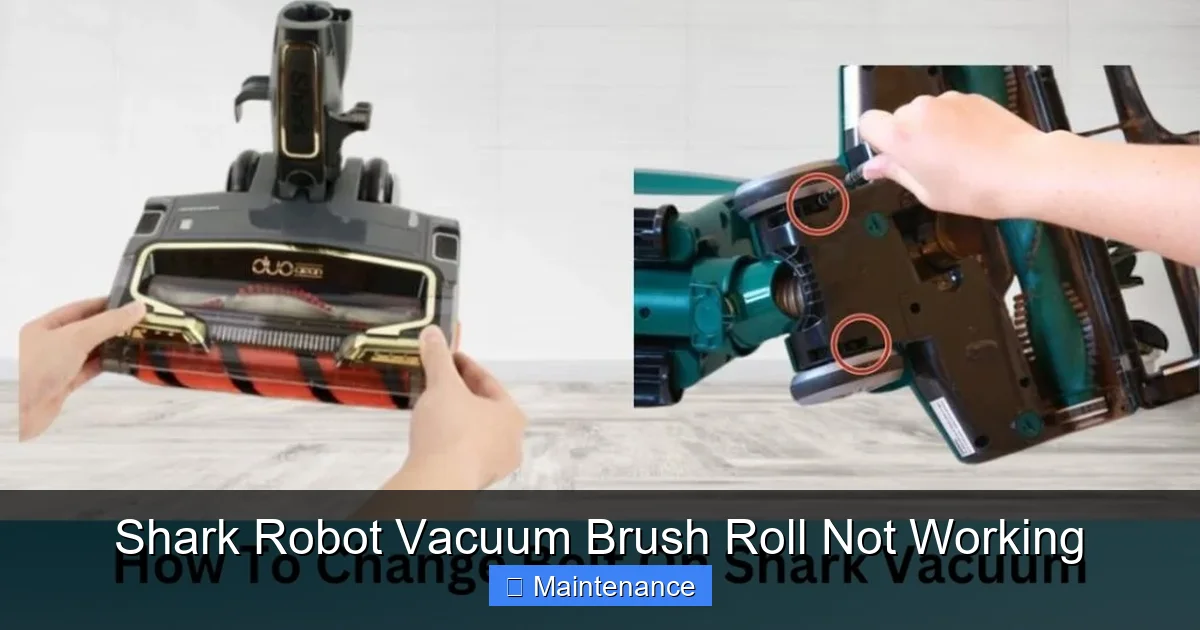
First, identify the symptom
The best fix depends on what the brush roll is doing. A roll that does not spin at all has a different likely cause from one that spins but does not pick up hair.
| Symptom | Common causes | First check |
|---|---|---|
| Brush roll does not move | Clog, switch setting, belt, motor, jam | Turn off and inspect the roll |
| Brush roll spins by hand but not when powered | Belt, brush motor, wiring, safety switch | Check the belt and head connection |
| Brush roll spins, then stops | Jam, overload protection, hot motor | Remove debris and let the unit cool |
| Brush roll spins but cleans poorly | Worn bristles, packed hair, weak suction | Clean the roll and check suction |
| Brush roll makes a loud noise | Bearing, belt, trapped object, motor issue | Stop use and inspect for damage |
| Vacuum shuts off when the roll starts | Jam, blocked air path, overload system | Clear the roll and intake |
| Roll works on hard floors but not carpet | Floor mode, height setting, carpet sensor | Select the correct carpet setting |
Some vacuums stop the brush roll on bare floors. This helps protect hard surfaces and reduces the chance of scattering debris. On many models, the brush roll will run only when the handle is reclined or when the floor mode is set to carpet.
A brush roll problem can also look like a suction problem. If the roll is packed with hair, it cannot move air and debris well. The vacuum may sound normal while leaving dirt behind.
How to fix a vacuum brush roll that is not working
follow these steps in order. Stop if you find melted plastic, burnt wiring, smoke, or a strong electrical smell.
1. Turn on the correct brush-roll setting
Look for a control marked Brush Roll, Brush Bar, Carpet, Floor, or Bare Floor. Some vacuums use a button on the handle. Others use a pedal or a switch on the cleaning head.
Try the carpet setting on a small area of carpet. Keep the vacuum head slightly raised while you listen. A working roll often produces a light, steady hum.
Do not assume the roll should run in every mode. Some hard-floor settings turn it off by design.
2. Check the handle and cleaning-head connection
A detachable vacuum head may not receive power if it is not fully attached. Remove the head only after turning off and unplugging the vacuum.
Check the connection points for:
- Dust or hair around the contacts
- Bent metal contacts
- A loose head
- Cracks in the neck
- A damaged power cord on an upright or canister model
Reconnect the head firmly. If the vacuum uses a wand, make sure the wand is locked into place.
3. Remove hair and thread from the brush roll
Hair and thread often wrap around the ends of the roll. This can create enough drag to stop the motor or break the belt.
Use scissors to cut along the roll. Keep the scissor tips away from the bristles and your fingers. Pull the cut hair out by hand or with tweezers.
Check both ends of the roll. The center may look clean while one end is tightly packed. Remove the end caps only if the manual says they are removable.
Do not force a sealed brush roll apart. Some assemblies are not designed for home disassembly.
4. Clear the intake opening
A clog may sit behind the brush roll rather than on it. Turn the head over and inspect the opening where dirt enters the vacuum.
Remove visible debris with a blunt tool. A plastic ruler or the handle of a small cleaning brush may help. Do not push the clog farther into the hose.
Check the hose, wand, and dust path as well. A blocked path can reduce airflow and trigger an automatic shutoff on some vacuums.
5. Test whether the roll turns by hand
With power removed, try to rotate the brush roll.
- It will not turn: A hard object, packed hair, seized bearing, or damaged housing may be blocking it.
- It turns with strong resistance: Hair may be wrapped around the ends, or a bearing may be failing.
- It turns freely but feels loose: The roll or its end supports may be worn.
- It turns freely but will not run under power: The belt, motor, wiring, switch, or connection may be at fault.
A brush roll should not wobble badly. Excess movement can cause noise, poor cleaning, and belt wear.
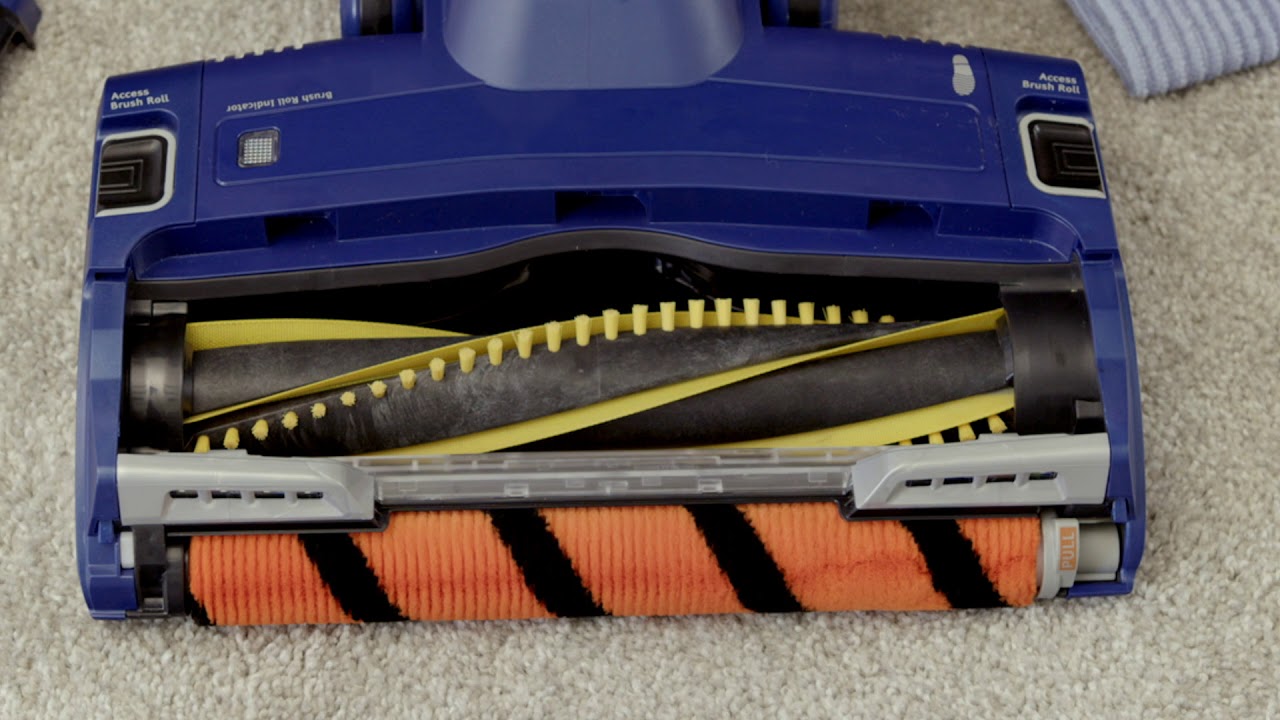
6. Inspect the belt
Many upright vacuums use a belt to transfer power from the motor to the brush roll. A belt may be:
- Broken
- Stretched
- Slipped off
- Melted
- Cracked
- Twisted
- Loose around the roll
A broken belt may leave a rubber smell. A stretched belt may look intact but fail to turn the roll at normal speed.
Replace the belt with the correct part for the exact model. A belt that looks similar may have the wrong length or shape. Do not use a generic rubber band or trim a belt to fit.
Some newer stick and cordless vacuums use a separate brush-roll motor. These models may not have a replaceable belt.
7. Clean the brush-roll sensor area
Some cordless and robotic vacuums use sensors to detect a jam or confirm brush movement. Dust can cover the sensor area or contacts.
Wipe accessible areas with a dry, soft cloth. Do not spray cleaner into the head. Do not pour water over the brush-roll housing.
If the display shows a jam code, follow the manual’s reset steps after clearing the roll.
8. Let the vacuum cool
A brush-roll motor can stop when it becomes too hot. This may happen after a jam, a long cleaning session, or a blocked filter.
Turn the vacuum off and unplug it. Let it cool for at least 30 minutes before testing it again. The exact cooling time depends on the model.
If it stops again soon after cooling, do not keep restarting it. A repeated thermal shutoff points to a continuing blockage, excessive load, motor fault, or electrical problem.
9. Reassemble and test on the right surface
Replace every cover and lock every latch before testing. Run the vacuum over a small area of carpet for a few seconds.
Look for these signs of success:
- The brush roll starts without a harsh noise.
- The roll keeps moving.
- The vacuum does not shut off.
- The roll does not wobble.
- Hair and debris enter the dust cup or bag.
- No burnt smell appears.
If the roll spins but the vacuum still cleans poorly, inspect the filter, hose, dust cup, bag, and floor-head seal.
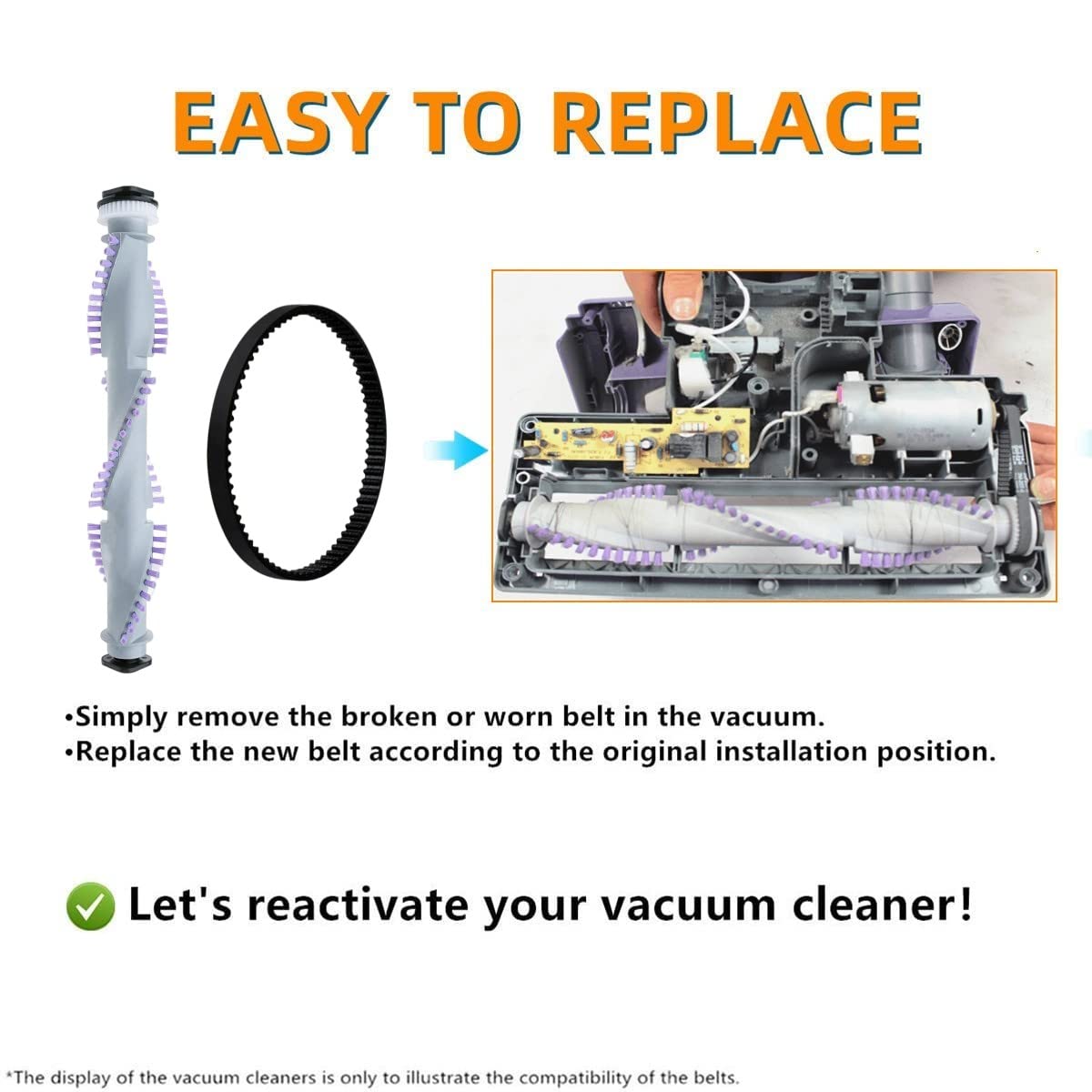
Why the brush roll stops while you are cleaning
A brush roll that starts and then stops often has an overload issue. The motor senses too much resistance, or the vacuum becomes too hot.
Common triggers include:
- A sock or toy stuck in the head
- Long hair wrapped around the roll
- Carpet fibers caught in the bristles
- A blocked intake
- A full dust cup or bag
- A dirty filter
- A worn belt
- A failing brush motor
Some vacuums have an automatic protection system. This system stops the brush roll to limit damage. It may reset after the obstruction is removed and the vacuum cools.
Do not bypass a protection switch. It is part of the vacuum’s safety design. If the roll stops repeatedly after a complete cleaning, the vacuum needs further diagnosis.
A useful test is to run the vacuum briefly with the head raised from the floor. If the roll works in the air but stops when it touches carpet, the load may be too high. The cause may be a jam, a low height setting, a worn belt, or a brush roll that is not suited to that floor.

When the brush roll spins but does not pick up dirt
A spinning brush roll does not always mean the cleaning head works well. The bristles may be worn down, or the air path may be blocked.
Check the following:
Worn brush-roll bristles
Short or missing bristles cannot agitate carpet well. Rubber fins can also crack, split, or lose their shape.
Compare the roll with the replacement part shown in the manual. If the bristles or fins look badly worn, replace the roll if the manufacturer provides a compatible part.
Hair packed under the roll
A thin layer of hair can cover the bristles. The roll may spin, but it will not contact the carpet correctly.
Clean the full length of the roll. Pay special attention to the spaces between bristle rows and the end bearings.
Weak suction
A full bag, full dust cup, dirty filter, or clogged hose can reduce pickup. Clean or replace filters only as the manual permits. Some filters are washable, while others must stay dry.
Never reinstall a washable filter while it is damp. Moisture can damage the motor and may create a musty smell.
Incorrect height setting
An upright vacuum set too low may press the head tightly against thick carpet. This can increase resistance and reduce airflow.
Raise the height one step if the vacuum has an adjustment. Use the lowest setting that allows steady movement without causing the brush roll to stall.
Damaged floor-head seal
A cracked head, missing gasket, or loose soleplate can let air enter before it reaches the floor. The roll may work, but pickup can fall.
Replace damaged seals or covers with the correct model part. Tape is not a reliable long-term repair for a moving vacuum head.

Vacuum type changes the likely repair
The design of the vacuum affects what you can safely inspect.
Upright vacuums
Upright vacuums often use a belt-driven brush roll. The belt may be behind a bottom plate or access cover.
Common upright causes include:
- Broken or stretched belt
- Incorrect floor setting
- Clogged lower hose
- Brush-roll jam
- Worn brush roll
Follow the manual before removing the bottom plate. Some models use screws, while others use clips.
Cordless stick vacuums
Cordless models often use a small motor inside the floor head. They may show a light or message when the brush roll jams.
Remove the battery if the manufacturer permits it. Otherwise, turn the vacuum off and follow the stated service procedure. Do not open a lithium-ion battery pack.
A cordless vacuum may also stop because the battery is too low or too cold. Charge it with the approved charger and test again.
Canister vacuums
Canister systems may have a powered floor nozzle connected through the hose and wand. The fault can be in the nozzle, wand contacts, hose, or canister.
Test the nozzle connection and inspect the electrical contacts. If the suction works but the powered nozzle does not, the nozzle circuit may need repair.
Robot vacuums
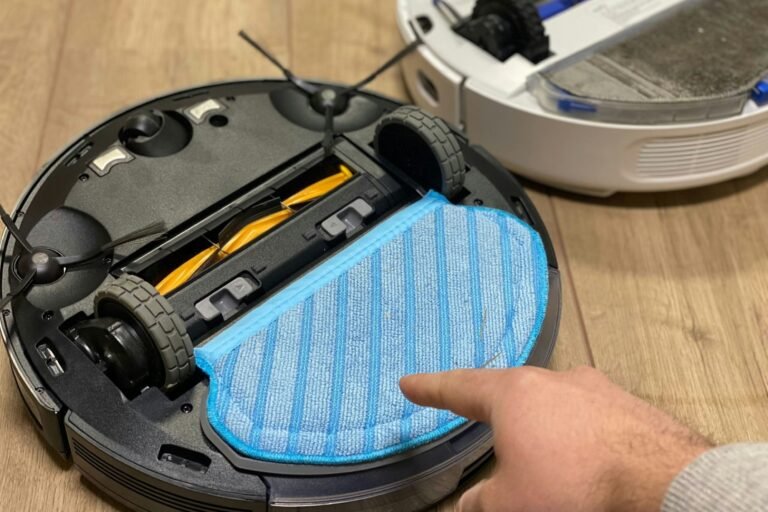
Robot vacuums often use one or two removable brush modules. Hair can collect under end caps and side supports.
Turn the robot off before removing the module. Clear the brush, clean the supports, and check the app or display for a jam message. A damaged gear or brush motor may require a replacement module.

When to replace a part or seek repair
Replace a brush roll when it is worn, cracked, badly warped, or missing bristles. Replace a belt when it is broken, stretched, glazed, or damaged.
Seek professional repair when:
- The vacuum smells strongly of burning plastic or wiring.
- You see melted parts or scorch marks.
- The motor makes grinding or screeching sounds.
- The brush roll has power but the motor will not run.
- The cord or plug is damaged.
- The vacuum repeatedly trips a breaker or safety device.
- A cordless battery is swollen, hot, leaking, or damaged.
- The correct replacement part is not clear.
Stop using a vacuum with smoke, sparks, or a damaged cord. Unplug it only if you can do so safely. Do not handle a swollen battery. Place the vacuum away from flammable materials and contact the manufacturer or a qualified repair service for instructions.
The repair may not be worth the cost if the vacuum has several faults. Compare the price of the brush roll, belt, motor, labor, and shipping with the cost of a similar replacement vacuum. A simple belt repair is often very different from a sealed brush-head motor repair.
Common mistakes to avoid
Several quick fixes can create more damage.
- Do not test the roll with the vacuum open. Loose parts can move into the motor or expose live components.
- Do not cut the belt. A belt that seems too tight may be the wrong part.
- Do not spray lubricant on the brush roll. Oil can spread onto the belt, carpet, and motor.
- Do not wash a motorized floor head. Water can damage contacts and electronics.
- Do not use the vacuum on a jammed roll. The motor may overheat.
- Do not force end caps off. Some are fixed in place.
- Do not ignore a burning smell. It may indicate belt friction or an electrical fault.
- Do not assume every brush roll should run on bare floors. The floor setting may be working as designed.
Keep small screws and covers in a cup during service. Take a photo before removing a belt or cover. This can make reassembly easier.

How to prevent another brush-roll problem
Regular care reduces the chance of a jam.
Check the brush roll every few uses if you have long hair or pets. Clean it sooner if you notice a change in sound or a drop in pickup.
Use this simple routine:
- Turn off and unplug the vacuum.
- Remove hair from the roll.
- Check both ends for packed debris.
- Empty the dust cup or replace the bag.
- Clean filters on the schedule in the manual.
- Inspect the belt or brush head for wear.
- Keep cords, socks, and small toys away from the floor before vacuuming.
- Use the correct setting for carpet and hard floors.
Pet hair and long human hair place extra load on many brush rolls. Frequent cleaning matters more than waiting for a complete jam.
Store the vacuum with the floor head free of wet dirt. Never vacuum liquids with a dry vacuum unless the machine is specifically rated for wet pickup.

Frequently asked questions
Why is my vacuum brush roll not spinning?
The most common causes are a disabled brush-roll setting, tangled hair, a clogged intake, a broken belt, or a brush motor fault. Unplug the vacuum, clean the roll, check the floor setting, and inspect the belt if the model uses one.
Can I use a vacuum if the brush roll is not working?
You may be able to use suction-only mode on hard floors if the manufacturer allows it. Do not continue using the vacuum if the roll is jammed, the motor smells hot, or the vacuum makes a harsh noise.
How do I know if my vacuum belt is broken?
A broken belt may leave the brush roll still, produce a rubber smell, or make the motor sound different. Some belts are hidden behind a cover, so inspect them only after removing power and following the model manual.
Why does my brush roll stop on thick carpet?
Thick carpet can place a high load on the roll. A low height setting, packed hair, a worn belt, or a weak brush motor can make the problem worse. Clear the roll and try a higher height setting.
Should the brush roll spin on hardwood floors?
Not always. Many vacuums turn the brush roll off in bare-floor mode to protect the surface and prevent scattering. Check the manual for your exact model.
Is it cheaper to repair or replace the vacuum?
A belt or brush roll may be a simple repair. A failed motor, wiring fault, or sealed powered head may cost more to fix. Compare the total repair cost with the price, age, and condition of the vacuum.
Conclusion
A vacuum brush roll that is not working usually needs a careful cleaning, a setting change, or a belt check. Start with the roll, intake, floor mode, and head connection. Then inspect the belt or powered brush motor based on the vacuum type.
Unplug the vacuum before service, keep water away from motorized parts, and stop when you find smoke, melted plastic, damaged wiring, or a swollen battery. If basic troubleshooting does not restore steady brush movement, use the exact model manual or arrange qualified repair.
2 Comments