
Regular vacuum cleaner maintenance keeps suction strong, reduces dust, and helps prevent costly repairs. For most U.S. homes, a simple routine works well: empty the bin or replace the bag before it is full, clean the filters as directed, remove hair from the brush roll, check the hose for blockages, and inspect the belt and power cord.
Always unplug a corded vacuum before cleaning it. For a cordless model, remove the battery when the manual allows it. Your owner’s manual is the final guide because filter types, cleaning methods, belt access, and replacement schedules vary by model.
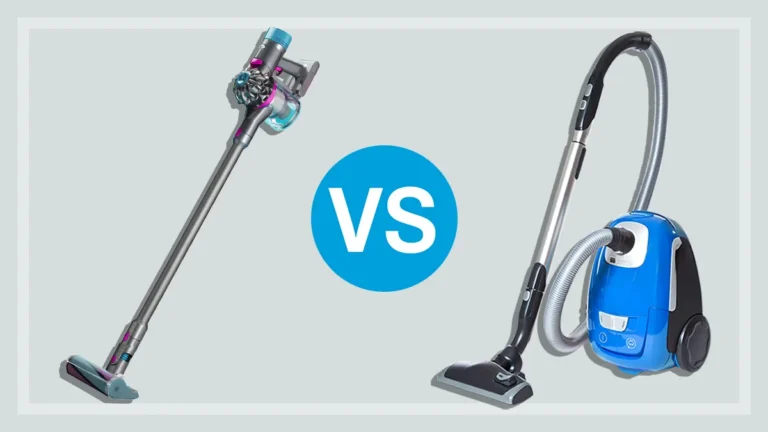
This guide covers upright, canister, stick, handheld, bagged, bagless, and robot vacuums.

How Often Should You Maintain a Vacuum Cleaner?
Most vacuums need a quick check after each use and a deeper service once a month. Homes with pets, children, carpets, or allergy concerns may need more frequent care.
| Vacuum part or task | Typical schedule | What to do |
|---|---|---|
| Dust bin or bag | Every use or when nearly full | Empty the bin or replace the bag |
| Brush roll | Weekly | Remove hair, thread, and fibers |
| Pre-motor filter | Every 1–3 months | Clean or replace as the manual states |
| Exhaust or HEPA filter | Every 6–12 months | Replace or clean only if approved |
| Hose and tools | Monthly | Check for clogs and cracks |
| Belt | Monthly inspection | Replace if stretched, cracked, or loose |
| Battery and charger | Monthly | Check for heat, damage, or charging problems |
| Full inspection | Every 6–12 months | Review suction, noise, wheels, seals, and cord |
These are starting points, not universal rules. A vacuum used every day in a home with shedding pets may need weekly filter care. A lightly used vacuum in a small apartment may need less.
Why maintenance matters
A vacuum moves air through a system of filters, seals, hoses, and a brush roll. When dust blocks the airflow or hair slows the brush roll, the motor must work harder to move the same amount of air.
That can cause weak suction, overheating, strange noises, poor carpet cleaning, and a burnt smell. Maintenance does not fix every problem, but it removes the most common and safest-to-check causes first.
The U.S. Environmental Protection Agency explains that cleaning and source control are important parts of indoor air quality management. A well-maintained vacuum can collect household dust more effectively, but it does not replace ventilation, moisture control, or professional cleanup when a home has major mold, asbestos, or lead hazards.
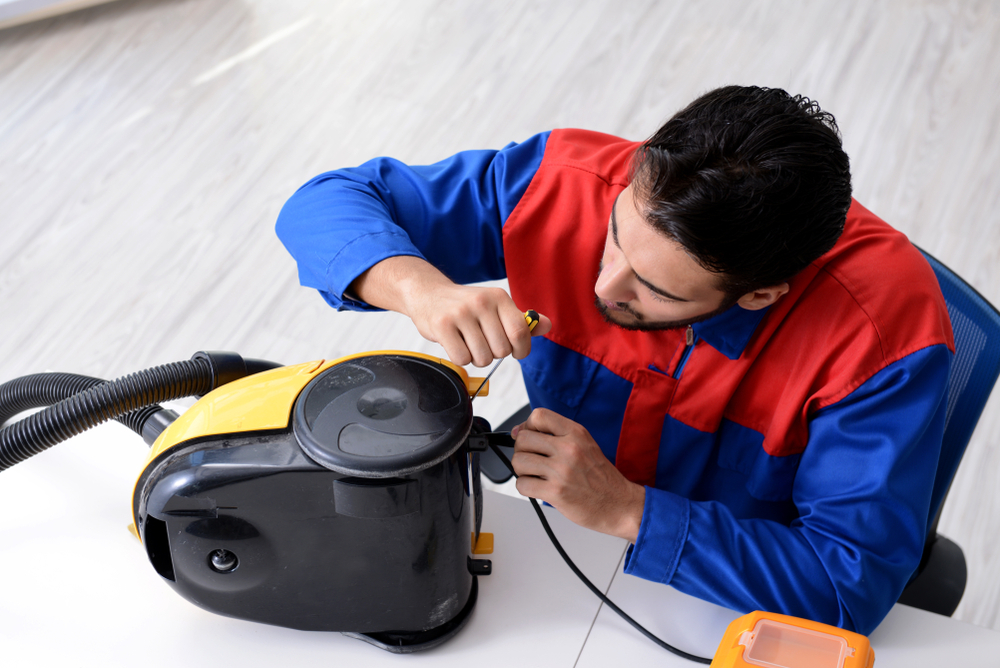
How to Clean a Vacuum Cleaner Step by Step
Clean a vacuum in this order: power it down, empty the dirt container, inspect the filters, clear the brush roll, check the hose, and inspect the belt, wheels, and cord.
1. Turn off and unplug the vacuum
Switch off a corded vacuum and unplug it before removing covers, filters, or brush-roll guards. Do not pull the plug from the outlet by the cord.
For a cordless vacuum, turn it off and remove the battery if the design permits. Keep water away from the motor, charging port, battery, electrical contacts, and control panel.
If the vacuum was running hot or smelled like burning plastic, let it cool before inspection. Do not keep using it while it is smoking, sparking, or making a sharp electrical sound.
2. Empty the dust bin or replace the bag
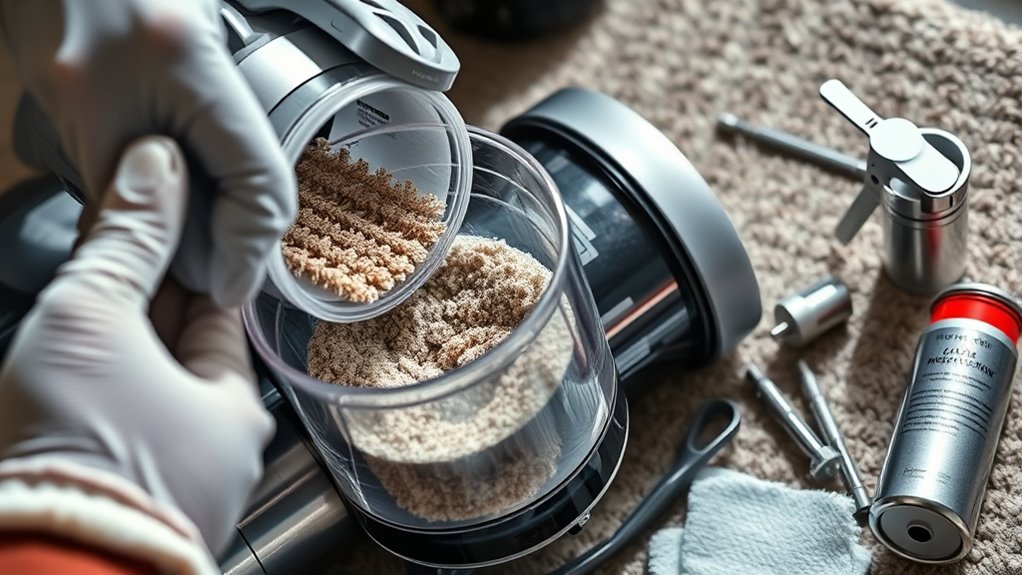
Hold a bagless dust bin low over a trash can. Open it slowly to limit the dust cloud. If possible, empty it outdoors or in a well-ventilated area.
Do not wait until the bin is packed tightly. A full bin can block airflow before the “full” line is reached, especially when the contents are light and fluffy.
For a bagged vacuum, use the correct bag made for the model. A poorly fitted bag can leak dust or allow debris to reach the motor. Never reuse a disposable bag unless the manufacturer specifically designed it for reuse.
If you have asthma or strong dust sensitivity, wear a well-fitting mask and consider asking someone else to empty the bin.
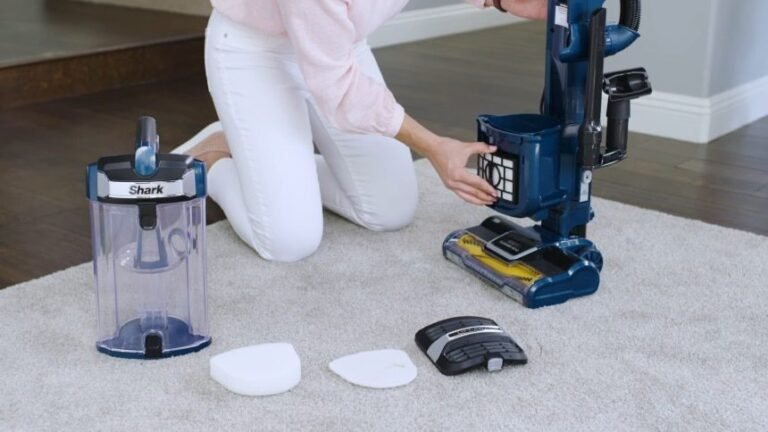
3. Clean or replace the filters
Filters are not all the same. A washable foam filter, a pleated cartridge, a disposable paper filter, and a sealed HEPA filter each have different care rules.
Use this method:
- Remove the filter according to the manual.
- Check whether it is washable or disposable.
- Shake loose dust into a trash can if the manual permits.
- Wash only filters labeled washable.
- Use cool or lukewarm water unless the manual says otherwise.
- Do not use soap unless the manufacturer approves it.
- Let a washed filter dry fully before reinstalling it.
- Replace damaged, misshapen, clogged, or foul-smelling filters.
A damp filter can restrict airflow and may allow moisture to reach electrical parts. Drying time can range from a day to longer, depending on the filter thickness and room humidity. Do not speed drying with a hair dryer, heater, oven, or direct high heat.
Do not wash a filter simply because it looks dusty. Some pleated filters are designed for replacement, not rinsing. Cleaning the wrong filter can damage its fibers and reduce filtration.
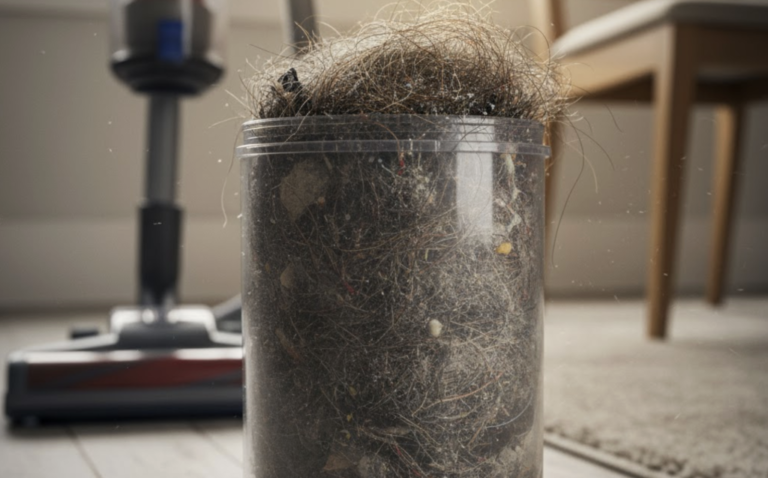
4. Remove hair from the brush roll
The brush roll, also called a beater bar on some upright vacuums, agitates carpet and lifts debris. Hair and thread can wrap around its ends and stop it from turning freely.
To clean it:
- Unplug the vacuum or remove its battery.
- Place the vacuum on a stable surface.
- Open the brush-roll cover if the design allows.
- Cut wrapped hair along the marked groove or between the bristles.
- Pull the debris away by hand or with tweezers.
- Check both end caps and bearings.
- Spin the roll by hand if it is safe to do so.
- Refit the cover before use.
Keep scissors away from the belt and bristle strips. Do not force a brush roll that is jammed by a solid object. Remove the obstruction first.
If the brush roll has a motor inside it, do not soak the assembly. Wipe it with a dry or slightly damp cloth only when the manufacturer allows that method.
5. Check the hose, wand, and tools
A blocked hose can feel like a failing motor. Disconnect the hose and look through it toward a light. You can also check the wand and floor head separately.
Remove soft clogs with a long, blunt tool. A flexible plastic rod is safer than a sharp metal object. Do not push hard enough to puncture the hose.
Never use compressed air near your face or blow dust into the room. Do not pour water into a hose unless the manual expressly permits it and the hose can be dried completely.
Clean crevice tools, upholstery tools, and dusting brushes. Hair and lint often gather at the narrow opening of a tool and reduce airflow.
6. Inspect the belt, seals, wheels, and cord
A belt helps transfer motor power to the brush roll. On some newer vacuums, the brush roll uses a separate motor and has no traditional belt.
A belt may need replacement if it is:
- Cracked or frayed
- Glossy from slipping
- Loose around the pulley
- Stretched so the brush roll does not turn
- Producing a rubber smell
Check the floor-head seal and dust-bin gasket for gaps or damage. A broken seal lets air enter from the wrong place, which can reduce cleaning performance.
Inspect wheels for wrapped hair and trapped debris. Check the power cord for cuts, exposed wires, crushed areas, or heat damage. Do not tape over damaged insulation and continue using the vacuum. Have the cord repaired by a qualified service provider or replace the vacuum according to the manufacturer’s guidance.

How to Fix a Vacuum With Weak Suction
Weak suction usually comes from a full bin, blocked airflow, a dirty filter, an open seal, or a brush roll problem. Check those causes before assuming the motor has failed.
Troubleshooting sequence
| Symptom | Likely cause | First safe check |
|---|---|---|
| Weak suction everywhere | Full bin, bag, or clogged filter | Empty the bin or replace the bag; inspect filters |
| Weak suction at the floor head | Brush-roll clog or blocked floor head | Remove hair and inspect the opening |
| Weak suction through the hose | Hose or wand blockage | Disconnect and inspect each section |
| Suction starts strong, then drops | Overheating or restricted airflow | Turn it off, let it cool, and clean filters |
| Dust blows back out | Missing, damaged, or wet filter | Refit or replace the filter |
| Vacuum leaves debris behind | Brush roll not turning or wrong height | Check the roll and floor-height setting |
| Cordless vacuum stops quickly | Low battery, hot battery, or blocked filter | Charge safely and clear airflow |
| Loud whine or grinding | Bearing, fan, or motor issue | Stop use and seek service |
Test one change at a time. For example, empty the bin and check suction before replacing a filter. This makes it easier to identify the actual cause.
When a vacuum shuts off by itself
Many vacuums have thermal protection. If airflow is restricted, the motor may become hot and shut down. Turn off the machine, unplug it, clear the bin, filter, hose, and floor head, then let it cool as the manual directs.
Do not repeatedly restart a hot vacuum. If it shuts off again after cleaning and cooling, stop using it. The cause may be a damaged motor, fan, wiring fault, or internal blockage.
When the vacuum smells like burning
A short rubber smell may occur when a belt slips or hair stops the brush roll. Turn off the vacuum at once and unplug it. Check the brush roll and belt after the unit cools.
A sharp electrical smell, smoke, sparks, or melting plastic is more serious. Do not test the vacuum again. Move it away from flammable materials if you can do so safely, and arrange qualified repair or replacement.

How to Maintain Different Types of Vacuum Cleaners
All vacuums need clean airflow, but their maintenance steps differ by design.
Bagged vacuums
Replace the bag when it is full or when suction drops. Do not compress dust inside the bag to make extra room. Check that the bag collar is seated correctly before closing the compartment.
Bagged models can reduce direct contact with dust during emptying. However, the bag, pre-motor filter, and exhaust filter still need the correct replacement schedule.
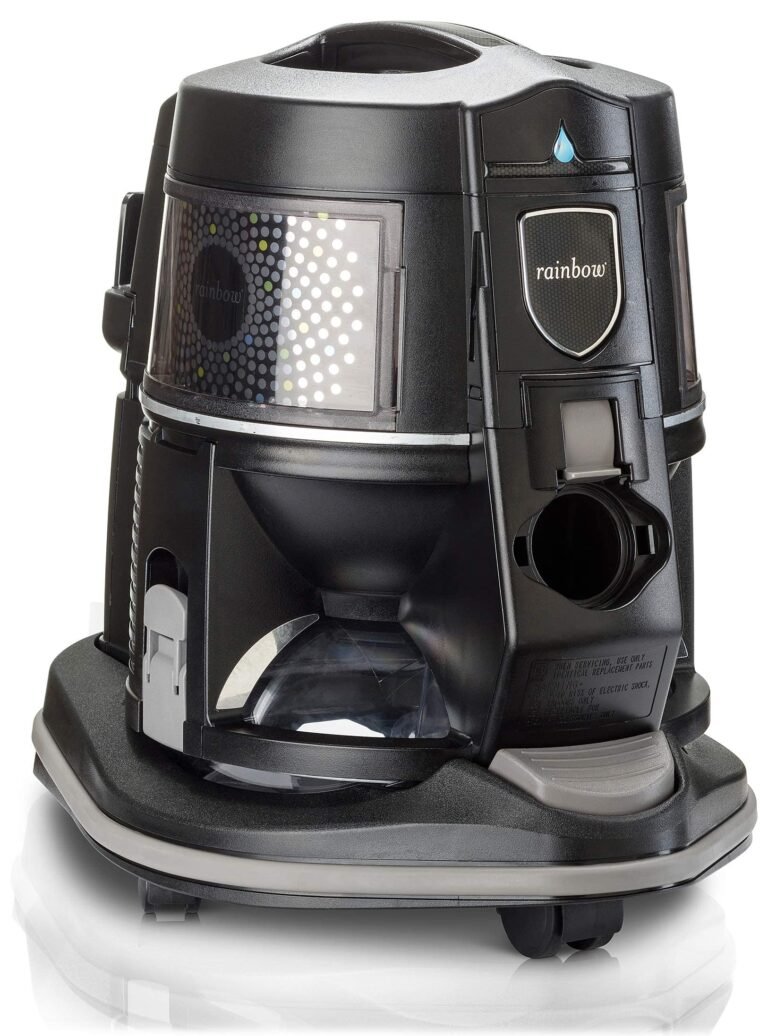
Bagless upright and canister vacuums
Empty the dirt container often and clean its seals. Fine powder can settle in the cyclone or air path. Only wash parts that the manufacturer identifies as washable.
Do not use a bagless vacuum to collect wet debris unless it is specifically designed for wet pickup. Ordinary household vacuums are generally for dry material only.
Cordless stick vacuums
Keep the filter and air path clear because small cordless motors can lose performance quickly when airflow is restricted. Store and charge the battery according to the manual.
Do not use or charge a battery that is swollen, cracked, leaking, unusually hot, or physically damaged. Keep lithium-ion batteries away from extreme heat and dispose of damaged batteries through a local household hazardous-waste or battery recycling program.
Robot vacuums
Clean the main brush, side brushes, wheels, sensors, dock contacts, and dust bin. Hair often collects around wheel axles and brush ends.
Keep the charging dock clear. If the robot cannot return to the dock, check for blocked sensors, moved furniture, dirty contacts, or a dock that is not level and stable.
A robot vacuum may need more frequent brush cleaning than a manual vacuum because it runs on a repeated schedule. Its small dust bin may also fill quickly in homes with pets.
Wet-dry vacuums
Follow the wet-dry vacuum manual closely. Empty and rinse the recovery tank after wet pickup when allowed, then let it dry. Use the correct filter for wet or dry operation.
Never assume a standard dry vacuum can collect water. Water can damage the motor, create shock hazards, and cause contaminated dust or debris to spread.
What Not to Vacuum
Do not use a standard household vacuum for liquids, hot ash, burning material, sharp glass, wet cement, or hazardous dust unless the vacuum is specifically rated for that material.
Avoid vacuuming:
- Fireplace ash that may still contain hot embers
- Large quantities of drywall or concrete dust
- Wet food or spilled drinks
- Needles, screws, and large pieces of glass
- Paint, solvents, gasoline, or other flammable liquids
- Mold-contaminated material without the proper containment plan
- Asbestos or lead dust without professional controls
Fine construction dust can pass through or clog a household vacuum. It may also damage the motor. Use equipment designed for the hazard, and follow U.S. Occupational Safety and Health Administration requirements when work involves regulated construction dust.
If a vacuum accidentally collects a hazardous substance, stop using it. Do not shake out the filter indoors. Contact the product manufacturer or a qualified hazardous-material professional for disposal advice.

When to Repair or Replace a Vacuum Cleaner
Repair may make sense when the problem is a belt, hose, filter, wheel, switch, or other accessible part. Replacement may be more practical when the motor, battery, body, or sealed electrical system has failed.
Consider repair when:
- The vacuum has strong suction after routine cleaning
- Replacement parts are available
- The repair does not involve unsafe electrical work
- The body and floor head are still in good condition
- A qualified service center can diagnose the fault
Consider replacement when:
- The motor repeatedly overheats
- The battery no longer holds a useful charge and is not replaceable
- The power cord has internal damage
- The housing is cracked near electrical parts
- Repair cost approaches the price of a comparable new model
- The vacuum no longer fits the floors or cleaning needs of the home
A repair is not automatically safer than replacement. For cord, motor, battery, or control-board work, use an authorized service center or a qualified appliance repair professional.

Common Vacuum Maintenance Mistakes
The most common errors are using the wrong filter method, operating with a full bin, and trying to repair electrical damage with tape or improvised parts.
Avoid these mistakes:
- Reinstalling a wet filter. Moisture can restrict airflow and damage the vacuum.
- Washing a disposable filter. It may lose its shape or filtration ability.
- Running without a required filter. Dust can reach the motor.
- Ignoring the brush-roll ends. Hair often hides behind the end caps.
- Using a generic belt that does not fit. The wrong size can slip or damage the brush system.
- Pulling the vacuum by its cord. This can damage the cord and plug.
- Vacuuming liquids with a dry vacuum. This can create electrical and equipment hazards.
- Using perfume or cleaning fluid in the bin. Liquids and residues may harm filters or the motor.
- Forcing a blockage through the hose. A sharp object can puncture it.
- Skipping the owner’s manual. Model-specific instructions override general advice.

A Simple Monthly Vacuum Maintenance Checklist
Use this checklist once a month, or more often if the vacuum works hard:
- Unplug the vacuum or remove its battery.
- Empty the dust bin or inspect the bag.
- Check washable and disposable filters.
- Remove hair from the brush roll and wheel axles.
- Inspect the hose, wand, and floor head for clogs.
- Check seals and covers for gaps.
- Inspect the belt if the vacuum uses one.
- Look for cord, plug, battery, or charger damage.
- Wipe the outside with a slightly damp cloth if allowed.
- Reassemble every part before testing.
- Run a short test and listen for unusual noise.
A successful service should leave the vacuum with steady airflow, a freely turning brush roll, no burning smell, and no visible dust escaping from a damaged seal.
Frequently Asked Questions
How often should I replace a vacuum filter?
Replace a filter when the owner’s manual says to, or sooner if it is damaged, permanently clogged, misshapen, or still smells after approved cleaning. Many filters last several months, but homes with pets or heavy dust may require more frequent replacement.
Can I wash a HEPA filter?
Only wash a HEPA filter if the manufacturer labels it washable. Some HEPA filters are designed for dry cleaning or replacement only. Water can damage the filter media and reduce its performance.
Why does my vacuum lose suction after a few minutes?
A restricted filter, clogged hose, packed dust bin, or overheating motor can cause suction to fall during use. Turn the vacuum off, let it cool, and check the airflow path from the bin or bag to the floor head.
Can I use a vacuum without a belt?
Only if the vacuum was designed without one. Some models use a separate brush-roll motor, while others rely on a belt. Do not remove a belt and operate the vacuum unless the manufacturer’s design specifically allows it.
How can I reduce dust when emptying a bagless vacuum?
Empty it outdoors when practical, keep the bin low over the trash can, open it slowly, and wear a suitable mask if dust bothers you. Clean the bin only as directed and allow all washed parts to dry fully before reassembly.
Should I maintain a vacuum differently for pet hair?
Yes. Check the brush roll, end caps, hose entrance, and wheels more often. Pet hair can wrap tightly around moving parts and may require weekly cleaning in homes with heavy shedding.
Final Takeaway
Vacuum cleaner maintenance is mainly an airflow task. Empty the bin or bag, keep filters in good condition, clear the brush roll and hose, and stop using the machine when it shows electrical damage, overheating, smoke, or a burning smell.
Start with the manufacturer’s manual, use only approved replacement parts, and match the vacuum to the material being collected. That routine helps protect the motor, improve cleaning results, and keep household dust under control.
Sources for further guidance
- U.S. Environmental Protection Agency: Indoor Air Quality
- U.S. Consumer Product Safety Commission: Appliance and electrical safety information
- OSHA: Respirable crystalline silica and construction dust
- The owner’s manual and support page for the specific vacuum model
One Comment