Introduction
Self-propelled vacuum cleaners use a motor-driven system to move the cleaner forward while you guide it. In the United States, they are most useful on large carpeted floors, thick rugs, and homes where pushing a heavy vacuum causes strain. They can make cleaning easier, but they are not always the best choice for bare floors, stairs, or small spaces.
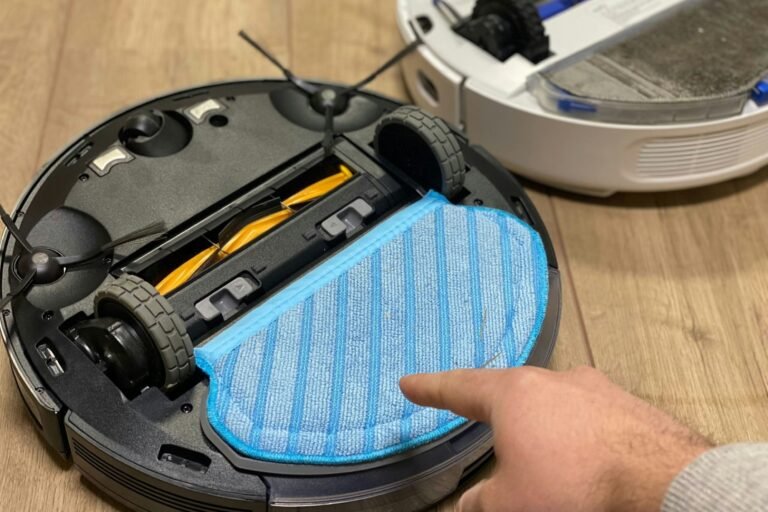
A self-propelled vacuum is different from a robot vacuum. A traditional self-propelled model is still controlled by a person. A robot vacuum moves and cleans on its own, usually with sensors, software, and a charging dock.
The right choice depends on floor type, home size, vacuum weight, steering, maintenance needs, and your comfort with the machine’s forward pull.

What Is a Self-Propelled Vacuum Cleaner?
A self-propelled vacuum cleaner has a powered drive mechanism that helps move the machine across the floor. The same motor may also turn the brush roll, but the drive system and brush-roll system serve different jobs.
Most self-propelled vacuums are upright models. They often include:
- A drive motor or transmission
- A powered brush roll
- A handle control or on/off switch
- Height adjustment for carpet
- A bag or dust cup
- Wheels designed to reduce pushing effort
- A belt, gear, or other connection between moving parts
The drive system pulls the vacuum ahead at a controlled speed. You still steer, stop, lift, and guide the machine around furniture.
Self-propelled does not mean fully automatic
The phrase “self-propelled” can cause confusion. It does not mean the vacuum chooses a route, avoids furniture, or cleans without a person.
A self-propelled upright usually:
- Moves forward when the drive is engaged.
- Requires you to guide its direction.
- Needs manual control around corners and edges.
- Requires you to release the drive before pulling it backward.
- Still needs normal care, such as filter, brush-roll, and belt maintenance.
Some brands use terms such as power assist, automatic drive, or powered steering. Read the manual for the exact controls because the terms are not used in one universal way.
How Self-Propelled Vacuum Cleaners Work
Self-propelled vacuums combine suction, agitation, and movement. Suction lifts loose dust and debris. The brush roll loosens dirt from carpet fibers. The drive system reduces the force needed to move the cleaner.
The main parts
Suction motor: Creates airflow that carries dust into the bag or dust cup.
Brush roll: Spins against the floor. On carpet, it helps lift hair, crumbs, and embedded grit. On bare floors, a spinning brush can scatter debris or scratch delicate surfaces if the cleaner is not designed for that use.
Drive wheels: Receive power from a motor or transmission. They pull the vacuum forward.
Transmission or belt: Transfers power to the wheels. A worn belt can cause weak movement, slipping, or a burning smell.
Height adjustment: Changes the distance between the cleaning head and the floor. The correct setting helps the brush roll contact carpet without making the vacuum hard to move.
Why the vacuum can still feel hard to use
Self-propulsion reduces pushing force, but it does not remove all effort. You may still need to:
- Turn the cleaner at the end of a pass
- Lift it onto stairs
- Pull it backward
– Guide it across uneven thresholds - Hold the handle steady on thick carpet
- Carry it between floors
A drive system may also feel too strong on thin rugs or smooth floors. In that case, use the slowest setting, reduce the height if the manual allows it, or disengage the drive.

Benefits and Drawbacks
Self-propelled vacuum cleaners can reduce fatigue, but the drive mechanism adds weight, cost, and parts that may need service.
Main benefits
Less pushing effort: The motor helps move the cleaner, which may help people with shoulder, wrist, back, or hand discomfort.
Useful on large carpeted areas: A powered drive can make long cleaning sessions less tiring.
Steadier carpet cleaning: The cleaner moves at a more even pace when the drive is smooth. This can help you avoid rushing over dirty areas.
Helpful with heavier uprights: A vacuum with strong carpet cleaning parts may be easier to manage when its wheels provide assistance.
Better control on dense carpet: Thick carpet can create resistance. A powered drive helps overcome some of that drag.
Main drawbacks
Higher weight: Motors and drive parts add mass. A self-propelled vacuum may be easier to push but harder to carry.
More complex repairs: Belts, gears, wheels, and transmissions add possible failure points.
Less natural on bare floors: Some models pull too quickly or feel awkward on smooth surfaces.
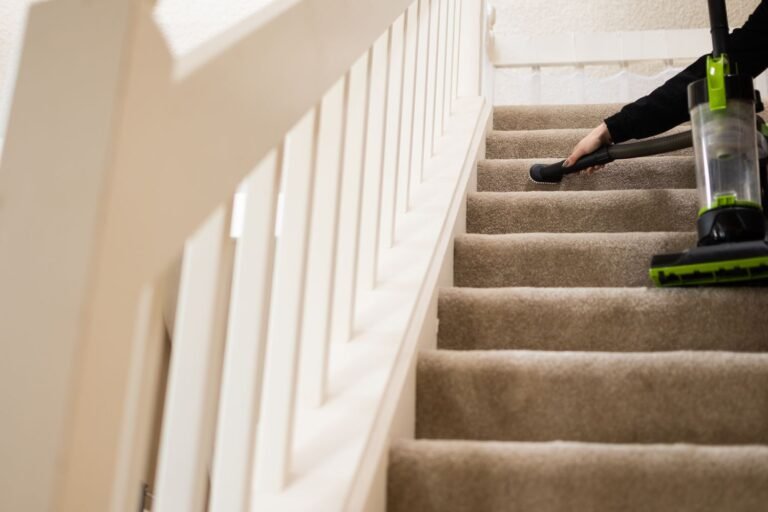
Limited stair use: A traditional upright must usually be carried or used with a hose and attachment on stairs.
More noise and vibration: A second motor or drive mechanism can add sound and vibration.
Not a replacement for good steering: Self-propulsion does not automatically provide strong cornering or easy furniture clearance.
A self-propelled vacuum is often a good fit for a person who cleans large carpeted rooms. A lighter non-self-propelled vacuum may be better for a small apartment, many stairs, or mostly hard floors.

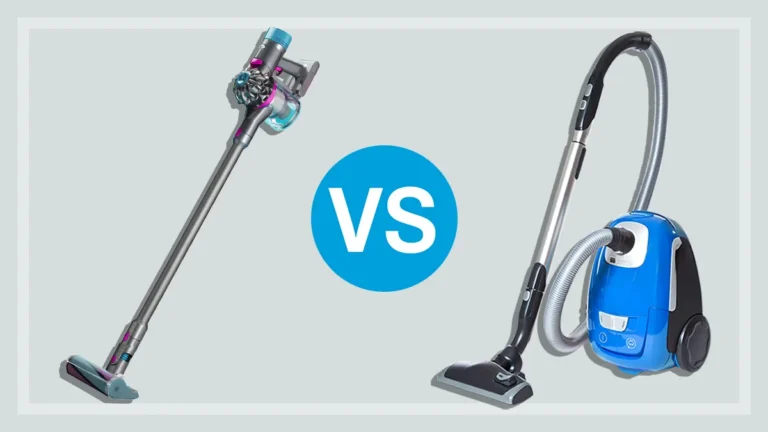
Self-Propelled vs. Standard Upright vs. Robot Vacuum
The best type depends on how much control you want and how much manual work you can do.
| Vacuum type | Best for | Main strength | Main limitation |
|---|---|---|---|
| Self-propelled upright | Large carpeted homes | Reduces pushing effort | Heavy and more complex |
| Standard upright | Mixed floors and lower cost | Simple, familiar operation | Requires more pushing |
| Canister vacuum | Hard floors, stairs, and tools | Flexible hose and strong floor access | The canister must be pulled |
| Stick vacuum | Small spaces and quick cleanups | Light and easy to store | Often has a smaller bin and shorter runtime |
| Robot vacuum | Daily maintenance cleaning | Runs with limited supervision | Needs floor preparation and may miss some areas |
A robot vacuum is not a direct substitute for a self-propelled upright. Robot models may handle daily dust and crumbs, but they can struggle with stairs, clutter, deep carpet, corners, and large debris. Many homes use both types: a robot for routine cleaning and an upright for deeper work.
A canister vacuum may be the better choice when your home has many bare floors, stairs, drapes, or hard-to-reach areas. Its cleaning head is usually easier to maneuver, although the canister follows behind you.

How to Choose a Self-Propelled Vacuum Cleaner
Choose the vacuum by matching its design to your floors, body, and cleaning routine. Do not select one based only on motor wattage or a long feature list.
1. Check your floor mix
Count the main surfaces in your home:
- Low-pile carpet
- Medium- or high-pile carpet
- Area rugs
- Hardwood
- Tile
- Laminate
- Vinyl
- Stairs
If carpet covers most of the floor, self-propulsion may be useful. If hard floors dominate, look for a model with a brush-roll shutoff or a floor setting made for bare surfaces.
For delicate rugs, check the care instructions. A strong brush roll can pull loops, damage fringe, or move a lightweight rug.
2. Test the drive control
The control should be easy to reach without changing your grip. Look for:
- A clear drive on/off switch
- A speed control, if available
- A smooth start
- Easy stopping
- Controlled backward movement
- A handle that does not require excessive force
If possible, test the machine on both carpet and bare floor. A cleaner that feels comfortable in a store may behave differently on thick carpet at home.
3. Consider weight and carrying
A heavy vacuum can still feel easy on level carpet when the drive works well. It can become difficult on stairs, thresholds, and storage hooks.
Before buying, check the listed weight and think about where you will carry it. If you have limited strength, compare the lifting weight with the pushing benefit.
4. Look for floor-safe controls
A brush-roll shutoff is useful for bare floors and delicate rugs. Height adjustment can help prevent excessive suction or brush contact.
A sealed airflow path may help reduce leaks, but marketing terms vary. Review the manufacturer’s manual and product specifications rather than assuming that a label means the same thing across brands.
5. Compare bagged and bagless designs
Bagged models usually contain dust in a replaceable bag. They can be convenient for people who want less contact with collected debris. The trade-off is the need to buy replacement bags.
Bagless models use a dust cup and washable or replaceable filters. They avoid bag purchases but require more frequent emptying and filter care.
If dust sensitivity is a concern, emptying a bagless cup outdoors may reduce indoor dust release. Follow the manufacturer’s filter instructions and never operate the vacuum without required filters.
6. Review parts and service support
Before buying, confirm that the brand lists replacement:
- Belts
- Filters
- Brush rolls
- Bags or dust cups
- Wheels
- Hoses
- Batteries, if applicable
A lower purchase price may not remain low if common parts are hard to find. The warranty can cover defects, but it may exclude wear parts, clogs, misuse, or damage from improper maintenance.

Self-Propelled Vacuum Features That Matter Most
Some features directly affect daily use. Others mainly add marketing language.
Features worth prioritizing
Brush-roll control: Lets you stop the brush on bare floors.
Manual height adjustment: Helps match the cleaning head to different carpet heights.
Headlight: Can make dust and pet hair easier to see under furniture.
Swivel steering: Helps with turns and furniture. It is separate from self-propulsion.
Long power cord: Reduces outlet changes in large rooms.
Onboard tools: Useful for edges, furniture, and stairs.
Full-bag or full-cup indicator: Helps prevent reduced airflow from an overloaded container.
Sealed filtration: May help contain fine dust when the entire system is designed to limit leaks. The full design matters more than one filter label.
Features that need careful interpretation
“Powerful suction”: Suction claims are not always measured under the same conditions. A higher motor rating does not automatically prove better cleaning.
“Automatic drive”: This may mean forward movement, not autonomous cleaning.
“Pet vacuum”: This label does not guarantee better hair pickup. Check the brush design, hose, filter, and ability to resist tangles.
“HEPA filter”: A filter claim should be checked against the exact model and the manufacturer’s documentation. The filter alone does not describe the performance of the complete vacuum.
The Carpet and Rug Institute’s Seal of Approval program is one useful source for carpet-cleaning information. Its tests apply to specific products and conditions, so a certification should be treated as evidence for that scope—not proof that a vacuum is best for every home.

How to Use a Self-Propelled Vacuum Correctly
Correct use improves cleaning and protects the drive system.
- Clear large objects first. Pick up cords, toys, coins, and items that could block the brush roll.
- Set the floor mode. Turn the brush off when the manual recommends it for bare floors.
- Set the height. Start with the manufacturer’s suggested carpet setting. The cleaner should move without excessive resistance.
- Engage the drive after placing the head on the floor. Do not start the drive while the cleaner is lifted.
- Use slow, overlapping passes. Move slowly enough for the brush and airflow to collect debris.
- Release the drive before pulling backward. This protects the transmission on many models.
- Use attachments for stairs and furniture. Do not carry a running upright onto stairs unless the manual specifically permits that use.
- Check the container and filters. Empty or replace them before airflow drops.
- Unplug the vacuum before clearing a blockage. For cordless models, remove the battery if the manual directs you to do so.
A clean pass should leave less visible debris without a burning odor, belt slip, or unusual noise. If the vacuum pulls sharply, stop and check the setting before continuing.

Maintenance and Troubleshooting
Regular maintenance prevents many self-propelled vacuum problems. Unplug the machine before servicing a corded model. For a cordless model, turn it off and follow the battery removal instructions.
Vacuum will not move forward
Possible causes include:
- Drive control is not engaged
- Drive belt is worn or broken
- Wheels are blocked
- Transmission needs service
- The cleaner is set too low for the carpet
- The drive motor has failed
First check the control and floor setting. Then inspect the wheels and brush area for wrapped hair. If the belt is damaged or the motor makes an electrical smell, stop using the vacuum and consult the manual or an authorized repair center.
Vacuum pulls too hard
Possible causes include:
- Height setting is too low
- Suction seal is strong on a smooth floor
- Drive speed is too fast
- A rug is too light or loose
- The brush roll is not suitable for the surface
Raise the cleaning head if the manual allows it. Disengage the drive on smooth floors if that is permitted. Do not force the machine across a rug that bunches or lifts.
Brush roll stops or makes noise
Hair, thread, and carpet fibers can wrap around the brush. A worn belt, blocked bearing, or jammed object can cause the same symptom.
Turn off and unplug the vacuum. Clear only the parts the manual says you may service. Never reach into a moving brush roll.
Suction becomes weak
Check the following in order:
- Full bag or dust cup
- Blocked hose
- Dirty filter
- Clogged intake
- Worn brush or belt
- Air leak or motor fault
Wash a filter only if the manual says it is washable. A damp filter can damage the vacuum or create odor if reinstalled too soon.

Safety Limits and Common Mistakes
Self-propelled movement can create a false sense that the vacuum will manage itself. It will not.
Avoid these mistakes:
- Leaving the drive engaged while pulling backward
- Running over power cords
- Vacuuming water with a dry vacuum
- Using the vacuum near flammable liquids or vapors
- Operating without the required filter
- Ignoring a burning smell
- Forcing the cleaner over thick rug edges
- Using a carpet brush on a delicate bare floor
- Carrying a running upright on stairs
- Allowing children to operate the vacuum without supervision
Stop using the machine if it sparks, overheats, smells like burning rubber, shocks you, or makes a new grinding sound. Unplug it when safe to do so. Electrical repairs should be handled by a qualified repair professional or the manufacturer’s service network.
For product-specific limits, use the owner’s manual. The manual controls details such as permitted surfaces, hose use, belt replacement, filter washing, and stair operation.

Key Takeaways
- A self-propelled vacuum uses powered wheels to reduce pushing effort.
- It is usually best for large homes with substantial carpet.
- Self-propelled does not mean autonomous.
- Weight, steering, brush-roll control, and serviceable parts matter more than headline motor numbers.
- A bagged model may reduce dust contact, while a bagless model avoids replacement bags.
- Use the correct floor setting and release the drive before pulling backward.
- Stop using the vacuum when it shows electrical, heat, or mechanical warning signs.
Frequently Asked Questions
Are self-propelled vacuum cleaners worth it?
They can be worth it if you clean large carpeted areas or find standard uprights tiring to push. They may not be worth the extra cost and weight for a small home with mostly hard floors.
Do self-propelled vacuums work on hardwood floors?
Some do, especially models with brush-roll shutoff and a bare-floor setting. Check the manual before use. A rotating brush can scatter debris or damage some delicate surfaces.
Are self-propelled vacuums good for pet hair?
They can be effective when the brush roll is designed to lift hair and resist tangles. Look for easy brush access, strong airflow, and a filter system that can handle fine dander. No vacuum removes all pet hair without regular cleaning.
Can you use a self-propelled vacuum on stairs?
The upright itself is often difficult and unsafe to use on stairs. Many models allow a hose and attachment for stair cleaning, but follow the exact manual instructions.
What is the difference between power assist and self-propelled?
The terms may describe similar functions, but brands define them differently. Power assist can mean that the wheels help movement, while self-propelled often suggests stronger forward drive. Check the model’s controls and manual.
Conclusion
A self-propelled vacuum cleaner is a practical tool for people who want less pushing effort on carpet. Its main advantage is powered movement, not automatic cleaning. The best model will match your floor types, physical needs, home layout, and willingness to maintain belts, filters, brush rolls, and drive parts.
Before buying, test the forward speed, steering, backward movement, lifting weight, and bare-floor behavior. Then confirm the availability of bags, filters, belts, and repair support. A well-matched vacuum can make routine cleaning less tiring, while the wrong one may feel heavy, difficult to control, and costly to maintain.