
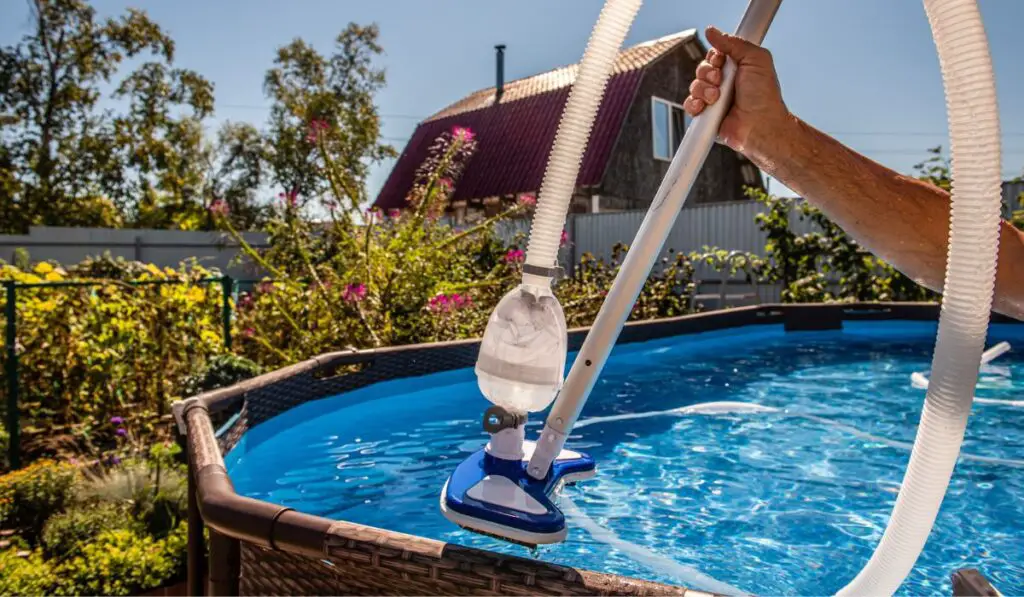
For homeowners in the United States, the simplest way to vacuum an above-ground swimming pool is to connect a pool vacuum head to a telescoping pole and hose, prime the hose with pool water, and vacuum through the skimmer. Move the head slowly across the floor. Use the Filter setting for routine dirt. Use Waste only when your filter system has that setting and you need to remove heavy debris or cloudy water.
Regular vacuuming removes sand, leaves, bugs, dirt, and fine dust that the pool skimmer may miss. It also helps your sanitizer work better because less organic matter remains in the water.
What You Need Before You Start
Gather the right tools before turning on the pump. Most above-ground pools in the United States use one of these setups:
- A manual vacuum head
- A telescoping pool pole
- A flexible vacuum hose
- A skimmer basket and, if available, a vacuum plate
- A compatible filter system
- A pool brush for walls and corners
- Water test strips or a test kit
- A clean skimmer basket and filter
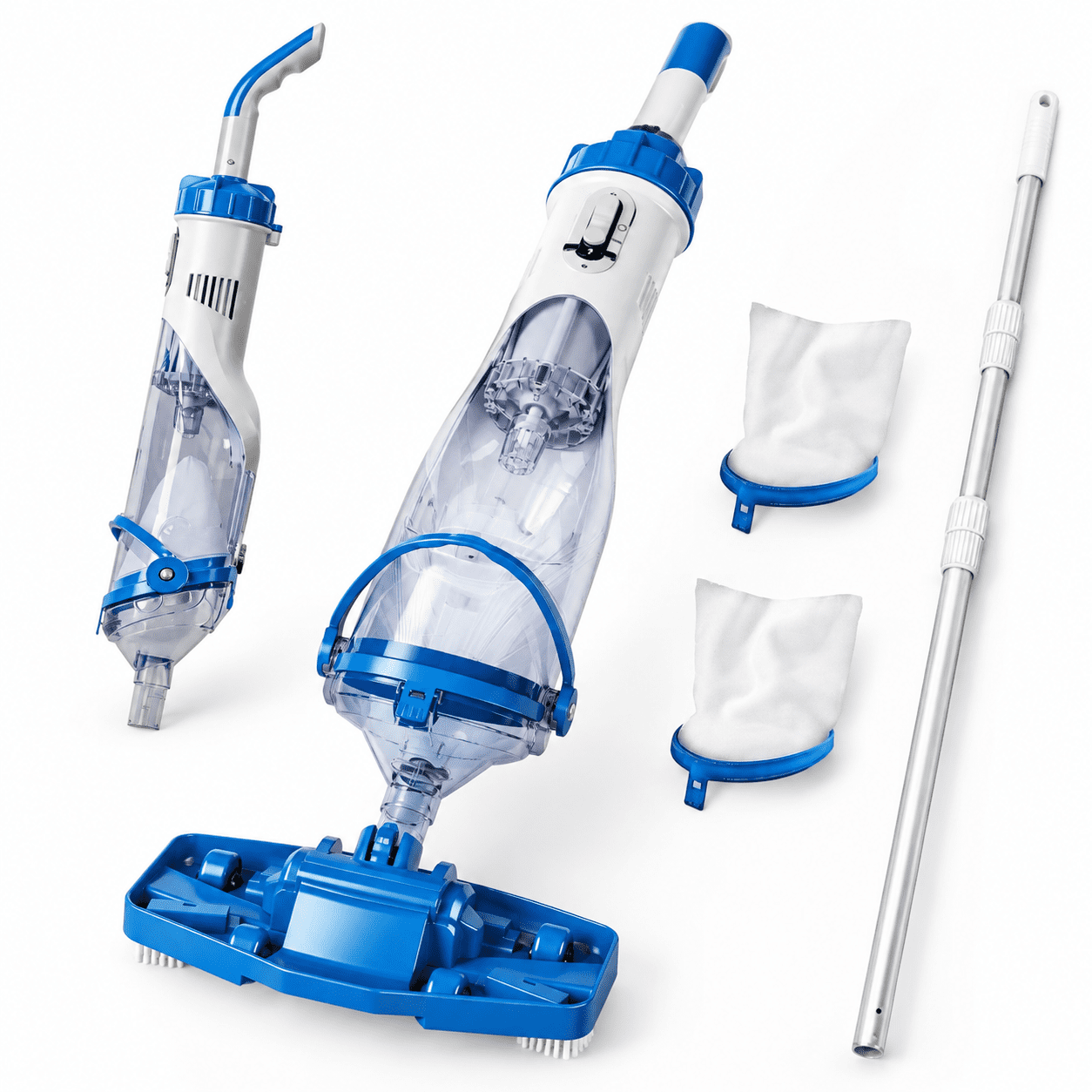
A manual vacuum head is usually the best choice for basic cleaning. It gives you control and does not require a separate robotic cleaner.
Check the pool and equipment first. The water should cover the vacuum head. If the water level is too low, the skimmer can draw air. As a general rule, keep the water near the middle of the skimmer opening, unless the pool or skimmer manual gives a different mark.
Remove large leaves and floating debris with a leaf net. Large debris can clog the vacuum hose, skimmer basket, or filter.
Inspect the hose for cracks. A small air leak can make the pump lose prime. Check that the vacuum head fits the pole and that the hose fits the vacuum port or skimmer adapter.
How to Vacuum an Above-Ground Pool Step by Step
Follow these steps for most above-ground pools with a standard suction-side vacuum.
1. Turn off the pump before changing connections
Switch off the pool pump before attaching the vacuum hose, vacuum plate, or other fittings. Never place your hand near a suction port while the pump is running.
If your pool has a multiport valve, check its current position. The correct setting depends on the type of debris and the filter system.
- Filter: Best for normal dirt and routine cleaning.
- Waste: Sends water out of the system instead of through the filter. Use only when available and needed.
- Backwash: Used to clean a sand or DE filter. It is not a normal vacuum setting.
- Rinse: Used after backwashing on many sand filter systems.
- Closed: Do not run the pump in this position.
A cartridge filter often has no Waste setting. In that case, vacuum routine debris through the filter and clean the cartridge afterward.
2. Assemble the vacuum head
Attach the vacuum head to the end of the telescoping pole. Make sure the connection locks in place.
Push one end of the vacuum hose onto the vacuum head. Use a hose clamp or the correct adapter if your equipment requires one. Do not force a fitting that does not match.
Place the vacuum head on the pool floor. Keep the head underwater before the pump begins to pull water through the hose.
3. Fill the vacuum hose with water
Air in the hose can cause the pump to lose prime. Remove the air before connecting the hose to the skimmer.
You can prime the hose in either of these ways:
- Hold the hose underwater and slowly feed it into the pool until bubbles stop coming from the open end.
- Hold the hose opening in front of a return jet until the hose fills with water.
Keep the hose end underwater after it fills. If you lift it out, air can enter again.
4. Connect the hose to the skimmer
With the pump still off, connect the filled hose to the skimmer.
You may connect it directly to the suction port or use a vacuum plate. A vacuum plate, also called a skim-vac plate, rests over the skimmer basket and lets you connect the hose without removing the basket.
Using a vacuum plate can help catch debris before it reaches the pump. However, some pool systems require direct hose connection. Follow the instructions for your skimmer and pump.
If your pool has more than one suction line, close or reduce the other suction lines only if the manufacturer allows it. Do not block drains or suction fittings in a way that creates a hazard.
5. Start the pump and check the flow
Turn on the pump after the hose is connected.
Watch the pump strainer basket, if your system has one. The basket should stay full of water. The return jet should continue to send water back into the pool.
Stop the pump if you see any of these signs:
- Air bubbles keep coming from the return jet
- The pump loses prime
- The water level in the pump basket drops
- The hose collapses
- The filter pressure rises quickly
- The pump makes a loud rattling or grinding sound
These signs may point to a loose connection, low water, a clogged basket, or a blocked filter.
6. Vacuum the pool floor slowly
Move the vacuum head in slow, overlapping lines. Start at one end of the pool and work toward the other end.
Keep the vacuum head flat on the floor. Lifted edges can stir up dirt instead of removing it. Move slowly enough that the debris enters the head rather than spreading through the water.
Use short passes around:
- The wall-to-floor seam
- The ladder area
- Steps
- Corners
- Under return jets
- Areas below trees or pool covers
Do not scrub the head back and forth quickly. A slow pass works like a broom pushing dust into a pile. A fast pass can make the dirt cloud disappear into the water before the filter catches it.
7. Watch the filter pressure and water level
Check the filter pressure during cleaning. If the pressure rises above the normal clean-filter pressure listed in your equipment manual, stop and clean the filter as directed.
A pressure rise of about 8–10 pounds per square inch above the clean starting pressure is commonly used as a signal to clean some sand or DE filters. The exact limit varies by system, so use the manufacturer’s instructions as the final guide.
If you vacuum on Waste, watch the water level closely. Waste mode removes pool water. Stop before the water falls below the skimmer opening, unless you are using a method designed for that situation.
8. Finish and clean the equipment
Turn off the pump before disconnecting the hose or changing a valve setting.
If you used the Filter setting:
- Remove and empty the skimmer basket.
- Clean the cartridge filter if the pressure rose or the filter became dirty.
- Backwash and rinse a sand filter when its instructions call for it.
- Recharge a DE filter only according to its manual.
If you used Waste, replace lost water before restarting normal filtration. Test and adjust the water after adding a large amount of fresh water.
Rinse the vacuum head and hose with clean water. Store the hose loosely, without sharp bends or tight coils.
Which Filter Setting Should You Use?
The correct filter setting depends on the type and amount of dirt in the pool.
| Pool condition | Usual setting | Why |
|---|---|---|
| Light dust, sand, or small debris | Filter | Cleans the water and saves water |
| Heavy dirt after a storm | Waste, if available | Removes debris without loading the filter |
| Cloudy water with settled debris | Filter or Waste | Choose based on filter type and water-loss limits |
| Algae or dead algae on the floor | Waste, if available | Helps prevent fine material from returning through the filter |
| Cartridge filter system | Filter | Most cartridge systems do not have Waste |
| Sand filter that needs cleaning | Backwash, then Rinse | Cleans the filter before normal filtration |
Use Filter for most routine vacuuming. It is the most practical choice for small above–ground pools because it does not discard large amounts of water.
Use Waste with care. This setting can lower the water level quickly. It may also require adding and balancing replacement water.
Never move a multiport valve while the pump is running. Turn off the pump first, move the valve, and then restart it.

How to Vacuum an Above-Ground Pool Without a Skimmer
If the pool does not have a working skimmer connection, you still have options.
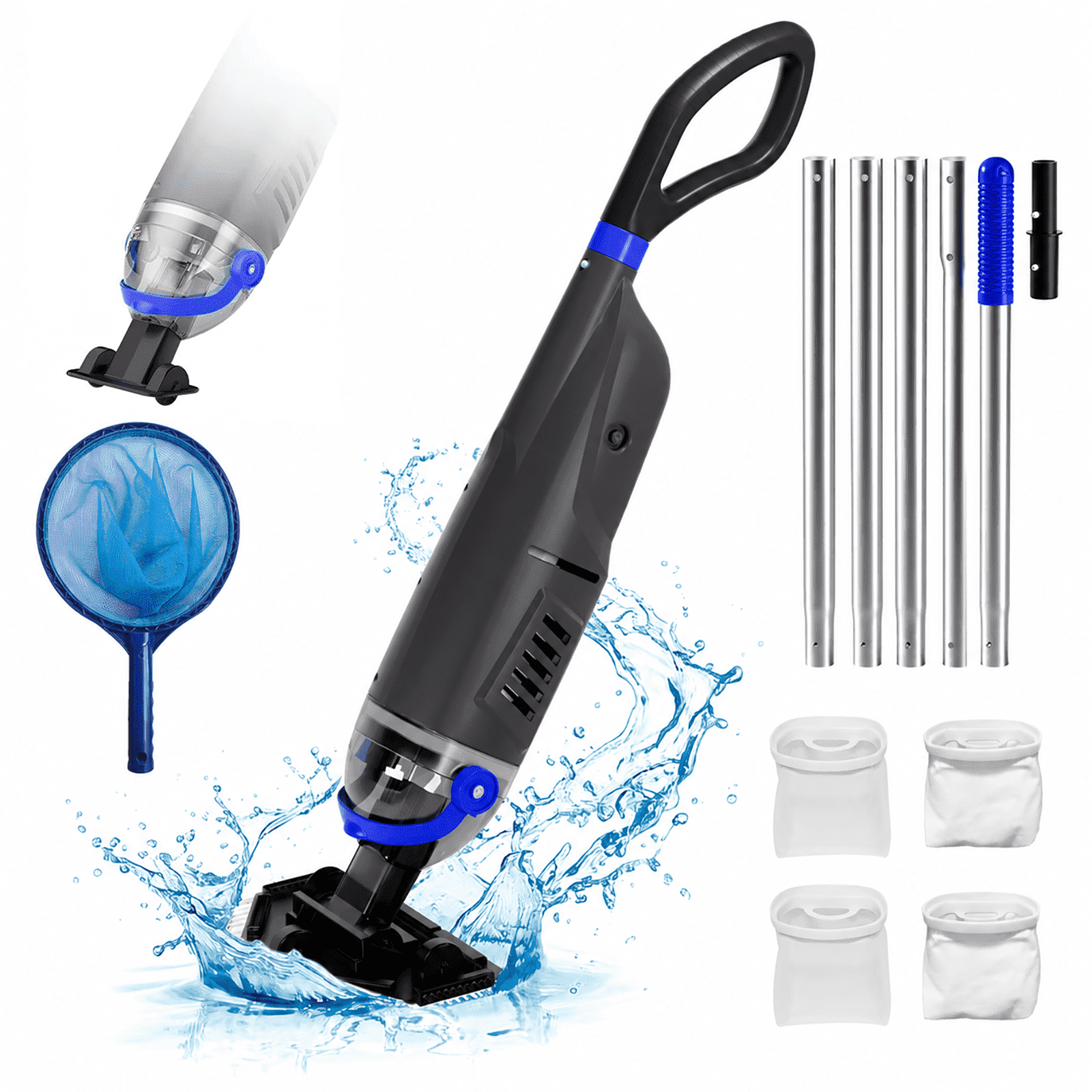
A battery-powered or rechargeable pool vacuum can collect debris without connecting to the main pump. This can work well for small pools, light dirt, or a pool with a weak filtration system.
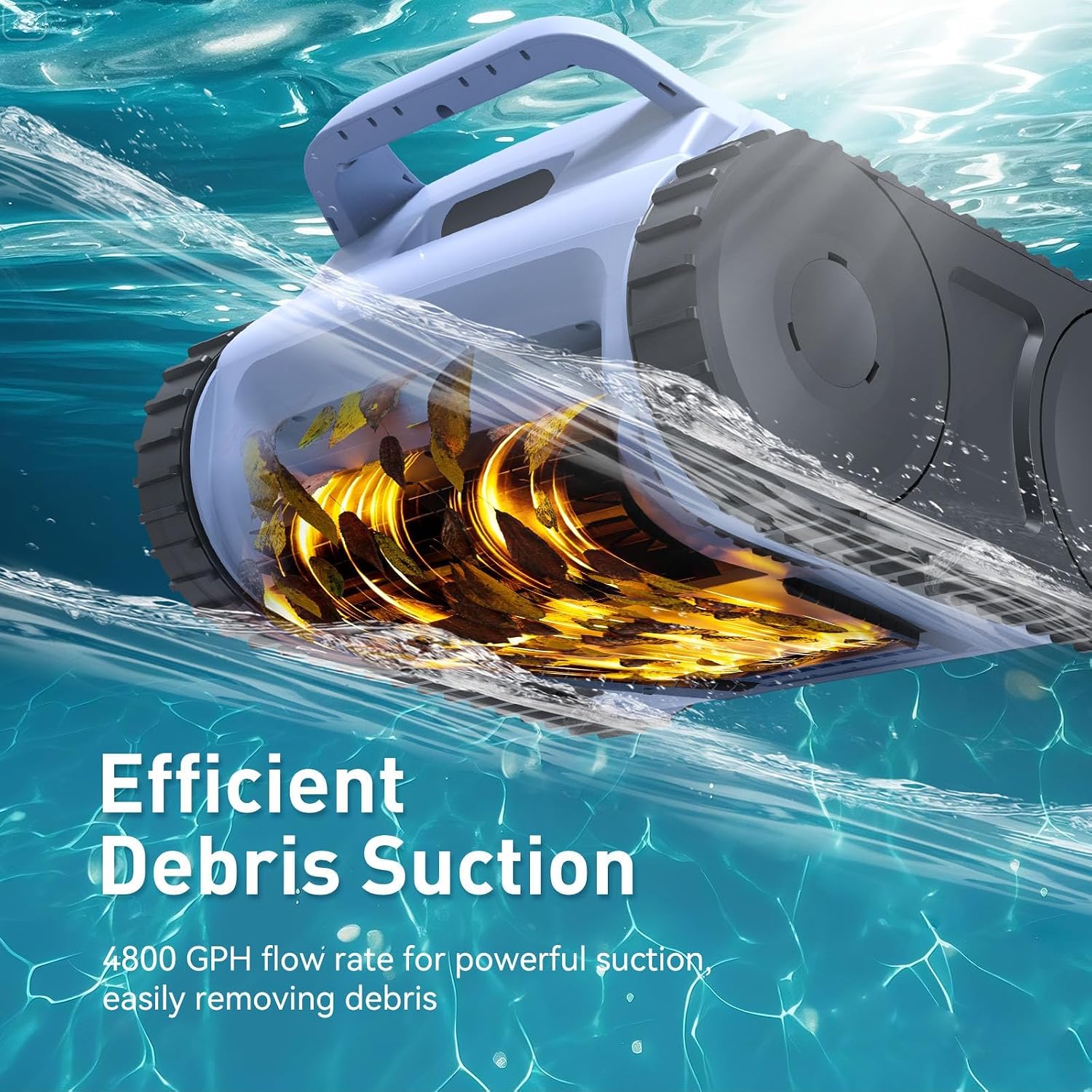
A pressure-side or robotic cleaner may also work, but compatibility varies. Check whether the cleaner is rated for your pool size, wall type, water depth, and filter setup.
You can also use a manual vacuum connected to a dedicated vacuum port if the pool has one. Do not improvise by connecting a hose to a fitting that was not designed for suction.
For very small pools, drain-and-clean maintenance may be easier than vacuuming. Follow the pool manufacturer’s instructions. Never drain an above-ground pool unless the manufacturer says it is safe. Emptying some above-ground pools can damage the liner or cause the walls to shift.
How Often Should You Vacuum an Above-Ground Pool?
Vacuum when dirt is visible on the floor or after an event that adds debris.
A useful starting schedule is:
- Light use and little debris: Once a week
- Frequent swimming: One to two times a week
- Trees, wind, or storms nearby: As needed
- After heavy rain: Inspect and vacuum if debris settles
- After algae treatment: Vacuum settled dead algae, often using Waste if available
The right schedule depends on pool use, weather, nearby plants, and the strength of the circulation system. Brushing the walls and floor before vacuuming can loosen stuck dirt, but wait for the debris to settle before you begin.
Test the water regularly. Vacuuming removes debris, but it does not replace proper chlorine, pH, circulation, or filter care.
What to Do If the Vacuum Will Not Work
Most vacuum problems come from air, poor water flow, or a clogged filter. Check the simplest causes first.
The pump loses prime
Possible causes include:
- The hose was not fully filled with water
- A hose connection is loose
- The water level is too low
- The skimmer basket is clogged
- The pump lid O-ring is dirty or damaged
- The filter needs cleaning
Turn off the pump. Refill the hose with water, check each connection, and restart the system. If the pump still will not hold prime, stop using it and consult the pump manual or a qualified pool service professional.
The vacuum has weak suction
Check the skimmer basket, pump basket, filter, and hose. A blockage in any of these parts can reduce suction.
Make sure the vacuum head is not pressed too tightly against the liner. If the head seals against the floor, water cannot pass through it.
Also check whether another suction line is open. Some systems divide suction between the skimmer and a main drain. Adjustments may be possible, but follow the equipment manual.
Dirt blows back into the pool
A dirty or damaged filter may allow fine particles to return through the outlets. A loose filter element, damaged cartridge, incorrect sand level, or DE problem can also cause this issue.
Stop vacuuming and inspect the filter. For a sand filter, backwash and rinse if required. For a cartridge filter, remove and clean the cartridge. Replace damaged parts before continuing.
The water becomes cloudy
Cloudy water may result from stirring up fine dirt, poor filtration, algae, or unbalanced water.
Allow the dirt to settle before vacuuming again. Brush gently, run the filter as directed, and test the water. If algae is present, follow the sanitizer instructions for your pool and chemical products. Do not mix pool chemicals, and never add chemicals while people are swimming.

Common Vacuuming Mistakes to Avoid
Avoid these mistakes to protect the liner, pump, and water quality:
- Vacuuming too fast: This stirs up debris.
- Starting with air in the hose: Air can cause the pump to lose prime.
- Running the pump with a clogged basket: This restricts flow.
- Using Waste for every cleaning: It wastes water and may lower the pool below the skimmer.
- Changing valve settings while the pump runs: This can damage the valve.
- Vacuuming large leaves through a small hose: Remove them with a leaf net first.
- Letting the vacuum head drag on a damaged liner: Inspect the liner before cleaning.
- Draining an above-ground pool without approval: The structure or liner may be damaged.
- Swimming while vacuum equipment is connected: Keep people out of the pool during cleaning.
- Using electrical equipment near water carelessly: Follow the product instructions and applicable electrical safety rules.
Never use a household vacuum cleaner in or near the pool. Use equipment made for swimming pools and follow its safety instructions.

Signs You Vacuumed the Pool Successfully
The job is complete when:
- The floor looks clean from end to end.
- Dirt no longer rises behind the vacuum head.
- The pump maintains prime.
- The return jet has steady flow.
- The filter pressure remains within its normal range.
- The water level still covers the skimmer opening.
- The skimmer and pump baskets are free of debris.
After vacuuming, run the filter for the time recommended by the pool or filter manufacturer. Test the water before swimming. The U.S. Centers for Disease Control and Prevention recommends maintaining proper disinfectant and pH levels in treated recreational water, but exact chemical targets depend on the product, pool type, and local guidance.

Frequently Asked Questions
Should I vacuum my above-ground pool on Filter or Waste?
Use Filter for normal dirt and light debris. Use Waste only for heavy debris, algae residue, or very cloudy water when your system includes that setting. Waste removes pool water, so monitor the water level.
Can I vacuum an above-ground pool with a cartridge filter?
Yes. Connect the vacuum to the skimmer and use the Filter setting. Clean the cartridge after vacuuming if the pressure increases or the cartridge becomes dirty. Most cartridge systems do not have a Waste setting.
Why does my pool pump lose prime when I vacuum?
The most common causes are air in the hose, a loose connection, low water, or a clogged basket or filter. Turn off the pump, refill the hose, inspect the connections, and check the water level before restarting.
Can I vacuum algae from an above-ground pool?
Yes, but dead algae may be very fine. Brush the pool, treat the water according to the product label, and vacuum the settled material. If available, Waste can help remove fine algae without sending it through the filter.
How long should I run the pool pump after vacuuming?
Run it according to the normal circulation schedule for your pool and filter. If the water is cloudy, the filter may need longer operation and more frequent cleaning. Follow the pump and filter manuals rather than using a fixed time for every pool.
Final Takeaway
To vacuum an above-ground swimming pool, remove large debris, connect a primed hose to the skimmer, choose the correct filter setting, and move the vacuum head slowly across the floor. Use Filter for routine cleaning and Waste only when the system supports it and water loss is acceptable.
Finish by cleaning the baskets and filter, checking the water level, and testing the pool water. If the pump loses prime, suction stays weak, or dirt returns through the outlets, stop and inspect the hose, baskets, filter, and connections before continuing.
One Comment