
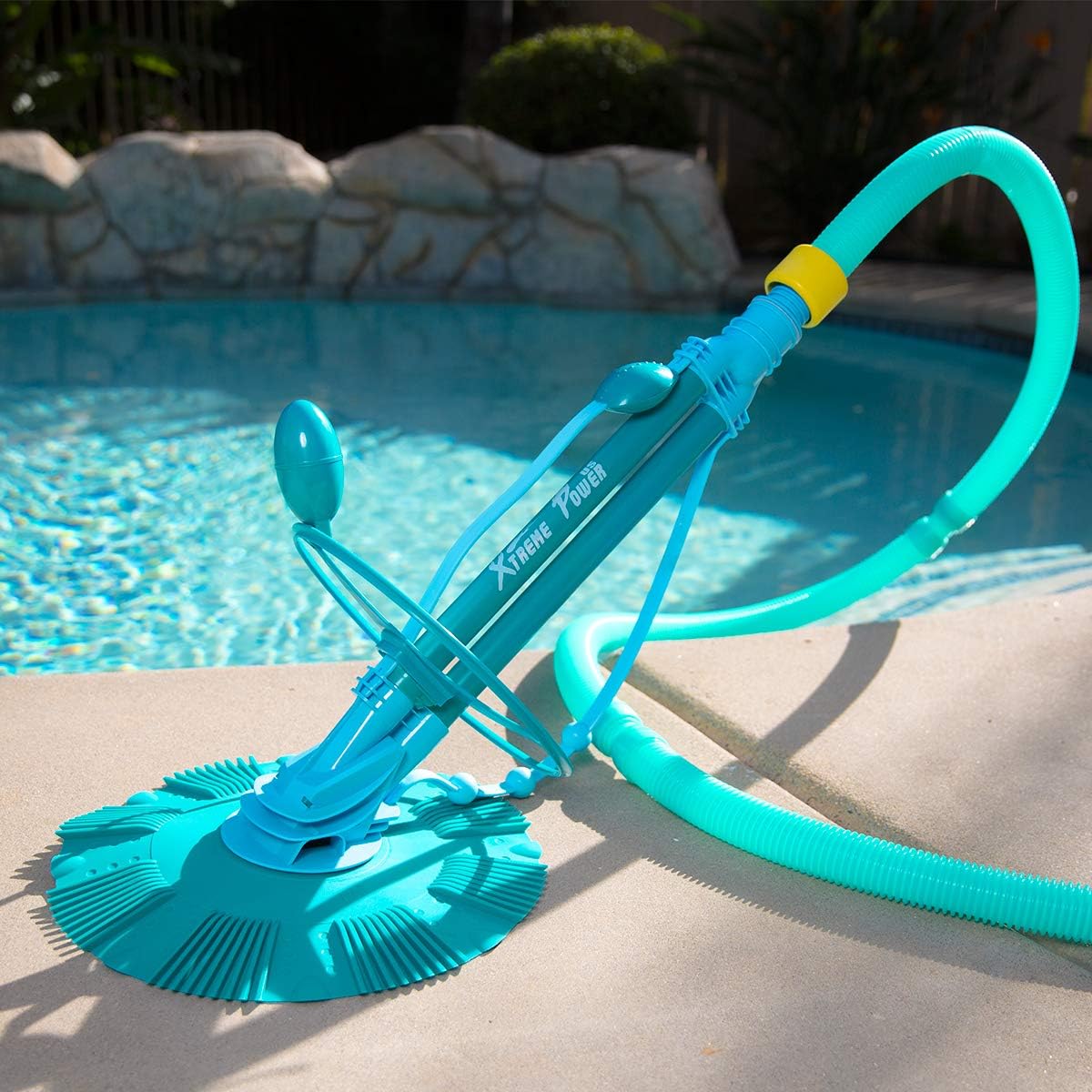
To vacuum an above-ground pool, connect a manual pool vacuum head to a telescoping pole and vacuum hose. Attach the hose to the pool’s skimmer or suction port, start the pump, and move the vacuum head slowly across the floor. The correct valve setting depends on your filter type and the amount of dirt in the pool.
This guide is written for above-ground pools in the United States. It covers common systems that use sand, cartridge, or diatomaceous earth (DE) filters. Always check your pool and filter manuals before changing valve settings or connecting equipment.

What You Need to Vacuum an Above-Ground Pool
You need a few basic tools before you begin:
- A manual vacuum head made for pools
- A telescoping pool pole
- A vacuum hose long enough to reach every part of the pool
- A skimmer vacuum plate, if your pool uses one
- A clean skimmer basket
- A clean or properly serviced filter
- A garden hose, if your pool uses a separate pressure-side vacuum
- Test strips or a test kit
Most manual pool vacuums use the pool pump to create suction. The vacuum head collects dirt from the floor. The hose carries that dirt to the skimmer and filter.
Some above-ground pools use a small cartridge filter with a wall-mounted skimmer. Others use a larger sand or DE filter with a multiport valve. These systems work in similar ways, but the correct setting can differ.
Before you start
Check these items first:
- Remove leaves and large debris with a leaf net.
- Make sure the water level is high enough for the skimmer to keep drawing water.
- Empty the skimmer basket.
- Check that the pump is filled with water and primed.
- Inspect the vacuum hose for cracks or loose fittings.
- Keep swimmers out of the pool while you vacuum.
A low water level can cause the pump to draw air. That may interrupt suction and can damage some pumps if they run dry.
How to Vacuum an Above-Ground Pool Step by Step
Follow these steps for a standard manual pool vacuum connected to the skimmer.
1. Turn off the pool pump
Switch off the pump before assembling the vacuum. This helps prevent air from entering the system while you connect the hose.
If the pump is controlled by a timer, turn the timer off for the cleaning period. Keep hands and electrical connections dry. Use only equipment that is rated for pool use and connected to a properly protected outlet.
2. Attach the vacuum head to the pole
Connect the vacuum head to the telescoping pole. Make sure the clips or locking pins are secure.
Use a wide vacuum head for large, open areas. A smaller head may work better in tight corners or on small above-ground pools.
3. Connect the vacuum hose
Push one end of the vacuum hose onto the vacuum head. Make sure the connection is tight.
Before you connect the other end to the skimmer, fill the hose with water. The easiest method is to hold the hose in front of a return jet while the pump is running. Water will push air out of the hose.
You can also lower the hose into the pool one section at a time. The goal is to fill the hose completely with water. Air in the hose can cause weak suction or make the pump lose its prime.
4. Connect the hose to the skimmer
Turn off the pump again if it is running. Place the hose into the skimmer opening.
There are two common connection methods:
- Skimmer vacuum plate: Place the plate over the skimmer basket and connect the hose to the plate.
- Direct skimmer connection: Remove the skimmer basket and connect the hose to the suction port below it.
A vacuum plate is often easier because it lets the basket catch large debris before it reaches the pump. Follow the instructions for your skimmer model.
5. Select the correct filter setting
The right setting depends on your filter and the dirt in the pool.
| Filter system | Normal vacuum setting | When to use another setting |
|---|---|---|
| Sand filter | Filter for light dirt; Waste for heavy dirt or algae | Use Backwash after using Waste or when the filter pressure is high |
| DE filter | Filter for light dirt; Waste for heavy dirt or algae | Recharge the DE filter after backwashing or using Waste |
| Cartridge filter | Filter | Remove and clean the cartridge after vacuuming if pressure rises |
| Small pump with no multiport valve | Normal operating setting | Follow the pump manual |
The Filter setting sends water through the filter and back into the pool. This saves water but may clog the filter faster.
The Waste setting sends dirty water out of the pool. This can work well for large amounts of dirt, dead algae, or very cloudy sediment. It also lowers the water level, so watch the pool while vacuuming.
Never move a multiport valve while the pump is running. Turn off the pump before changing the setting.
6. Start the pump and check the suction
Turn on the pump. Hold the vacuum head underwater and check that it stays on the pool floor.
A vacuum head that rises or moves poorly may have weak suction. Check for:
- Air bubbles coming from the return jet
- Air in the pump basket
- A loose hose connection
- A clogged skimmer basket
- A dirty filter
- A partially closed valve
- A vacuum head that is not fully submerged
Do not continue if the pump loses prime. Turn it off and correct the problem first.
7. Vacuum the pool floor slowly
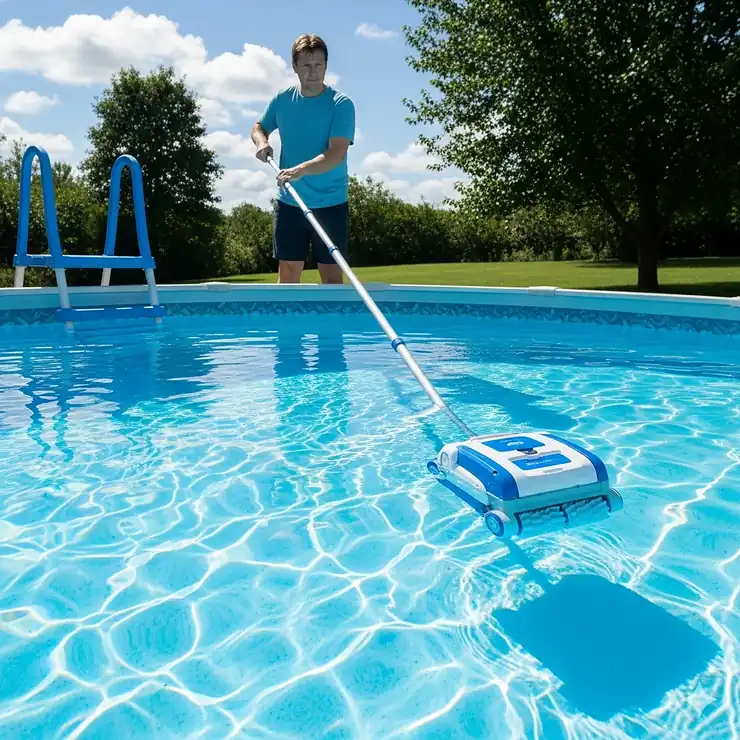
Move the vacuum head in slow, straight lines. Overlap each pass slightly, much like mowing a lawn.
Start at the shallow end if your pool has different depths. Work toward the deeper area. Keep the vacuum head flat on the floor.
Move slowly enough that dirt does not swirl away. Fast strokes can stir up fine dust and make the water cloudy. If the pool is very dirty, pause between sections to let particles settle.
Pay extra attention to:
- The area under the ladder
- Pool walls near the floor
- Steps and corners
- Areas below return jets
- Places where leaves collect
8. Watch the filter pressure and water level
Check the pressure gauge during the job if your system has one. A rising pressure reading can mean the filter is becoming clogged.
The exact pressure change that requires cleaning varies by system. Many manufacturers recommend cleaning when pressure rises by about 8–10 pounds per square inch (psi) above the clean starting pressure, but use the value in your filter manual.
If using Waste, watch the water level closely. Stop before the water falls below the skimmer opening. Running the pump without enough water can introduce air into the system.
9. Turn off the pump before disconnecting
When the pool floor looks clean, turn off the pump. Do not pull the hose out while the pump is still running.
Remove the hose from the skimmer, then remove the vacuum head from the pole. Drain the hose and rinse the equipment with fresh water.
If you used the Waste setting, restore the valve to the normal filter position only after the pump is off. If you used a sand filter, backwash and then rinse it according to the manufacturer’s instructions.
10. Check the water after vacuuming
Allow the pump to run through a normal filtration cycle. Test the water for:
- Free chlorine
- pH
- Total alkalinity
- Water clarity
Vacuuming removes debris, but it does not replace chemical care. If the pool has algae, you may need a separate cleaning and treatment plan. Do not add chemicals based only on appearance. Test the water first and follow the product label.

Should You Vacuum an Above-Ground Pool on Filter or Waste?
Use Filter for normal dirt and small amounts of sediment. Use Waste when the pool contains heavy debris or dead algae that you do not want sent through the filter.
The trade-off is simple:
- Filter: Uses less water and is best for routine cleaning.
- Waste: Removes dirty water from the pool but lowers the water level and may require refilling.
A cartridge filter normally does not have a Waste setting. Water passes through the cartridge during vacuuming. If the cartridge becomes dirty, turn off the pump, remove the cartridge, and clean it according to the filter manual.
Do not use Backwash as a general vacuum setting. Backwash is designed to clean sand or DE filter media after pressure rises. It sends water in the opposite direction through the filter and discharges dirty water.
When to use the Waste setting
Waste may be useful when:
- The pool has a thick layer of dirt
- Dead algae covers the floor
- The water is cloudy from settled material
- The filter becomes dirty almost immediately
- You need to remove a large amount of fine sediment
Before using Waste, make sure the discharge hose leads to an approved location. Some areas restrict where pool water may be discharged. Never direct chlorinated pool water onto a neighbor’s property, a storm drain, or a natural waterway unless local rules allow it.

How to Vacuum an Above-Ground Pool Without a Skimmer
If your pool does not have a built-in skimmer, you have several options.
Use a filter-pump vacuum attachment
Some above-ground pool pumps include a vacuum port or a special adapter. Connect the vacuum according to the pump instructions.
This method usually sends debris through the pool’s filter. Clean the cartridge or inspect the filter after use.
Use a garden-hose vacuum
A garden-hose vacuum uses water pressure rather than pump suction. It pushes debris into a collection bag.
This option can work for light dirt, but it uses fresh water. It may also disturb fine sediment if you move the head too quickly.
Use a hose vacuum when:
- The pool has a small pump
- The skimmer is not compatible with a manual vacuum
- You need to collect leaves and light debris
- You want to avoid sending debris through the filter
Use a battery-powered pool vacuum
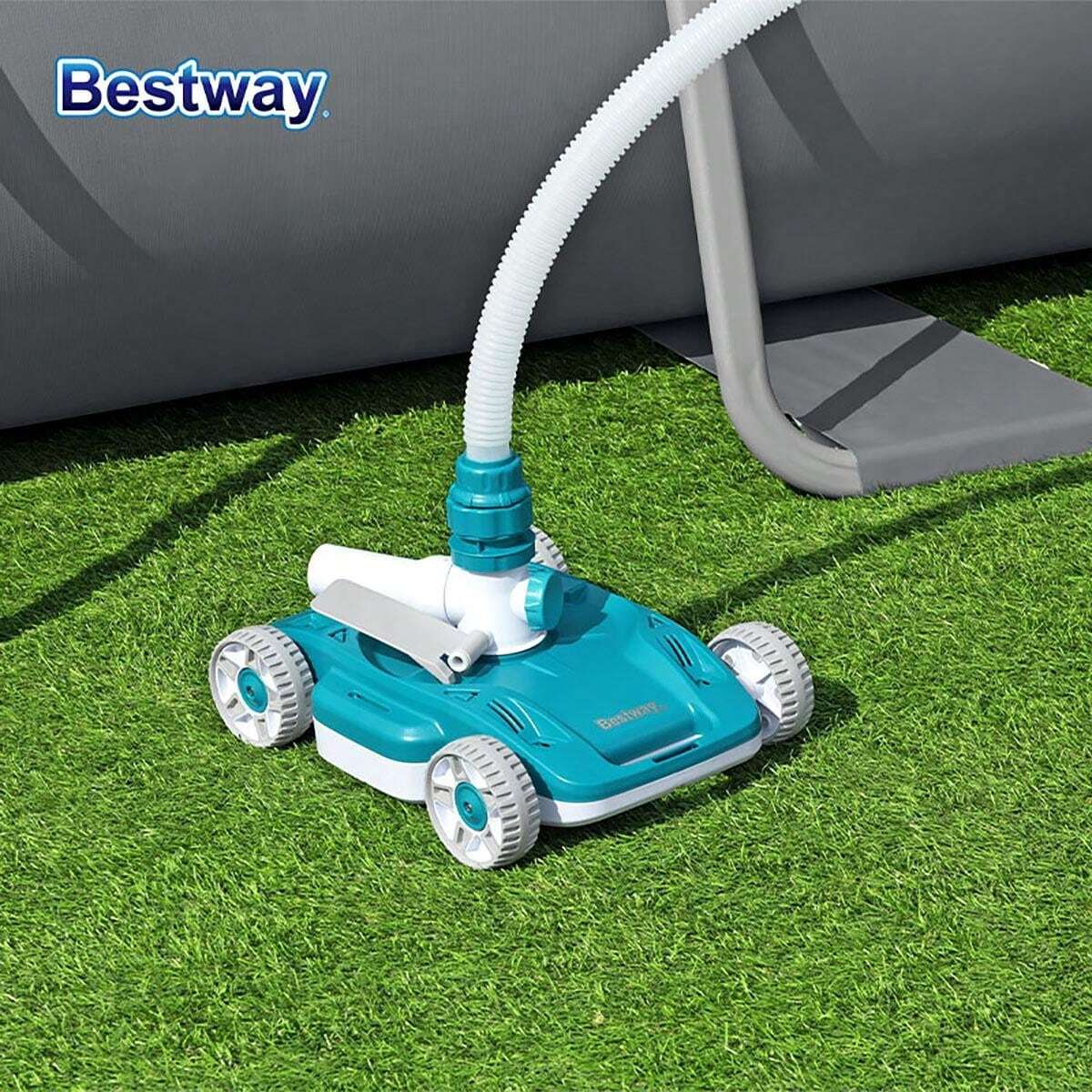
A battery-powered vacuum has its own motor and filter bag. It does not need to connect to the pool pump.
This can be useful for small pools, spot cleaning, and pools with weak filter systems. Keep the charger and electrical connections away from the pool. Follow the product’s instructions for charging, storage, and water depth.
How to Vacuum Fine Dirt and Algae from an Above-Ground Pool
Fine dirt and algae need slower cleaning than ordinary leaves or sand. The main goal is to avoid stirring the material back into the water.
First, allow the particles to settle. If you vacuum while the dirt is still floating, the vacuum may not collect it well.
Then:
- Set the filter to Waste if your system and local discharge rules allow it.
- Lower the vacuum head gently to the floor.
- Move it very slowly.
- Avoid brushing the floor immediately before vacuuming.
- Stop if the water level approaches the bottom of the skimmer.
- Refill the pool before the pump draws air.
If the pool has visible algae, vacuuming alone will not solve the problem. Algae can return unless the water is properly balanced and sanitized. Test the water and follow the instructions for any treatment product. Never mix pool chemicals together, and never mix chlorine products with acids.
For severe algae, repeated cloudiness, or a pool that cannot hold chlorine, contact a qualified pool professional.

Why Is My Above-Ground Pool Vacuum Not Working?
Most vacuum problems come from air leaks, poor water flow, or a dirty filter. Check the simplest causes first.
| Symptom | Likely cause | What to check |
|---|---|---|
| Vacuum has no suction | Hose contains air or connection is loose | Refill the hose and tighten each connection |
| Vacuum head will not stay down | Air trapped in the head or hose | Submerge the head and remove air before connecting |
| Pump loses prime | Water level is low or air enters the suction line | Raise water level and inspect fittings |
| Suction starts strong, then drops | Skimmer basket or filter is clogged | Clean the basket and inspect the filter |
| Pool becomes cloudy | Dirt is being stirred up or filter is overloaded | Move more slowly and clean the filter |
| Water level drops quickly | Pump is set to Waste | Stop and refill before the skimmer draws air |
| Vacuum pushes dirt around | Head moves too fast or brush is worn | Slow down and inspect the vacuum head |
| Air bubbles return to pool | Air leak on the suction side | Check the hose, lid O-ring, and fittings |
How to find an air leak
With the pump running, look at the pump basket if it is visible. A few small bubbles may occur during startup. A steady stream of bubbles can indicate air entering the suction line.
Inspect:
- The pump lid O-ring
- The drain plugs
- Hose ends
- Skimmer connections
- Valve fittings
- Cracked hoses
Turn off the pump before opening the pump basket or removing fittings. Never open a pressurized filter tank unless the system is off and pressure has been fully released according to the manufacturer’s instructions.

How Often Should You Vacuum an Above-Ground Pool?
Vacuum when dirt is visible on the floor or when the pool becomes cloudy from settled debris. Many pools need vacuuming about once a week during heavy use, but the right schedule depends on the site and season.
You may need to vacuum more often when:
- Trees drop leaves near the pool
- Wind carries dust into the water
- The pool receives frequent use
- Swimmers bring in grass or soil
- The pool cover leaks or is removed often
- The pool has a recurring algae problem
Use a skimmer net for floating leaves and a brush for walls. Vacuuming is mainly for dirt that settles on the floor.
Regular circulation also helps. Run the pump according to the filter and pool manufacturer’s instructions. More pump time does not fix poor water chemistry, but it can help the filter remove suspended particles.

Safety Rules for Vacuuming a Pool
Pool vacuuming involves water, electricity, suction, and chemical exposure. Use these basic safety rules:
- Keep swimmers out while the vacuum is connected.
- Keep electrical plugs, timers, and chargers dry.
- Use ground-fault circuit-interrupter protection where required.
- Never operate a pump without enough water.
- Turn off the pump before changing a valve setting.
- Release filter pressure before opening a filter housing.
- Do not block a suction outlet with your body.
- Do not use damaged hoses, cords, or fittings.
- Wear eye protection when handling concentrated pool chemicals.
- Store chemicals in their original containers, away from heat and children.
- Follow local rules for discharging pool water.
The U.S. Consumer Product Safety Commission and the U.S. Centers for Disease Control and Prevention provide pool safety information, but equipment installation and electrical work may require a licensed professional under local rules.

Common Mistakes to Avoid
Avoiding a few common errors can make the job faster and protect your equipment.
Vacuuming too fast
Fast movement lifts dirt into the water. Use slow, overlapping passes instead.
Connecting a hose full of air
Air can reduce suction and cause the pump to lose prime. Fill the hose with water before connecting it to the skimmer.
Forgetting the skimmer basket
A full basket blocks water flow. Empty it before vacuuming and check it again afterward.
Using Waste for every cleaning
Waste removes pool water. It is useful for heavy dirt but wasteful for routine cleaning. Use Filter when the debris load is small and your filter can handle it.
Running a cartridge filter with high pressure
A clogged cartridge reduces flow and may stress the pump. Clean the cartridge when the pressure reaches the level listed in the manual.
Draining too much water
If the water falls below the skimmer, the pump can draw air. Stop, turn off the pump, and refill the pool.
Adding chemicals without testing
Cloudy water does not always mean the same problem. Test the water before adjusting pH, chlorine, or alkalinity.
Quick Checklist for Vacuuming an Above-Ground Pool
Use this short checklist each time:
- Remove large debris with a leaf net.
- Raise the water level if it is low.
- Empty the skimmer basket.
- Inspect the hose and vacuum head.
- Fill the hose with water.
- Connect the hose to the skimmer or vacuum port.
- Choose Filter or Waste based on the dirt level.
- Start the pump.
- Vacuum slowly in overlapping lines.
- Watch filter pressure and water level.
- Turn off the pump before disconnecting.
- Clean the filter if needed.
- Test the water after cleaning.

Frequently Asked Questions
Can I vacuum an above-ground pool with a regular garden hose?
Yes. A garden-hose pool vacuum can collect light debris in a bag. It uses water pressure instead of the pool pump. It may use more water and may not remove heavy or fine debris as well as a pump-powered vacuum.
Do I vacuum before or after adding chlorine?
Remove visible debris and vacuum first when possible. Test the water afterward and add chemicals based on the test results and product directions. If algae treatment requires brushing or circulation, follow that product’s instructions.
Can I vacuum an above-ground pool without a pump?
Yes, but your choices are limited. You can use a garden-hose vacuum, battery-powered vacuum, or manual debris cleaner. A pump-powered vacuum will not work without a functioning pump and proper water flow.
Why does my pool get cloudy after vacuuming?
The vacuum may be stirring up fine dirt, or the filter may be dirty or undersized for the debris load. Move the vacuum more slowly, allow particles to settle, and clean the filter as directed.
Should I brush the pool before vacuuming?
Brush the walls and floor when dirt or algae sticks to the surfaces. For loose sediment, vacuum first if possible. Brushing right before vacuuming can send fine material into the water instead of into the vacuum.
How long should I run the pump after vacuuming?
Run it for the normal filtration period listed in your pool or filter manual. Keep the pump running if the water remains cloudy, but check the filter pressure and clean the filter when needed.
Final Takeaway
The best way to vacuum an above-ground pool is to fill the hose with water, connect it to the skimmer, choose the correct filter setting, and move the vacuum head slowly across the floor. Use Filter for routine dirt and Waste for heavy debris when your system allows it.
If suction is weak, check for air in the hose, a full skimmer basket, low water, loose fittings, or a dirty filter. Stop the pump before changing settings or disconnecting equipment, and keep water and electrical parts safely separated.
Sources for further reference
- Centers for Disease Control and Prevention: Healthy Swimming
- U.S. Consumer Product Safety Commission: Pool and Spa Safety
- CDC Model Aquatic Health Code
- Your pool pump, filter, skimmer, and vacuum manufacturer manuals
One Comment