
Vacuuming a swimming pool removes dirt, leaves, sand, and fine debris that a skimmer may miss. In a typical U.S. residential pool, you connect a vacuum head to a telescoping pole and hose, prime the hose with water, then vacuum with the pump running. The correct filter setting depends on your pool system and how much debris is on the floor.
Vacuum slowly and use smooth, overlapping strokes. Rushing can stir dirt into the water instead of removing it.
What You Need Before You Start
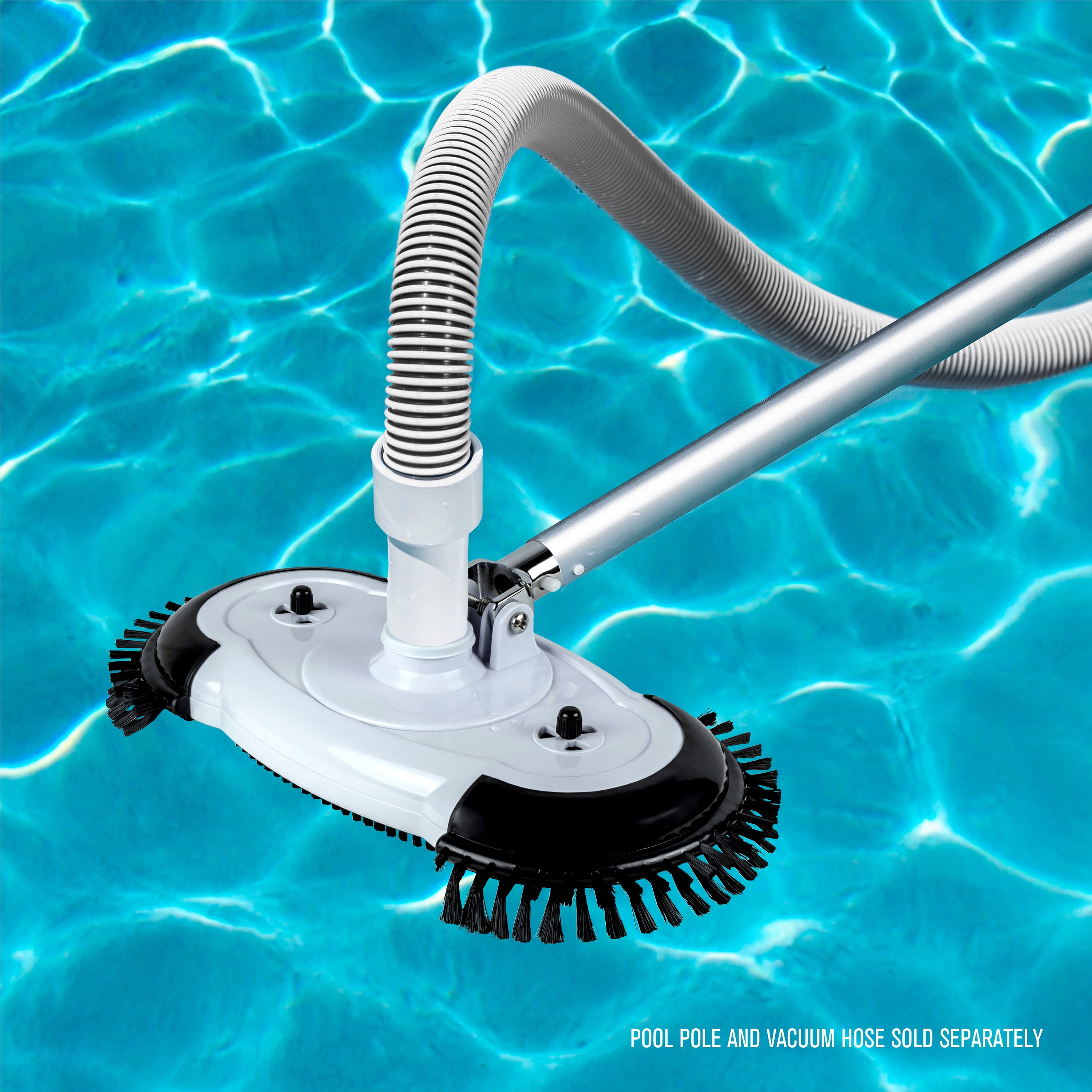
Gather the right tools before you begin:
- Pool vacuum head
- Telescoping pool pole
- Vacuum hose long enough to reach the farthest point of the pool
- Skimmer vacuum plate, if your system uses one
- Pool brush, if algae or stuck-on dirt is present
- Water test kit or test strips
- Pool filter and pump in working order
- Clean skimmer basket and pump basket
A manual vacuum usually connects in one of two ways:
- Through the skimmer: The hose connects to a skimmer vacuum plate or directly to the skimmer suction port.
- Through a dedicated suction port: Some pools have a separate port designed for automatic or manual cleaners.
Check the pool equipment manual before changing valve positions. Sand, diatomaceous earth (DE), and cartridge filters do not use the same controls.
What the main parts do
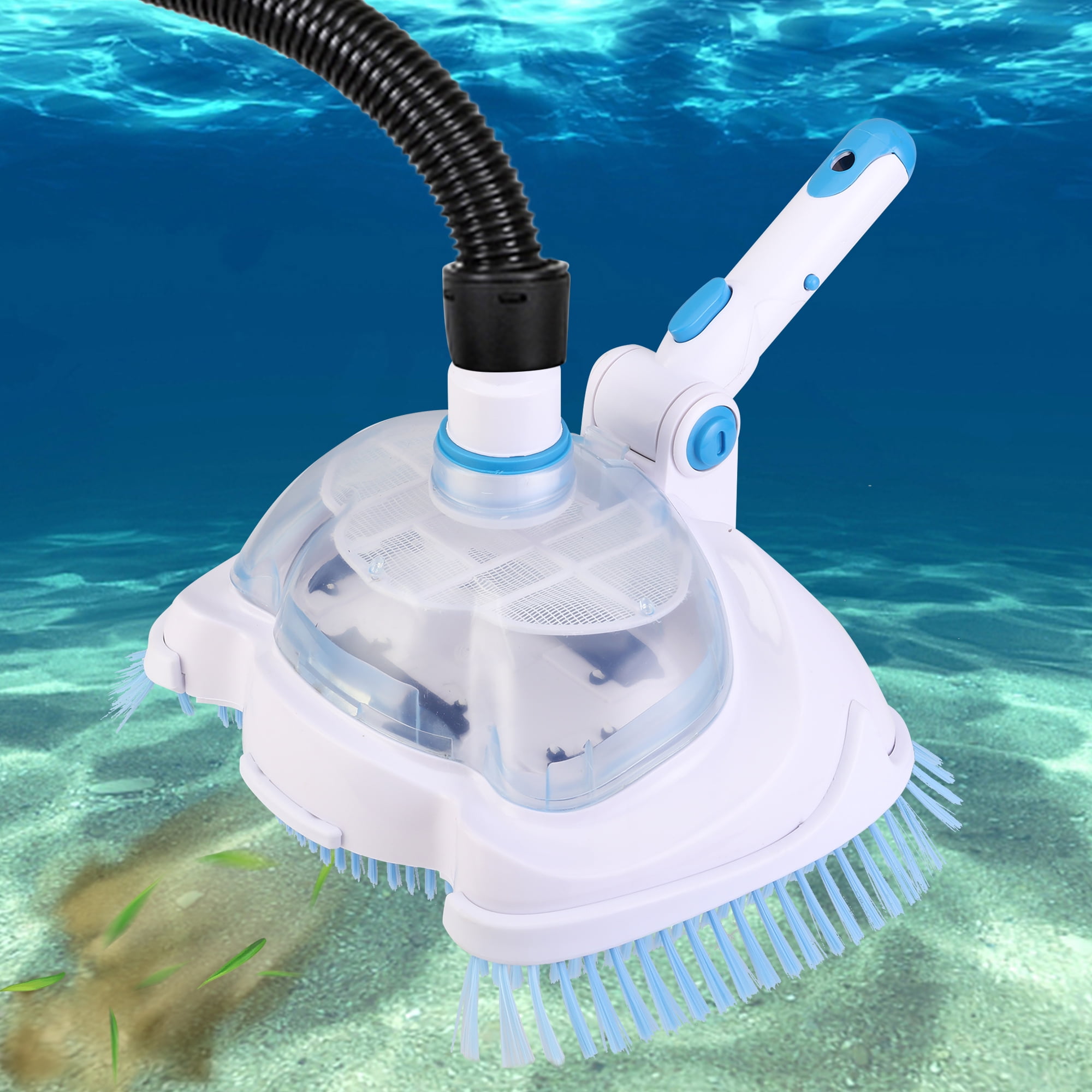
- Vacuum head: Collects debris from the pool floor.
- Telescoping pole: Lets you guide the vacuum head from outside the pool.
- Vacuum hose: Carries water and debris toward the filter or waste line.
- Skimmer vacuum plate: Connects the hose to the skimmer while keeping the basket in place.
- Filter: Traps dirt as pool water passes through it.
- Multiport valve: Found on many sand and DE systems. It controls settings such as Filter, Waste, Backwash, and Rinse.
A cartridge filter usually has valves rather than a multiport valve. Do not assume that a cartridge system can vacuum to waste.

How to Vacuum a Swimming Pool Step by Step
Follow these steps for most manual pool vacuum systems.
1. Remove large debris from the pool
Use a leaf net to remove large leaves, twigs, toys, and insects. This keeps large debris from clogging the vacuum head, skimmer basket, or pump basket.
If the pool floor has a thick layer of dirt, remove as much as possible with a net first. A large amount of debris can quickly block a filter.
2. Brush the walls and steps
Brush the pool walls, corners, steps, and floor before vacuuming. Brush toward the main drain or the area you plan to clean first.
If the pool contains loose algae, wait for it to settle before vacuuming. Brushing can make the water cloudy for a short time. Vacuuming too soon may spread the particles instead of removing them.
3. Assemble the vacuum
Attach the vacuum head to the telescoping pole. Then connect one end of the vacuum hose to the vacuum head.
Make sure the hose connection is tight. An air leak can reduce suction and may cause the pump to lose its prime.
4. Fill the hose with water
The hose must be full of water before you connect it to the suction line. Air in the hose can enter the pump and reduce circulation.
Use one of these methods:
- Hold the hose in front of a return jet until bubbles stop coming from the hose.
- Lower the entire hose into the pool and let water push the air out.
- Hold the open hose end against a return fitting while the pump is running, if the fitting and system allow it.
Keep the hose underwater as you move it toward the skimmer. If the hose end comes out of the water, air may enter again.
5. Connect the hose to the suction point
With the hose still underwater, connect it to the skimmer vacuum plate or dedicated suction port.
If you use a skimmer vacuum plate, place the plate over the skimmer basket unless your pool equipment instructions say otherwise. Keeping the basket in place helps catch large debris before it reaches the pump.
Some pools need the skimmer valve partly closed so the vacuum receives enough suction. Do not fully close valves unless the equipment manual specifically allows it. A pump must have enough water flowing through it to operate safely.
6. Choose the correct pump and filter setting
For routine cleaning, use the Filter setting. This sends dirty water through the filter and returns filtered water to the pool.
Use Waste only when all of these conditions apply:
- Your system has a waste setting.
- The vacuumed material is heavy or very fine.
- Your equipment manual permits vacuuming to waste.
- Local rules allow the discharged water to go where you plan to send it.
- You can replace the lost pool water safely.
Vacuuming to waste sends water out of the pool rather than through the filter. This can lower the water level quickly. Never let the pump run dry.
For a cartridge filter, vacuuming normally sends water through the cartridge. Stop and clean the cartridge if the pressure rises above the manufacturer’s recommended range.
7. Turn on the pump and check the suction
Start the pump and look for steady water flow at the return jets. Watch the pump basket and pressure gauge.
Stop the pump if you see:
- Air bubbles collecting in the pump basket
- A pump that loses prime
- A very low water level
- A sharp pressure change
- A leaking connection
- Unusual noise or vibration
Correct the problem before continuing.
8. Vacuum the pool slowly
Place the vacuum head flat on the pool floor. Move it in slow, straight lines with slight overlap between each pass.
Start at the shallow end and work toward the deep end, or use another pattern that keeps the cleaned area separate from the dirty area. Move slowly enough that dirt stays on the floor.
Avoid lifting the vacuum head while the pump is running. If you need to move it, keep it underwater.
9. Clean the equipment when finished
Turn off the pump before disconnecting the hose or changing a multiport valve setting. Never move a multiport valve while the pump is running.
Then:
- Remove and empty the skimmer basket.
- Check and clean the pump basket.
- Backwash and rinse a sand or DE filter if its pressure indicates that cleaning is needed.
- Clean a cartridge filter according to its manual.
- Store the vacuum head and hose out of direct sunlight when possible.
Return valves to their normal circulation positions before restarting the pump.

Should You Vacuum on Filter or Waste?
The best setting depends on the type and amount of debris.
| Pool condition | Usual setting | Reason |
|---|---|---|
| Small amount of normal dirt | Filter | The filter can capture the debris without wasting water |
| Heavy leaves or settled debris | Waste, if available | It reduces the load on the filter |
| Very fine dead algae | Waste, if permitted | It may keep fine particles from returning to the pool |
| Cartridge filter system | Usually Filter | Many cartridge systems do not have a waste path |
| Water level already low | Filter or postpone | Waste can lower the water level further |
| Pool water contaminated by a major event | Follow local and equipment guidance | The correct treatment may involve more than vacuuming |
Vacuuming to filter
This is the most common method. It is suitable for routine cleaning and moderate debris.
Watch the filter pressure during the process. If pressure rises significantly above the clean starting pressure listed by the equipment maker, stop and clean the filter. A dirty filter can reduce suction and strain the pump.
Vacuuming to waste
Waste is useful when you need to remove material without sending it through the filter. However, it also removes pool water.
Keep an eye on the water level. If the water drops below the skimmer opening, the pump can draw air. Stop the pump before that happens.
Do not discharge pool water onto a neighbor’s property, a public sidewalk, a storm drain, or an area where it can cause erosion. Local rules differ across U.S. cities, counties, and states. Follow your local wastewater and pool-drainage requirements.
How Often Should You Vacuum a Pool?
Many pools need vacuuming about once a week during normal swimming season. The right schedule depends on weather, trees, swimmer use, pets, landscaping, and the pool’s circulation system.
Vacuum sooner when:
- A storm blows dirt or leaves into the pool.
- The floor looks dull or dirty.
- The pool has visible algae or sediment.
- Construction, lawn work, or dust creates extra debris.
- Swimmers bring in sand or soil.
- The pool has poor circulation in certain areas.
Vacuuming is only one part of pool care. The CDC recommends maintaining proper pool disinfectant and pH levels to help control germs and protect swimmers. Always test the water with a reliable kit or strips and follow the label and equipment instructions for chemical use.
A clean floor does not prove that the water is safe. Clear water can still have poor chemical balance.

What to Do If the Pool Vacuum Has Weak Suction
Weak suction usually comes from air, a blockage, or incorrect valve settings. Check the simplest and safest causes first.
Check the hose for air
Look for bubbles at the return jets or in the pump basket. Refill the hose with water and reconnect it while keeping the hose underwater.
Inspect the hose for cracks or loose cuffs. A damaged hose can pull air into the system.
Check the skimmer and pump baskets
Turn off the pump. Remove leaves and debris from both baskets. A full basket can restrict water flow and reduce suction.
Check the filter pressure
A high pressure reading can indicate a dirty filter or blocked flow. Clean or backwash the filter only as the equipment manufacturer directs.
Check the valve position
Confirm that the skimmer or suction valve is open enough for the vacuum to work. Do not close every other suction line unless the manual permits it. Some systems require a balance between the skimmer, main drain, and cleaner line.
Check the vacuum head and hose
A stone, leaf, or clump of algae may be blocking the vacuum head or hose. Turn off the pump before removing a blockage.
If the pump repeatedly loses prime, leaks water, makes grinding sounds, or cannot maintain circulation, stop using it and contact a qualified pool service technician.

Why Does the Pool Become Cloudy After Vacuuming?
Cloudy water after vacuuming often means fine particles were stirred up or passed through the filter. It may clear as the filter runs, but the cause still matters.
Common causes include:
- Moving the vacuum too quickly
- Lifting the vacuum head from the floor
- A dirty or damaged filter
- Fine dead algae
- Poor water chemistry
- A low water level that allows air into the system
Run the filter according to the equipment instructions and check the water chemistry. If the pool contains algae, vacuuming alone will not solve the problem. Follow the chemical product label and test the water before swimming.
Do not add pool chemicals by guesswork. Never mix different chemicals together, and store them in their original containers in a cool, dry, well-ventilated place.

Manual Vacuuming vs. Automatic Pool Cleaners
A manual vacuum gives you direct control over where you clean. It is useful for spot cleaning, steps, corners, and areas with heavy debris.
Automatic suction-side, pressure-side, and robotic cleaners reduce the amount of manual work. However, each type has different setup, maintenance, and compatibility needs.
| Cleaner type | Main benefit | Main limitation |
|---|---|---|
| Manual vacuum | Precise and simple for spot cleaning | Requires hands-on work |
| Suction-side cleaner | Uses the pool’s suction system | Can affect skimmer flow and filtration |
| Pressure-side cleaner | Uses return-line pressure on some systems | May need a booster pump or special setup |
| Robotic cleaner | Runs independently of the pool filter on many models | Requires electrical safety and routine cleaning |
A manual vacuum is often the most practical choice when you need to remove a small amount of dirt quickly. An automatic cleaner may make more sense for a large pool or frequent debris.
Use only equipment designed for pool use. Keep electrical connections away from standing water, and follow the cleaner’s installation instructions.

Common Pool Vacuuming Mistakes
Avoid these errors to protect the pump and get better results:
- Vacuuming too fast: This pushes dirt into the water.
- Starting with an air-filled hose: Air can reduce suction and cause pump problems.
- Changing a multiport valve while the pump runs: Turn the pump off first.
- Letting the water fall below the skimmer: The pump may draw air.
- Ignoring a rising filter-pressure reading: A clogged filter reduces flow.
- Using Waste without planning for water loss: The pool can drain below a safe level.
- Vacuuming heavy debris through a small skimmer basket: The basket may clog.
- Adding chemicals without testing: Incorrect levels can damage surfaces or irritate skin.
- Using household cleaners in the pool: They may harm the liner, finish, filter, or water chemistry.
- Standing on the vacuum hose: This can restrict flow and make the head difficult to control.
The safest routine is simple: remove large debris, prime the hose, use the correct setting, move slowly, monitor water flow, and shut the system down before making equipment changes.

Frequently Asked Questions
Can I vacuum a pool without a skimmer plate?
Sometimes. Some systems allow the hose to connect directly to the skimmer suction port. Others need a vacuum plate to maintain the basket and regulate suction. Use the connection method listed in your pool or skimmer manual.
Do I need to backwash after vacuuming?
Not always. Backwash a sand or DE filter when the pressure reaches the level specified by the equipment manufacturer, or when circulation and suction drop. Do not backwash a cartridge filter; remove and clean the cartridge according to its instructions.
Can I vacuum a pool with a cartridge filter?
Yes, in most setups, but the water normally passes through the cartridge. Watch the pressure gauge and stop to clean the cartridge if pressure rises too much. Many cartridge systems do not support vacuuming to waste.
Should the pump be on while vacuuming?
Yes. The pump must run to create suction, but prime the hose before connecting it. Turn the pump off before changing valves, clearing baskets, removing blockages, or disconnecting equipment.
Can I vacuum algae from a pool?
You can vacuum loose algae, but vacuuming does not replace proper water treatment. Brush the surfaces, test the water, follow the chemical label, and clean or backwash the filter as directed. If algae returns, the cause may be poor circulation, incorrect chemistry, or inadequate sanitation.

Final Steps for a Clean Pool
To vacuum a swimming pool, remove large debris, brush the surfaces, fill the hose with water, connect it to the correct suction point, select the proper filter setting, and move the vacuum head slowly across the floor. Use Waste only when your equipment and local drainage rules allow it.
After vacuuming, empty baskets, check filter pressure, restore the normal valve position, and test the water before swimming. If suction remains weak or the pump loses prime, stop the system and inspect the hose, baskets, filter, and valves before continuing.
2 Comments