For most homes in the United States, Dyson is the better fit if you want a cordless vacuum, fast daily cleanups, or strong pet-hair tools. Miele is often the better choice if you want a quiet, durable canister vacuum for deep cleaning, hard floors, rugs, and allergy control.
The best choice depends on more than suction power. You should compare the vacuum type, floor surfaces, pet hair, filtration, noise, maintenance, warranty, and long-term cost. Dyson and Miele make very different machines, so this is not a simple brand-versus-brand contest.

Dyson vs Miele: The Main Differences
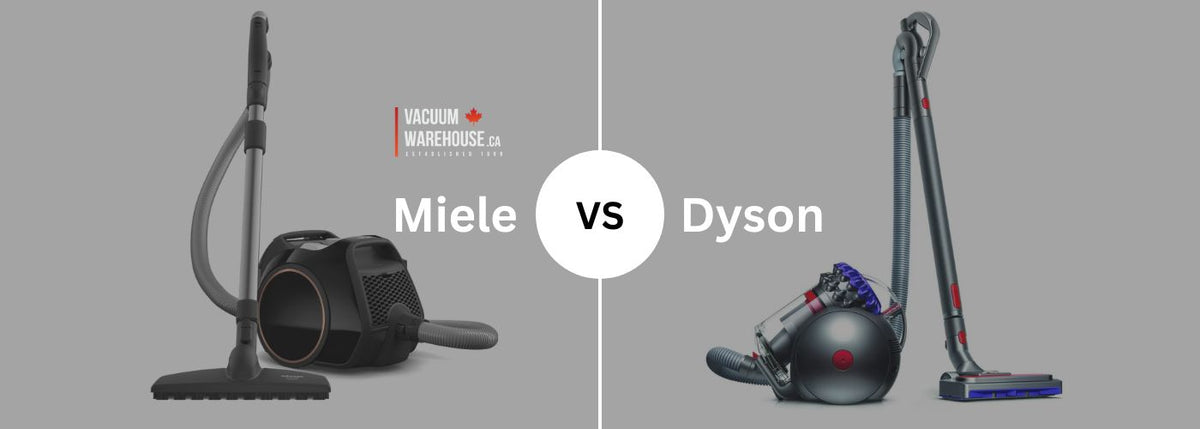
Dyson focuses heavily on cordless stick vacuums, bagless uprights, and technology-led features. Miele is best known for corded canister vacuums, including bagged models with powered floorheads.
| Feature | Dyson | Miele |
|---|---|---|
| Main vacuum types | Cordless sticks, uprights, handhelds | Canister, cordless stick, limited upright models |
| Dust collection | Usually bagless dust bins | Many models use disposable bags |
| Best known for | Easy daily use, cordless cleaning, pet tools | Deep cleaning, quiet operation, hard floors, sealed filtration |
| Hard floors | Strong, especially with soft roller heads on select models | Strong, especially with parquet or soft-floor tools |
| Carpets | Good to very good, depending on model | Very good with powered brush heads |
| Allergies | Model-specific whole-machine filtration | Bagged systems and optional HEPA filters on select models |
| Maintenance | Empty bin and wash filters | Replace bags and filters; less dust during disposal |
| Noise | Cordless models can sound high-pitched | Often quieter, but varies by model and floorhead |
| Storage | Compact and easy to mount | Requires closet or floor storage |
| Runtime | Limited by battery charge and power mode | Unlimited while connected to an outlet |
| Long-term cost | Battery replacement may matter | Bags and filters add recurring costs |
These differences matter because a lightweight cordless vacuum and a full-size canister vacuum solve different cleaning problems. A Dyson may feel more convenient every day, while a Miele may provide a more complete clean with fewer passes.
Dyson Vacuum Cleaners: Strengths and Limits
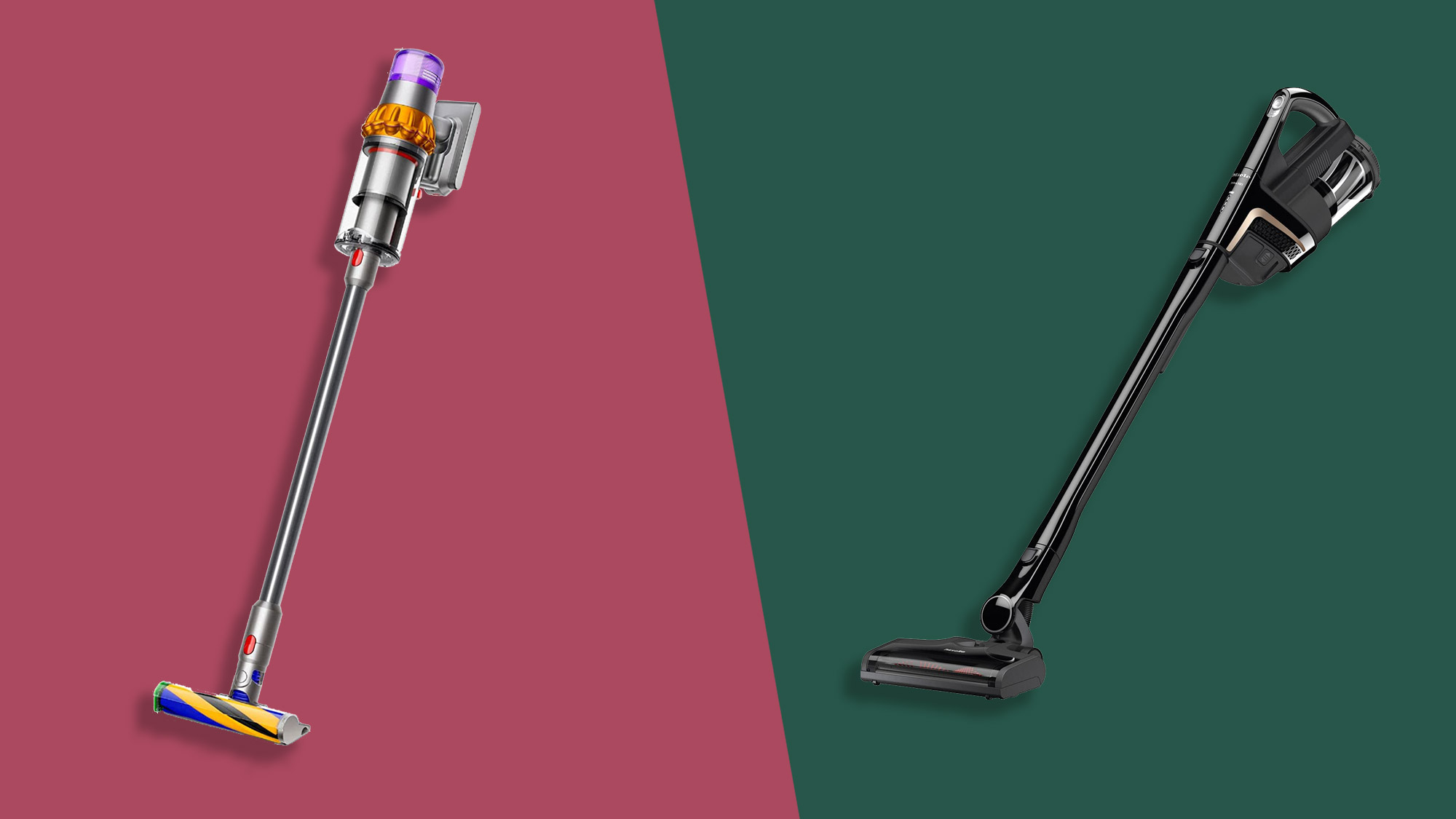
Dyson is a strong option for homes where convenience matters. Its cordless stick vacuums are easy to grab for crumbs, stairs, car interiors, and small messes. Many models convert into handheld vacuums and include wall-mounted charging docks.
Current Dyson families in the US include models such as the V8, V12 Detect Slim, V15 Detect, Gen5detect, and Outsize. Features vary by model, so do not assume that every Dyson has the same brush roll, battery, dust sensor, or filtration system.
Where Dyson performs well
- Quick cleaning: Cordless operation removes the need to find an outlet.
- Pet hair: Motorized tools can lift hair from upholstery, stairs, and rugs.
- Small homes: A stick vacuum takes less storage space than a canister.
- Visible dust detection: Some Detect models use a laser or particle sensor to show fine dust on hard floors.
- Versatility: Many models convert to handheld mode.
- Easy reach: A cordless design works well for stairs, ceilings, and tight spaces.
Dyson’s strongest advantage is the low effort between seeing a mess and cleaning it. That can lead to more frequent cleaning, which often matters more than a single deep-cleaning session.
Dyson limitations
A Dyson cordless vacuum still depends on battery capacity. Runtime claims usually vary by power mode and attached tool, so the maximum number on the box may not represent powered-brush cleaning in a high-power setting.
Dyson dust bins also require regular emptying. Emptying a bagless bin can release dust near the trash can, especially when fine debris sticks inside. Washable filters must be cleaned as directed and allowed to dry fully before reuse.
Many Dyson models also have a narrow, high-pitched motor sound. Some users find this more noticeable than the lower sound of a traditional canister vacuum.
Miele Vacuum Cleaners: Strengths and Limits
Miele is a better match for shoppers who want a corded vacuum with a canister design, a long hose, and a broad range of floor tools. In the US, popular Miele lines include the Classic C1, Complete C3, Compact C1, Boost CX1, and Guard series, although model names and included tools can change.
Miele offers both bagged and bagless machines. The bagged canister models are the main reason many buyers compare Miele with premium vacuum brands.
Where Miele performs well
- Deep cleaning: Powered brush heads can work well on wall-to-wall carpet.
- Hard floors: Parquet and soft-bristle tools are designed to reduce scratching.
- Filtration choices: Select systems can use HEPA filters and sealed construction.
- Long cleaning sessions: A corded model does not stop when the battery runs out.
- Dust control: A sealed bag can reduce contact with collected debris.
- Quiet operation: Many Miele models are designed for lower operating noise, though the result varies by setting and tool.
- Tool variety: Miele offers floorheads for hard floors, rugs, carpet, upholstery, and narrow spaces.
A Miele canister can also be easier to guide under furniture. The canister stays on the floor while the hose and wand reach across a room.
Miele limitations
The main trade-off is convenience. You must plug in the vacuum, carry or pull the canister, and store the hose and tools. A canister may feel cumbersome for a quick kitchen cleanup or a staircase.
Bagged Miele vacuums also create a recurring cost. You need compatible bags and filters, and the correct bag type matters. Bagless Miele models avoid bag purchases but require more direct bin and filter care.
Miele performance also depends strongly on the selected floorhead. A basic suction-only head may not clean thick carpet as well as a model with an electric brush. Check the exact US package before buying.

Which Is Better for Carpet?
Miele is usually the stronger choice for large carpeted areas, while Dyson is often easier for quick carpet cleaning.
A Miele canister with an electric powerhead gives you continuous corded power and a full-size cleaning path. This can suit homes with several carpeted rooms, medium- or high-pile carpet, and owners who prefer a traditional deep-cleaning routine.
Dyson works well for area rugs, stairs, and spot cleaning. Some Dyson models adjust suction or brush behavior based on floor conditions. However, cordless runtime and dust-bin size can limit long cleaning sessions.
Before choosing, check these details:
- Is the carpet low pile, medium pile, or plush?
- Does the vacuum include a powered brush head?
- Can the brush roll be turned off for delicate rugs?
- Does the vacuum have a height or suction adjustment?
- Will the battery last long enough for the whole floor?
For thick carpet, do not choose by brand alone. The included floorhead and the vacuum’s ability to move across the carpet matter more.
Which Is Better for Hardwood and Other Hard Floors?
Both brands can clean hard floors well, but Miele often offers more specialized floor tools, while select Dyson models offer excellent dust visibility.
Dyson Detect models can make fine dust easier to see on hard floors. That feature may help you slow down and clean areas that look clean at first glance. Some Dyson models also use a soft roller head designed for hard floors.
Miele offers tools such as parquet floorheads and soft brushes on selected models. These tools can glide across sealed wood, tile, laminate, and other hard surfaces. Use the tool made for your floor type, and avoid a rotating brush that could scatter debris or mark a delicate surface.
- Use a soft floorhead when the manufacturer recommends it.
- Turn off a rotating brush if your floorhead allows that setting.
- Pick up large grit quickly because sand and small stones can scratch finishes.
- Follow the flooring maker’s care instructions for moisture and cleaning products.
Neither vacuum should be used to collect wet spills unless the model is specifically designed for liquid pickup. Standard Dyson and Miele household vacuums are dry vacuums.

Which Is Better for Pet Hair?
Dyson is usually more convenient for pet hair on furniture, stairs, and small areas. Miele can be better for whole-home carpet cleaning when paired with a powered brush.
Dyson offers tools designed for pet hair, including motorized heads on many models. A cordless handheld mode also makes it easier to clean sofas, pet beds, car seats, and stairs.
Miele’s advantage is sustained cleaning through a corded power source. A bagged canister with an electric brush can collect pet hair from several carpeted rooms without a battery break. Miele also sells pet-focused tools in some product packages, but the included accessories vary.
Pet owners should look for:
- A tangle-resistant brush roll or a tool that is easy to clear
- A powered floorhead for carpet
- A mini motorized tool for upholstery
- A sealed filtration system
- A dust bin or bag large enough for frequent hair pickup
- Replacement brush rolls and filters that are easy to obtain
No vacuum removes every strand in one pass. Long hair can wrap around a brush roll, so inspect and clean the roller as part of normal care.

Which Is Better for Allergies?
Miele may have an advantage for allergy-focused cleaning when you choose a sealed, bagged model with the appropriate HEPA filter. Dyson can also be a good option, but filtration is model-specific.
A vacuum’s allergy performance depends on more than the word “HEPA.” The complete system matters: dust containment, seals, filter quality, exhaust design, and how you empty the machine.
Miele offers models with sealed filtration and HEPA filters, but not every Miele vacuum includes the same filter. Dyson states that many of its machines use whole-machine filtration, but the exact claim and filter setup vary by model.
For a home with asthma or dust sensitivity:
- Confirm the exact filter included with the US model.
- Check whether the system is sealed.
- Replace filters at the interval stated in the manual.
- Empty bagless bins outdoors if possible.
- Consider a bagged model if dust exposure during emptying is a concern.
- Do not run a vacuum with a missing, wet, or damaged filter.
A vacuum can reduce dust on floors, but it does not replace other measures such as ventilation, humidity control, bedding care, or professional advice for persistent symptoms.

Dyson vs Miele: Cordless Convenience or Corded Power?
The biggest buying decision is often the power system.
Choose cordless Dyson when you want:
- Fast daily cleaning
- Easy stair and car cleaning
- Minimal setup
- Compact storage
- A lightweight machine for small messes
- No cord to move between rooms
Choose corded Miele when you want:
- Long cleaning sessions
- A large home with many carpeted rooms
- No battery charging cycle
- A full-size canister and floorhead
- A bagged dust system
- More control through interchangeable tools
A cordless vacuum is not automatically weaker, and a corded vacuum is not automatically better. They simply support different cleaning habits. A cordless model may be used more often, while a corded canister may be used for a slower, deeper weekly clean.
Some households use both: a cordless Dyson for daily spills and a Miele canister for scheduled whole-home cleaning. That costs more, but it can make sense when convenience and deep cleaning are separate needs.

Maintenance and Running Costs
Dyson usually requires more frequent bin and filter care, while Miele shifts more of the maintenance to bags and replacement filters.
Dyson maintenance
Typical care may include:
- Emptying the dust bin before it becomes overfilled
- Removing hair from the brush roll
- Washing washable filters as directed
- Drying filters completely before reinstalling them
- Charging the battery according to the manual
- Replacing the battery or filters when required
Do not wash a Dyson component unless the manual identifies it as washable. Water inside the motor or electronic parts can cause damage.
Miele maintenance
Typical care may include:
- Replacing the dust bag when the indicator shows it is full
- Replacing the exhaust and motor-protection filters
- Clearing hair from floorheads
- Checking the hose and wand for blockages
- Using the correct bag and filter for the model
A bagged vacuum can be cleaner to empty, but bags and filters create ongoing costs. A Dyson avoids disposable bags, but battery replacement can become a major expense after years of use.
For either brand, check the current warranty terms, authorized repair options, replacement-part availability, and model-specific manual before purchase. These details can matter more than a small difference in advertised suction.

Dyson vs Miele: Which One Should You Buy?
Use this decision guide:
| Your situation | Better starting point |
|---|---|
| Small apartment with mostly hard floors | Dyson cordless or Miele Compact C1 |
| Large home with wall-to-wall carpet | Miele canister with powered head |
| Pets on furniture and stairs | Dyson with a motorized handheld tool |
| Allergy concerns and dislike of dust bins | Bagged Miele with suitable filtration |
| Need a vacuum for quick daily messes | Dyson cordless |
| Long cleaning sessions without charging | Corded Miele |
| Limited storage space | Dyson stick |
| Concern about scratching hard floors | Either brand with the correct soft floor tool |
| Want one machine for whole-home cleaning | Compare exact Miele powerhead and Dyson runtime |
| Prefer low recurring consumable costs | Dyson may avoid bags, but battery costs still matter |
Buy Dyson if convenience comes first
Dyson is the better match when you value cordless access, compact storage, stairs, pet tools, and quick cleanups. Choose the model by floor type and runtime, not just by the newest name.
Buy Miele if deep cleaning and dust containment come first
Miele is the better match when you want a corded canister, a bagged system, strong carpet performance, and specialized floor tools. Confirm whether the selected model includes a powered brush and HEPA filter if those features matter to you.
Consider another brand if price is the main concern
Dyson and Miele are premium brands. A less expensive vacuum may meet your needs if you have a small space, low-pile rugs, limited pet hair, or modest cleaning demands. A higher price does not guarantee a better result on every floor.
Common Buying Mistakes
Comparing the brands instead of the exact models
A Dyson V8 and a Dyson Gen5detect do not offer the same battery, tools, dust capacity, or filtration. The same applies to a basic Miele canister and a premium model with an electric powerhead.
Trusting maximum runtime without checking the mode
Cordless runtime depends on suction level and tool choice. Read the runtime conditions before deciding whether one battery is enough.
Choosing a carpet vacuum without a powered head
Suction-only tools may be fine for hard floors and low-pile rugs. They are often a poor match for thick carpet and heavy pet hair.
Ignoring storage
A canister needs room for the hose, wand, and attachments. A stick vacuum needs a safe place to stand or charge.
Treating HEPA as the whole allergy answer
A filter label does not describe the complete dust path. Look for the exact model’s filtration details and instructions for emptying or bag replacement.
Forgetting repair and parts
Batteries, filters, bags, brush rolls, and hoses eventually need replacement. Check that these parts are available in the United States before buying.

Frequently Asked Questions
Is Dyson more powerful than Miele?
There is no fair brand-wide answer. Suction and cleaning results depend on the exact model, floorhead, floor type, airflow path, and cleaning mode. A corded Miele with a powered brush may be better for deep carpet cleaning, while a Dyson may perform better for fast hard-floor pickup or targeted pet-hair cleaning.
Is Miele worth the money?
Miele can be worth the cost if you want a well-equipped canister, specialized floor tools, bagged dust collection, and long cleaning sessions. It may not be worth it if you mainly need a small cordless vacuum for crumbs and quick daily jobs.
Which vacuum is quieter, Dyson or Miele?
Miele canister models are often perceived as quieter, but noise varies by model, power setting, floorhead, and surface. Dyson cordless motors may produce a sharper sound even when the measured volume is not dramatically higher.
Does Dyson or Miele last longer?
Neither brand guarantees a specific service life for every model. Longevity depends on use, maintenance, battery condition, blockages, replacement parts, and repair support. A corded Miele avoids battery aging, while a Dyson may need a battery replacement during its life.
Can Dyson and Miele vacuums replace a broom?
They can collect dry dust, crumbs, hair, and loose debris more thoroughly than a broom in many situations. They cannot replace a mop for wet cleaning, and they should not be used for liquids unless the model is specifically rated for wet pickup.
Final Verdict
Choose Dyson for cordless convenience, compact storage, stairs, furniture, and quick pet-hair cleanup. Choose Miele for corded power, carpeted homes, specialized floor tools, bagged dust collection, and longer cleaning sessions.
For most buyers, the deciding question is simple: Do you want the vacuum that is easiest to grab, or the vacuum that is best suited to a full, methodical clean? Match that answer to your floors, pets, storage space, and maintenance preference, then compare the exact US model and included tools before purchasing.