Introduction
If you work out at home, in a U.S. gym, or with a personal trainer, a stomach vacuum can help you practice deep core control. The exercise uses a gentle inward pull of the abdominal wall while you keep good posture and continue calm breathing.
To do a basic stomach vacuum, exhale, draw your belly button gently toward your spine, hold the contraction for 5 to 10 seconds, then relax. Start with 3 to 5 repetitions. The goal is control, not a flat stomach, rapid weight loss, or a painful squeeze.

What Is a Stomach Vacuum?
A stomach vacuum is an abdominal drawing-in exercise. It trains you to pull the lower belly inward by using the deep abdominal muscles, especially the transverse abdominis.
The transverse abdominis wraps around your midsection like a wide belt. It helps support the spine and control movement. The exercise also uses the diaphragm, pelvic floor, and other core muscles as part of normal trunk control.
A stomach vacuum is not the same as sucking in your stomach all day. It is a short, controlled drill. You should be able to release the contraction with ease.
What stomach vacuums can and cannot do
Stomach vacuums may help you:
- Improve awareness of your deep core muscles
- Practice abdominal bracing and control
- Support better posture during some movements
- Add a low-impact core exercise to a workout
- Learn how to control your abdominal wall
They cannot:
- Burn fat from only your stomach
- Replace strength training or aerobic exercise
- Guarantee visible abs
- Remove visceral fat
- Repair a hernia or abdominal separation
- Make your waist smaller in a permanent way on their own
A smaller waist depends mainly on body fat, muscle size, bone structure, posture, and genetics. A vacuum may change how you hold your abdomen for a short time, but it does not remove fat.

How to Do a Stomach Vacuum Correctly
The standing version is easy to practice, but beginners often learn the movement more clearly while lying down. Use the position that lets you breathe and relax your neck.
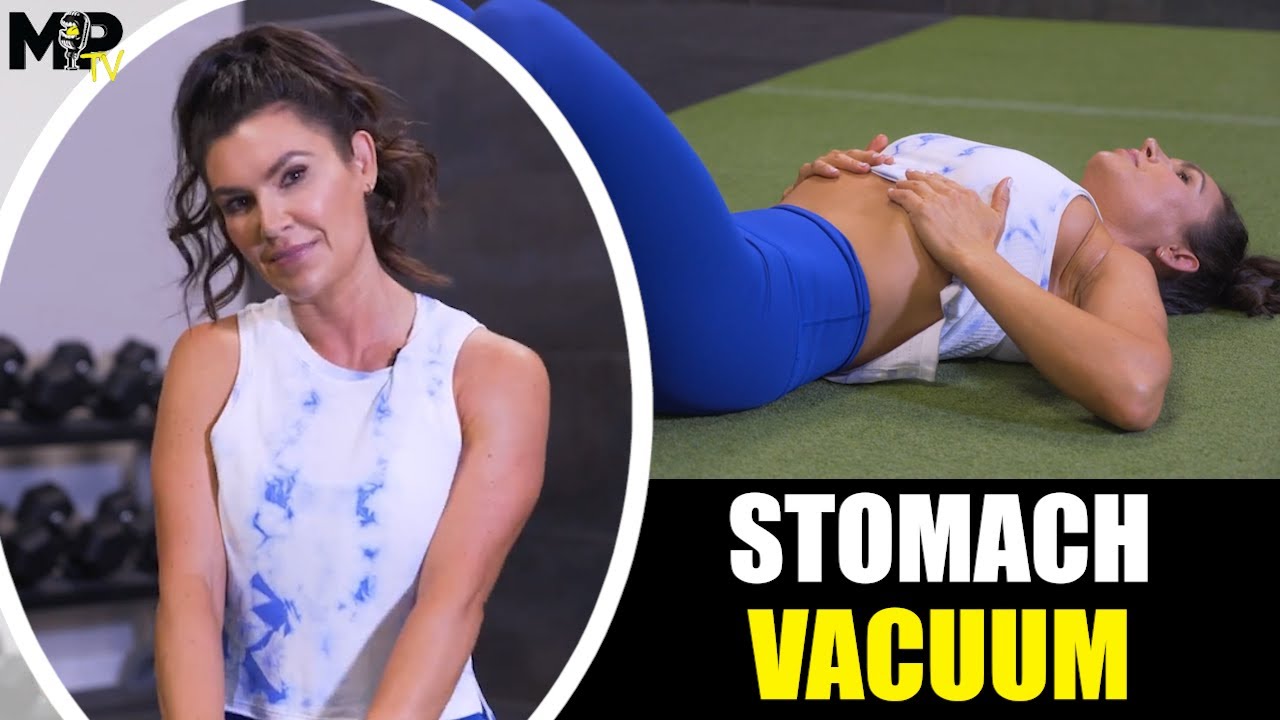
Beginner method: lying down
- Lie on your back on a firm but comfortable surface.
- Bend your knees and place your feet flat on the floor.
- Keep your arms by your sides.
- Let your lower back rest in a neutral position. Do not force it flat.
- Take a slow breath in through your nose.
- Exhale gently through your mouth.
- As your lungs empty, draw your lower abdomen inward and slightly upward.
- Keep your shoulders, jaw, and neck relaxed.
- Hold the gentle contraction for 5 to 10 seconds.
- Breathe normally if you can. Then release the contraction.
- Rest for 15 to 30 seconds.
- Repeat 3 to 5 times.
Think of your belly wall moving inward, not your ribs collapsing. The effort should feel moderate. Use about 30% to 50% of your maximum effort at first.
Standing method
Once the lying version feels easy, try it while standing.
- Stand with your feet about hip-width apart.
- Keep your knees soft rather than locked.
- Lengthen your spine without lifting your chest too high.
- Relax your shoulders.
- Inhale normally.
- Exhale slowly.
- Pull the area below your navel inward.
- Hold for 5 to 10 seconds.
- Release fully before the next repetition.
You can place one hand above your navel and one hand below it. The lower hand should move inward without a strong lift of the chest.
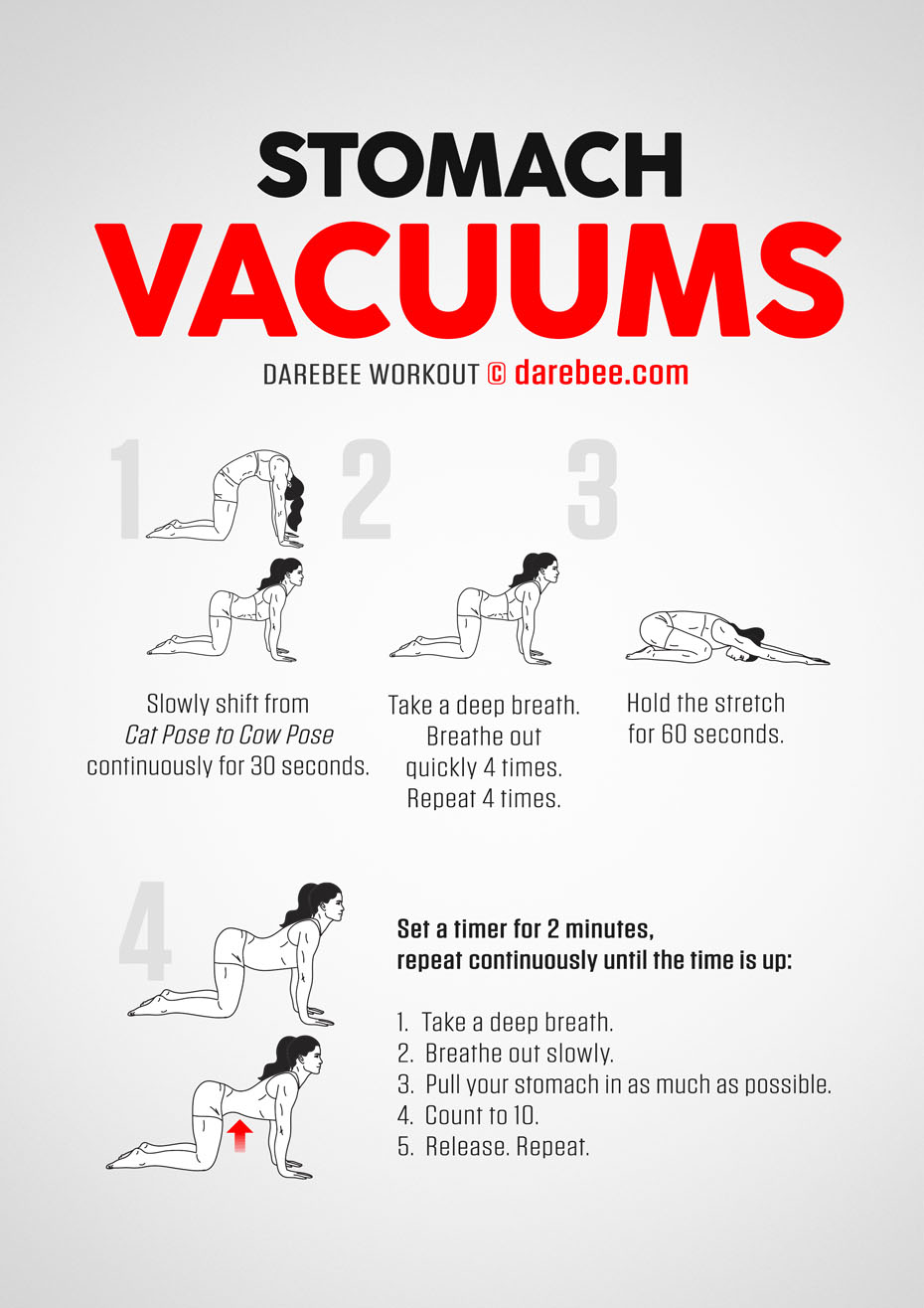
Hands-and-knees method
this position can make the abdominal wall easier to feel.
- Place your hands below your shoulders.
- Place your knees below your hips.
- Keep your back in a comfortable neutral position.
- Let your abdomen relax as you inhale.
- Exhale and gently draw the lower belly upward.
- Hold for 5 to 10 seconds.
- Relax and repeat 3 to 5 times.
Do not let your lower back sag or round sharply. The movement should stay small and controlled.

How to Breathe During a Stomach Vacuum
Keep breathing during most stomach-vacuum practice. Do not force a long breath hold to make the exercise harder.
A simple breathing pattern is:
- Inhale gently.
- Exhale slowly.
- Draw the abdomen inward near the end of the exhale.
- Take small, calm breaths while holding the position.
- Relax before you feel short of breath.
Some bodybuilding routines use an advanced version that includes a longer breath hold and rib expansion. This is not needed for beginners. It may also be a poor choice for people with certain heart, lung, blood pressure, pregnancy, or pelvic-floor concerns.
Stop if you feel dizzy, light-headed, chest pain, unusual pressure, or shortness of breath. Return to normal breathing before trying again.
How Often Should You Do Stomach Vacuums?
Start with 3 to 5 repetitions, three or four days per week. Each repetition can last 5 to 10 seconds.
After one or two weeks, you may increase the hold to 10 to 20 seconds if you can keep good form and breathe calmly. You can also add one or two repetitions.
A simple progression looks like this:
| Stage | Position | Hold | Repetitions |
|---|---|---|---|
| Beginner | Lying down | 5–10 seconds | 3–5 |
| Basic | Standing | 5–15 seconds | 3–5 |
| Progressing | Hands and knees | 10–20 seconds | 4–6 |
| Advanced control | Standing or during light movement | 10–20 seconds | 4–6 |
These are practical starting points, not medical rules. Quality matters more than longer holds.
You can do stomach vacuums before a workout, after a warm-up, or during a separate core session. Avoid practicing right after a large meal. A light stomach is usually more comfortable.

How to Add Stomach Vacuums to a Core Workout
A stomach vacuum works best as a control drill. It should support, not replace, exercises that train the core to resist movement.
You can pair it with:
- Dead bugs
- Bird dogs
- Side planks
- Front planks
- Glute bridges
- Resistance-band presses
- Farmer carries
For example:
- Do 3 stomach-vacuum repetitions.
- Perform 8 to 10 dead bugs per side.
- Rest for 30 to 60 seconds.
- Repeat for 2 or 3 rounds.
Keep the vacuum gentle before heavy lifts. Do not use it as a substitute for learning proper bracing during squats, deadlifts, presses, or carries.
During strength training, bracing usually means expanding and stiffening the trunk. A stomach vacuum uses a more inward abdominal draw. These skills overlap, but they are not identical.

Signs You Are Doing a Stomach Vacuum Correctly
You may be using the right technique when:
- The lower abdomen moves inward
- Your ribs and shoulders stay mostly still
- Your neck and jaw remain relaxed
- You can breathe without panic
- You feel a mild deep contraction
- You can release the contraction smoothly
- You do not feel sharp pain
Use a mirror or place your hands on your abdomen. Your stomach should not jerk inward with a sudden, forceful pull.
You may feel the muscles under your belly button working. You should not feel strong pain in your back, hips, ribs, or pelvic area.

Common Stomach Vacuum Mistakes
Pulling the stomach in too hard
A strong pull can make you tense your ribs, neck, and hip muscles. Start with a mild contraction. Increase effort only when you can keep your breathing steady.
Holding your breath
Breath holding can raise internal pressure and may make you dizzy. Exhale first, then use calm breathing during the hold.
Lifting the chest
Some people lift the chest to make the belly look smaller. This changes your posture rather than improving abdominal control. Keep your ribs stacked over your pelvis.
Rounding or arching the back
A large back movement can hide poor abdominal control. Use a neutral, comfortable spine.
Practicing after a large meal
This can cause pressure, reflux, or nausea. Wait until digestion feels comfortable.
Expecting fat loss
A vacuum does not create spot reduction. Fat loss requires an overall energy deficit, usually supported by nutrition, daily movement, and regular exercise.
Doing advanced holds too soon
Long holds are not automatically better. Stop the set when your form or breathing breaks down.

Is the Stomach Vacuum Safe?
For many healthy adults, a gentle stomach vacuum is a low-impact exercise. However, it is not suitable for every person or every stage of recovery.
Speak with a qualified health professional before trying it if you have:
- A diagnosed hernia
- Recent abdominal or pelvic surgery
- Pregnancy or a recent birth
- Significant diastasis recti concerns
- Pelvic-floor pain, pressure, or leakage
- Uncontrolled high blood pressure
- Heart or lung disease
- Frequent dizziness or fainting
- Severe reflux or abdominal pain
Do not use a stomach vacuum to treat a medical condition. If you notice a bulge, sharp pain, bleeding, vomiting, or worsening symptoms, stop and seek medical care.
People who are pregnant should not use breath-holding vacuum drills without guidance from their obstetric clinician or pelvic-floor physical therapist. Postpartum exercise should also match the person’s recovery stage.
What to Do If You Cannot Feel the Exercise
If you cannot feel the contraction, begin in the lying position. Place one hand on your upper chest and the other below your navel.
Breathe so the upper chest stays fairly quiet while the lower ribs and abdomen move naturally. Then exhale and gently draw the area below the navel inward.
If your whole body tightens, reduce the effort. You can also try a simpler core drill, such as a dead bug or heel slide. These exercises may make it easier to learn trunk control.
If the movement causes pain, pressure, bulging, or pelvic-floor symptoms, stop. A physical therapist can assess your breathing, abdominal wall, posture, and movement pattern.

Stomach Vacuums vs. Abdominal Bracing
Stomach vacuums and abdominal bracing are related but different.
| Feature | Stomach vacuum | Abdominal brace |
|---|---|---|
| Main action | Draw the abdomen inward | Tighten the trunk in all directions |
| Common use | Motor control and awareness | Support during movement and lifting |
| Breathing | Calm breathing is encouraged | Breathing depends on the task |
| Effort | Usually light to moderate | Moderate to high when lifting |
| Best starting position | Lying or standing | Lying, standing, or during exercise |
A vacuum teaches you to sense the deep abdominal wall. A brace helps you create trunk stiffness while your arms or legs move.
Neither exercise is automatically better. The useful choice depends on your goal. Use a vacuum for control practice and a brace for loaded movement.

Key Takeaways
- A stomach vacuum is a controlled inward draw of the abdominal wall.
- Start lying down with 3 to 5 repetitions of 5 to 10 seconds.
- Exhale gently and keep your neck, shoulders, and jaw relaxed.
- Do not rely on long breath holds.
- Stomach vacuums do not burn belly fat or replace full-body exercise.
- Stop for pain, dizziness, unusual pressure, or breathing trouble.
- Ask a health professional for guidance after surgery, during pregnancy, or with hernia or pelvic-floor symptoms.
Frequently Asked Questions
Do stomach vacuums make your waist smaller?
They may improve posture and abdominal control for a short time. They do not permanently reduce waist size or remove belly fat. A smaller waist usually requires changes in overall body fat, muscle, posture, and individual body structure.
Can I do stomach vacuums every day?
Some healthy adults can practice gentle repetitions daily if they have no pain and can breathe normally. You do not need to do them every day to improve control. Three or four sessions per week are a reasonable starting point.
Should I do stomach vacuums on an empty stomach?
You do not need to fast. However, the exercise may feel better before eating or after a meal has settled. Avoid doing it right after a large meal.
Can stomach vacuums help with diastasis recti?
They may be part of a broader rehabilitation plan, but they are not a guaranteed treatment. If you have abdominal separation, doming, pain, or pressure, work with a physical therapist who treats the abdominal wall and pelvic floor.
Can beginners do stomach vacuums?
Yes. Begin lying down, use mild effort, and focus on breathing. Move to standing only after you can perform the exercise without neck tension, back movement, or dizziness.
Conclusion
To do a stomach vacuum, lie down or stand tall, exhale, gently draw your lower abdomen inward, hold for 5 to 10 seconds, and relax. Start with a few controlled repetitions several times per week.
Treat the movement as a deep-core control drill, not a shortcut to fat loss. If you have a medical condition, recent surgery, pregnancy, or pelvic-floor symptoms, get personal guidance before adding it to your routine.
Your next step is simple: try three gentle repetitions today, stop well before discomfort, and assess whether you can breathe and relax throughout each hold.