
Vacuum-sealed meat is bad when it shows clear spoilage signs, has been stored too warm or too long, or comes from a package that is leaking, swollen, or damaged. Do not taste meat to test it. When safety is uncertain, throw it away.
For meat stored in a U.S. refrigerator, keep the temperature at 40°F (4°C) or below. Vacuum sealing slows air exposure, but it does not make raw meat shelf-stable or stop all harmful bacteria. The safest check combines the package condition, storage time and temperature, appearance, smell after opening, and texture.
Introduction
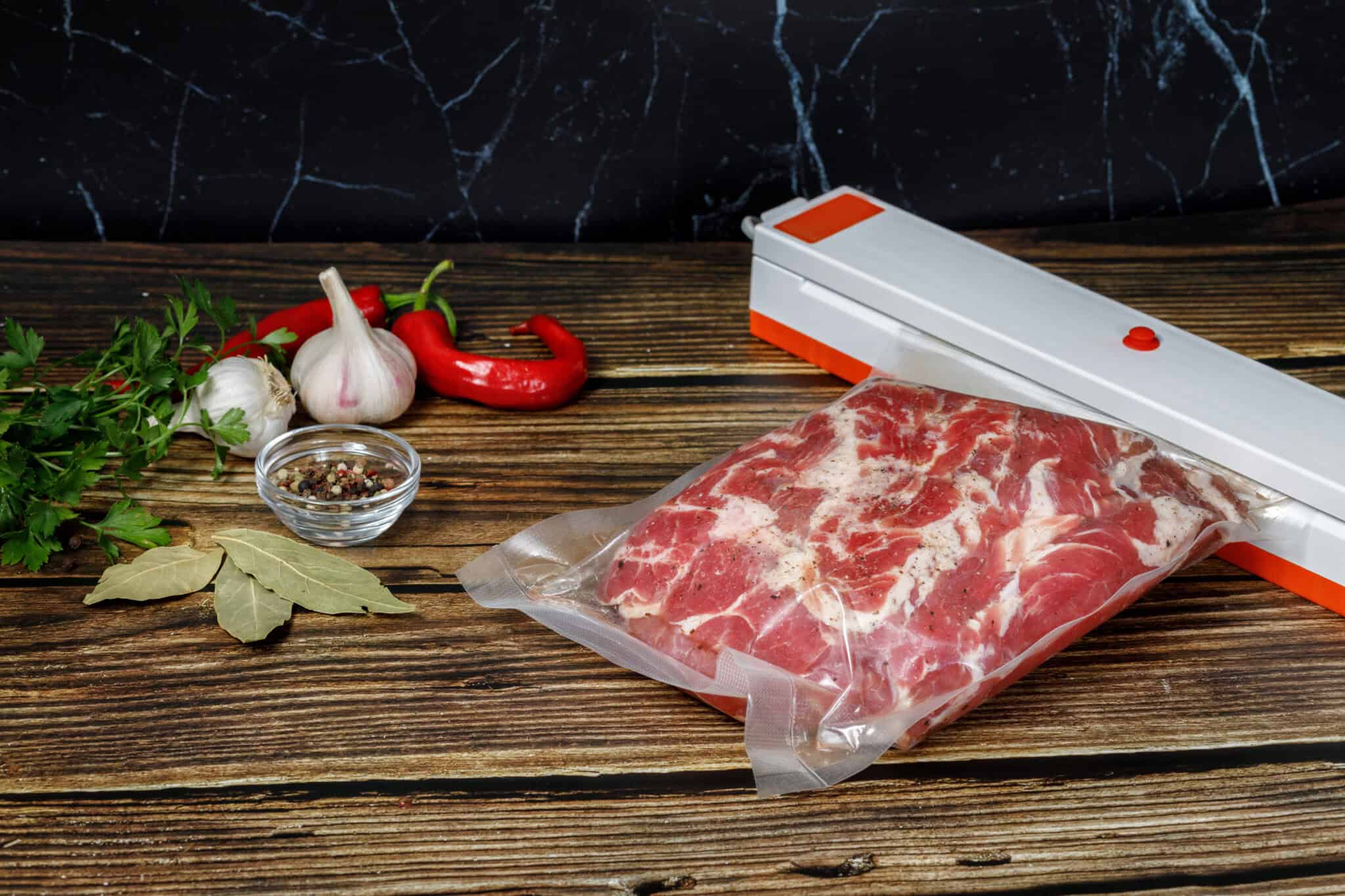
In American kitchens, vacuum-sealed beef, pork, poultry, seafood, and leftovers are common ways to reduce freezer burn and save space. The sealed bag can protect food from air, but it cannot replace a refrigerator or freezer.
This guide explains how to tell whether vacuum-sealed meat is spoiled, how long it can usually stay refrigerated or frozen, and when a strange smell is normal versus unsafe. It also covers a key warning: some dangerous bacteria can grow without producing an obvious odor.
Quick answer: signs vacuum-sealed meat may be bad
Discard vacuum-sealed meat if you notice one or more of these signs:
- The package is swollen, inflated, leaking, torn, or losing its seal.
- The meat smells strongly sour, rotten, sulfur-like, or otherwise unpleasant after opening.
- The surface feels slimy, sticky, or unusually tacky, not merely moist.
- The meat has unusual mold, green patches, or fuzzy growth.
- It was left above 40°F for more than 2 hours, or above 90°F for more than 1 hour.
- You do not know how long it has been stored or whether it stayed cold.
- The meat was thawed and refrozen after becoming warm.
- The package has been stored in the refrigerator beyond the recommended time.
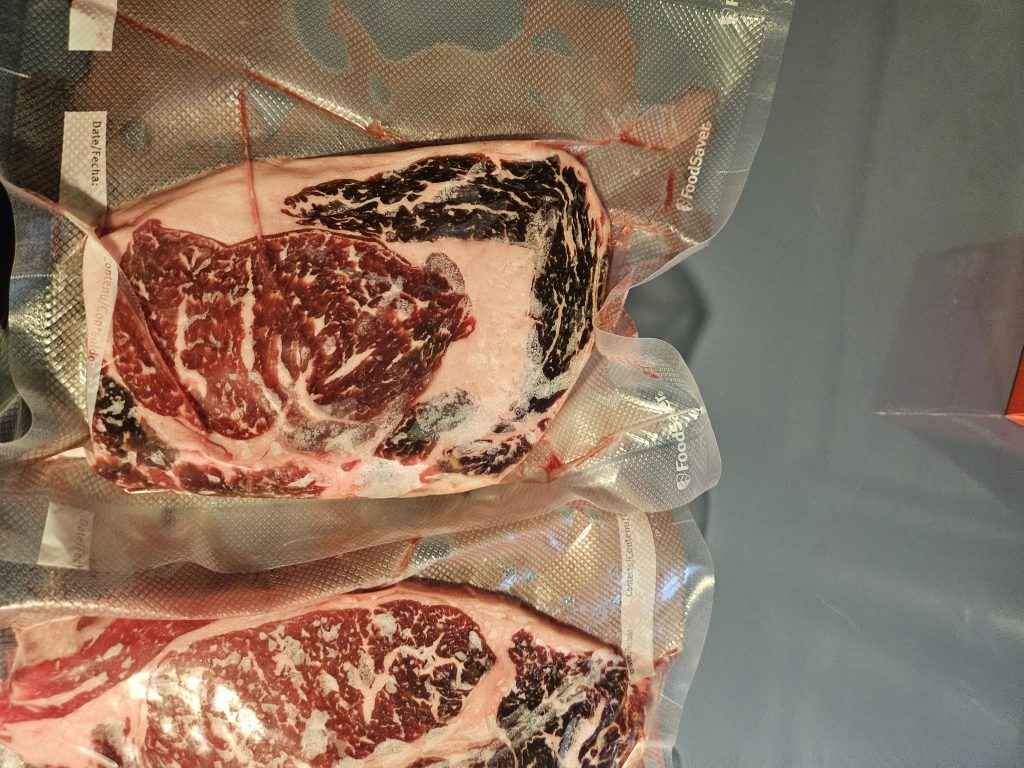
A dark red or purple color alone does not prove that vacuum-sealed meat is spoiled. Meat may look darker inside a low-oxygen package and turn brighter red after exposure to air.

Check the package before opening it
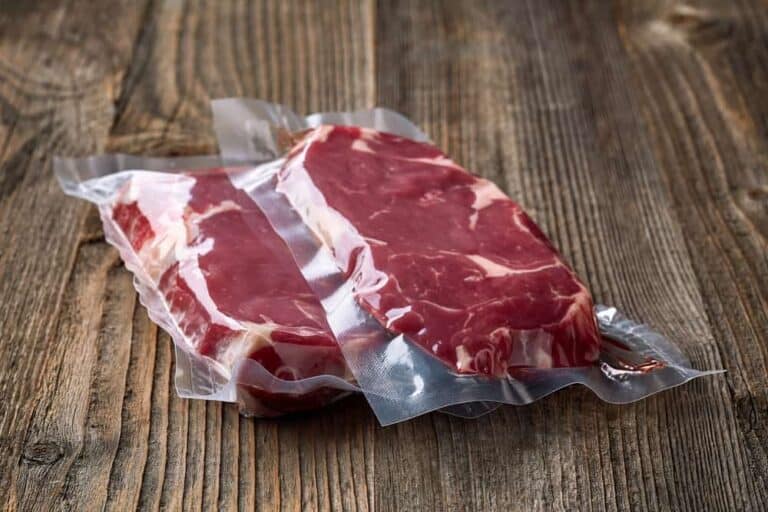
The package is your first safety clue. A good vacuum seal should be tight against the meat, with no major air pocket or liquid leaking from the edges.
Throw it away if the package is:
- Bloated or balloon-like
- Leaking
- Torn or punctured
- Open at a corner or seam
- Covered with unusual fluid outside the bag
- Damaged by freezer ice, sharp bones, or a broken seal
- Warm when it should have been cold
A swollen bag can mean that bacteria produced gas inside the package. It may also result from temperature changes or a poor seal, so swelling does not identify the exact cause. Still, an unexplained bulging package is not worth opening or tasting.
Place a questionable package in a leak-proof bag before disposal. Wash your hands and clean any surface that touched raw meat juice.
Does an air pocket mean the meat is bad?
Not always. A small air pocket may develop when a seal is weak or when the bag pulls away from the meat. Air exposure can reduce quality and cause freezer burn, but it does not automatically mean spoilage.
The risk is higher when the bag is loose, the meat has been warm, or the package is leaking. Treat an unknown storage history as a safety problem rather than trying to judge the meat by appearance alone.
Smell the meat after opening—but do not rely on smell alone
A strong foul odor is a clear reason to discard vacuum-sealed meat. Bad smells may include sour milk, rotten eggs, ammonia, sewage, or a sweet, decaying odor.
Freshly opened vacuum-sealed meat can have a short-lived “confinement” or “vacuum” smell. This may happen because natural meat odors build up in the low-oxygen package. Let the meat sit in a clean dish for a few minutes in a well-ventilated area.
If the smell quickly fades and the meat has been stored safely, the odor may have come from the sealed environment. If the smell stays strong, becomes worse, or comes with slime, discoloration, or a swollen package, discard the meat.
Important: A normal smell does not prove that meat is safe. Some harmful bacteria do not create a noticeable odor, and cooking cannot reliably correct meat that was mishandled.
Never:
- Taste raw meat to check it
- Rinse meat to remove a bad smell
- Cook spoiled meat to “save” it
- Serve it to a pet
- Trust spices, marinades, or smoke to hide spoilage
Check color, texture, and surface changes
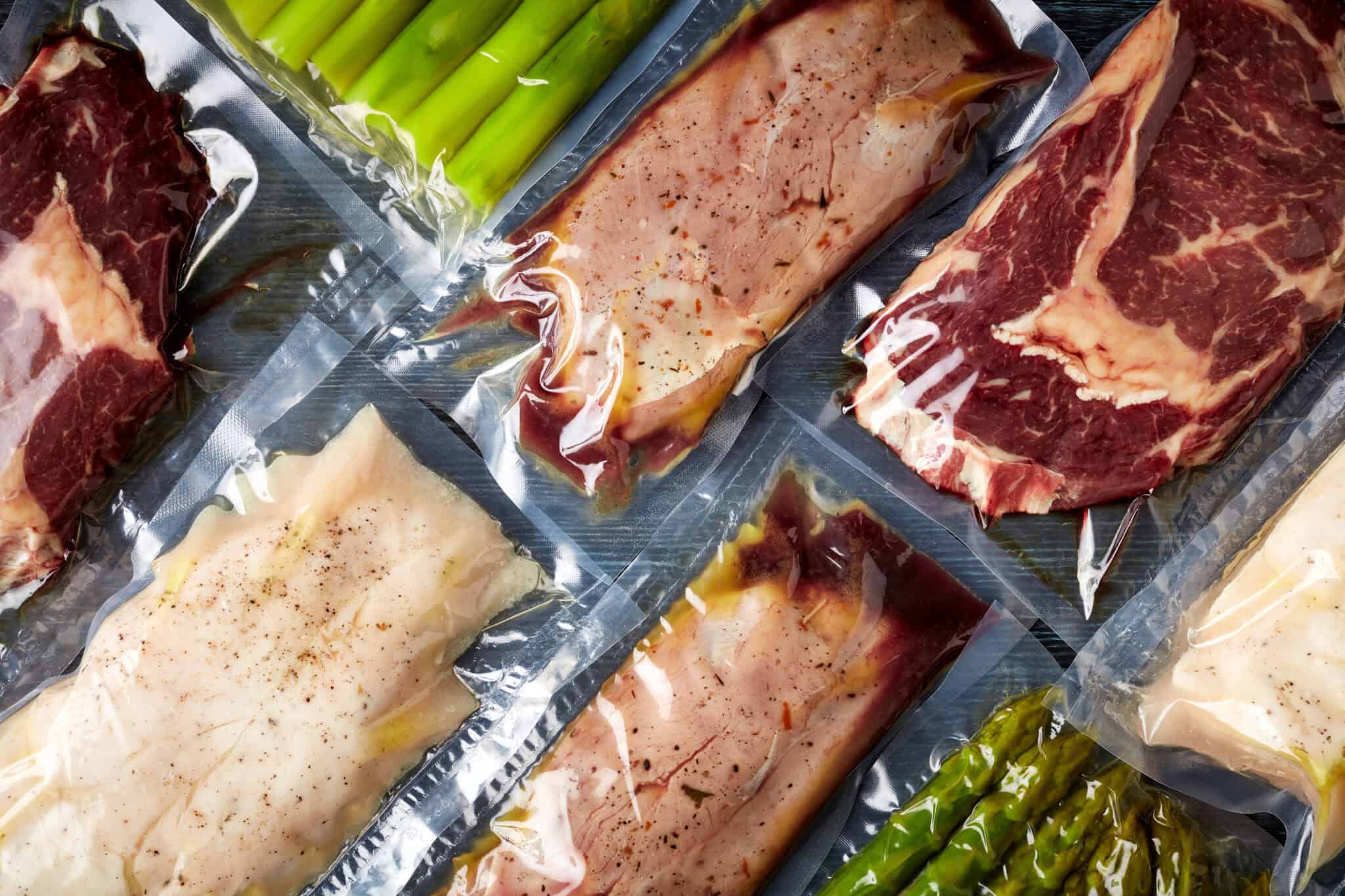
Color changes can be confusing because vacuum packaging removes much of the oxygen around the meat.
Color changes that may be normal
Raw beef may look dark red, purple, or burgundy inside a vacuum package. Once exposed to air, it may become brighter red. This color change is known as blooming and is not, by itself, proof of spoilage.
Frozen meat may also develop:
- Pale gray or brown areas
- White, dry patches
- Frost crystals
- Slight surface discoloration
These signs often point to freezer burn or quality loss. Freezer-burned meat may be dry or tough, but it is not automatically unsafe if it remained continuously frozen.
Color changes that are more concerning
Discard meat with:
- Green or yellow-green patches
- Fuzzy mold
- An unusual rainbow-like film combined with slime or a bad odor
- Broad gray-brown discoloration plus a sour smell
- Any combination of strange color, bad odor, and sticky texture
Color is only one clue. Do not decide that meat is safe or unsafe from color alone.
How should fresh vacuum-sealed meat feel?
Raw meat is naturally moist. A wet surface is not always a problem. Spoiled meat may feel:
- Slimy
- Sticky
- Gummy
- Coated with a film
- Unusually soft or mushy
Wash your hands after touching raw meat. Do not wash the meat itself. The U.S. Department of Agriculture warns that rinsing raw meat can spread bacteria through splashes around the sink.

Use storage time and temperature to make the decision
Time and temperature are often more reliable than appearance. Keep a refrigerator at 40°F or below and a freezer at 0°F or below.
The table below gives general USDA storage guidance for raw meat and poultry kept in a refrigerator at 40°F or below.
| Meat type | Refrigerator time |
|---|---|
| Beef, pork, lamb, or veal steaks, chops, and roasts | 3–5 days |
| Ground beef, pork, lamb, or veal | 1–2 days |
| Raw chicken or turkey | 1–2 days |
| Fresh variety meats, such as liver or kidneys | 1–2 days |
| Cooked meat and poultry leftovers | 3–4 days |
| Fresh fish and shellfish | Usually 1–2 days |
Vacuum sealing does not safely extend these times unless the meat was packaged and processed under a controlled commercial system with specific instructions. A home vacuum sealer removes air; it does not sterilize the food.
Food kept continuously frozen at 0°F or below remains safe indefinitely, although its quality may decline. Recommended freezer times mainly describe quality, not a strict safety deadline.
If meat was above 40°F for over 2 hours, discard it. In outdoor temperatures above 90°F, use a 1-hour limit. The “danger zone” supports fast bacterial growth, and meat may still look and smell normal after unsafe warming.
What if the vacuum-sealed meat smells bad only when opened?
A brief smell can be normal, especially with beef, lamb, and other red meats sealed without oxygen. Open the package, place the meat on a clean plate, and wait a few minutes.
Use this decision guide:
| What happens after opening? | Safer choice |
|---|---|
| Mild odor fades quickly; meat stayed cold and looks normal | Cook promptly if within the storage limit |
| Strong sour or rotten odor remains | Discard |
| Odor fades, but the meat is slimy or the package was swollen | Discard |
| No odor, but storage time or temperature is unknown | Discard |
| Meat was warm for too long | Discard |
| Meat is frozen with dry white patches but no bad odor | Usually a quality issue; trim after thawing if otherwise properly stored |
Do not leave meat at room temperature for a long “airing out” period. A short check is enough. If the smell raises doubt, the safest choice is disposal.
Vacuum-sealed meat and botulism: an important warning
Vacuum sealing creates a low-oxygen environment. This can slow some forms of spoilage, but low oxygen can allow certain bacteria, including Clostridium botulinum, to grow under the right conditions.
Botulinum toxin may not change the food’s smell, taste, or appearance. That is why a normal-looking vacuum-sealed package is not proof of safety. The risk is especially serious when vacuum-sealed food is:
- Stored too warm
- Kept for an unknown length of time
- Improperly canned or preserved
- Made with a process that was not designed for home storage
- Stored in oil or another low-oxygen environment
Do not open a severely swollen package close to your face. Do not taste questionable food. If someone develops trouble swallowing, blurred or double vision, muscle weakness, drooping eyelids, or breathing problems after eating potentially contaminated food, seek emergency medical help immediately.
For questions about a suspected foodborne illness in the United States, contact a health care professional or Poison Control at 1-800-222-1222. Call 911 for severe symptoms.
How to thaw vacuum-sealed meat safely
Thaw meat in one of three safe ways:
- In the refrigerator: Place the sealed meat on a tray to catch leaks. This is the safest method.
- In cold water: Keep the meat in a leak-proof package and change the water every 30 minutes. Cook it right after thawing.
- In the microwave: Use the defrost setting and cook the meat immediately.
Do not thaw meat on the counter. Do not use warm water.
For some vacuum-sealed fish products, the U.S. Food and Drug Administration advises removing the fish from reduced-oxygen packaging before thawing in the refrigerator, or opening the package before or immediately after thawing under controlled conditions. Follow the package instructions when available.
If vacuum-sealed meat has already thawed in the refrigerator, use the normal refrigerator storage limit. If it thawed on the counter or became warm, discard it when the safe time limit was exceeded.

Can cooking make spoiled vacuum-sealed meat safe?
No. Cooking can kill many live bacteria, but it may not destroy all toxins produced by bacteria during spoilage or improper storage. Heat also cannot reverse the chemical and quality changes that make food unsafe.
Cook meat to a safe internal temperature measured in the thickest part:
- Whole cuts of beef, pork, lamb, and veal: 145°F, followed by a 3-minute rest
- Ground meats: 160°F
- Poultry: 165°F
- Leftovers and casseroles: 165°F
These temperatures apply to meat that was handled and stored safely. They are not a rescue method for spoiled meat.
Use a food thermometer rather than judging doneness by color or juices. Clean the thermometer between foods when needed, and prevent raw meat juice from touching cooked food.
Vacuum-sealed meat safety checklist
Use this short checklist before cooking:
- Check the date and storage history. Do you know when it was sealed and whether it stayed cold?
- Inspect the bag. Reject swelling, leaks, tears, or a failed seal.
- Check the odor briefly. A persistent foul smell means discard.
- Check the surface. Slimy or sticky meat is unsafe to keep.
- Check the color in context. Purple-red beef can be normal; mold or green patches are not.
- Consider the temperature. Meat that became too warm should be discarded.
- Do not taste it. When in doubt, throw it out.
- Clean up safely. Wash hands, utensils, counters, and any area touched by raw meat juices.
The cost of replacing meat is small compared with the possible cost of foodborne illness.

Common mistakes to avoid
Mistake 1: Assuming vacuum-sealed means shelf-stable
Vacuum sealing removes air, but it does not create a sterile product. Keep vacuum-sealed meat refrigerated or frozen.
Mistake 2: Trusting the package date alone
A date printed on the package does not replace temperature control. A package can become unsafe before the date if it was stored too warm. It may also remain safe after a quality date if it stayed frozen, although quality can decline.
Mistake 3: Rinsing meat
Rinsing does not make spoiled meat safe. It can spread bacteria to the sink, counter, and nearby food.
Mistake 4: Eating meat because it “cooks fine”
A normal cooking smell does not prove that meat was safe before cooking. Discard questionable meat instead of trying to hide the problem with sauce or spices.
Mistake 5: Refreezing meat without checking its temperature
Meat that thawed safely in the refrigerator may usually be refrozen, although texture may suffer. Meat that became warm for too long should not be refrozen or eaten.

Frequently asked questions
Is vacuum-sealed meat safe if the bag has air inside?
Not always. A small air pocket may only indicate a weak seal or movement inside the bag. However, if the package is swollen, leaking, warm, or has a persistent bad smell, discard it.
Why is my vacuum-sealed beef purple?
Low oxygen can make beef look dark purple or burgundy. It may turn brighter red after exposure to air. Purple color alone is not a reliable sign of spoilage.
How long does vacuum-sealed meat last in the refrigerator?
For home storage, use standard refrigerator limits unless a validated commercial process gives different instructions. Whole cuts of beef, pork, lamb, and veal generally keep for 3–5 days; ground meat and poultry generally keep for 1–2 days. Keep the refrigerator at 40°F or below.
Does freezer-burned vacuum-sealed meat need to be thrown away?
Not usually, if it remained frozen at 0°F or below. Freezer burn mainly harms quality. Trim dry areas after thawing and discard the meat if it also has a foul odor, slime, mold, or a questionable storage history.
Can you eat vacuum-sealed meat after the use-by date?
Only consider it if the package has stayed at a safe temperature and the meat remains within recommended storage limits. A date cannot make meat safe after poor handling. When the date, temperature, or storage history is unclear, discard it.
Final decision
The safest way to tell if vacuum-sealed meat is bad is to combine package condition, storage temperature, storage time, smell, texture, and visible changes. A persistent foul odor, slime, mold, swollen package, leak, or unsafe temperature history means the meat should go in the trash.
Do not taste-test questionable meat, and do not assume vacuum sealing prevents dangerous bacteria. If the meat stayed cold, the package is intact, the storage time is within the recommended limit, and there are no spoilage signs, cook it promptly to the correct internal temperature.


One Comment