Introduction
The best cordless vacuum for your U.S. home depends less on the highest advertised voltage or longest headline runtime and more on your floors, home size, cleaning habits, pets, allergies, and willingness to maintain the machine. Start by identifying the surfaces you clean most often, then compare real cleaning modes, battery runtime, filtration, dustbin capacity, attachments, repair support, and total cost.
For many American households, a cordless stick vacuum is a convenient primary vacuum for apartments, smaller homes, stairs, kitchens, and everyday messes. However, homes with thick carpeting, large floor areas, heavy shedding, or frequent deep cleaning may still benefit from a corded upright, canister vacuum, or a cordless model with a removable battery and a powered floor head.
This guide explains how to choose a cordless vacuum without relying on misleading specifications or marketing terms.

1. Decide Whether a Cordless Vacuum Is Right for Your Home
A cordless vacuum is most useful when convenience and quick access matter more than unlimited operating time. It removes the need to find an outlet, manage a cord, or carry a heavier full-size vacuum between rooms.
A cordless model may be a good fit if you:
- Live in an apartment, condominium, or smaller home
- Clean up crumbs, tracked-in dirt, and pet hair frequently
- Need to clean stairs, vehicles, furniture, or hard-to-reach areas
- Prefer a lightweight vacuum for daily maintenance
- Want a machine that is easy to store and grab quickly
A corded vacuum may be the better primary cleaner if you:
- Have a large home with extensive carpeting
- Need to vacuum for long periods without recharging
- Regularly clean thick or high-pile carpet
- Want a larger dustbin and fewer interruptions
- Prefer a machine designed for deep cleaning rather than quick cleanup
A practical compromise is to use a cordless vacuum for everyday cleaning and a stronger corded vacuum occasionally for deep carpet maintenance. This approach can reduce the workload on the cordless machine, especially in homes with multiple pets or wall-to-wall carpet.
Common cordless vacuum types
| Type | Best for | Main limitation |
|---|---|---|
| Cordless stick vacuum | Floors, rugs, stairs, routine whole-home cleaning | Smaller dustbin and limited battery runtime |
| 2-in-1 stick vacuum | Floors plus handheld cleaning | Often requires converting or changing tools |
| Cordless handheld vacuum | Cars, furniture, crumbs, small spills | Usually unsuitable as a whole-home vacuum |
| Cordless canister-style vacuum | Users who want a separate hose and floor tool | Less compact and less common than stick models |
| Cordless wet/dry floor cleaner | Sealed hard floors and liquid messes | Usually not intended for rugs or carpet |
Do not assume that a wet/dry floor cleaner replaces a conventional vacuum. Many are designed for hard floors only and may not be suitable for loose debris, carpet, upholstery, or unsealed flooring.

2. Match the Vacuum to Your Floor Types
Floor type is one of the most important factors when choosing a cordless vacuum. A model that performs well on hardwood may not handle thick carpet, delicate rugs, or embedded pet hair equally well.
Hard floors
for hardwood, engineered wood, vinyl, laminate, tile, and other hard surfaces, look for:
- A soft roller or soft-bristle floor head
- Adjustable suction or a gentle cleaning mode
- Rubberized wheels that are less likely to scratch
- A head that seals reasonably well against the floor
- Crevice tools for baseboards and gaps
Some hard-floor models use a soft roller that picks up fine dust and larger debris at the same time. This can be useful in kitchens and dining areas, where crumbs and fine particles commonly appear together.
Check the flooring manufacturer’s care instructions before using a powered brush roll. Excessive moisture, aggressive bristles, or trapped grit can damage certain surfaces.
Low-pile and medium-pile carpet
For common residential carpet, a powered brush roll is usually more useful than suction alone. The brush roll agitates fibers and helps lift dirt that is not loose on the surface.
Look for:
- A motorized floor head
- Brush-roll controls or an automatic floor-sensing mode
- A height or suction adjustment when available
- A head that does not become difficult to push on dense carpet
- A visible brush-roll access area for removing hair and threads
If the vacuum is hard to push on carpet, the problem may be excessive suction, an overly aggressive brush roll, or a head design that forms too tight a seal. A suction adjustment can make the vacuum more usable without necessarily reducing cleaning to an unacceptable level.
High-pile carpet and rugs
Thick carpet creates greater airflow resistance and can be difficult for lightweight cordless vacuums. A compact model may clean surface debris adequately but struggle with embedded dirt or become difficult to move.
For high-pile carpet, prioritize:
- A powerful motorized floor head
- Adjustable suction
- A brush roll designed for carpet
- A head that can move without stalling
- A removable battery if long cleaning sessions are common
For delicate rugs, especially shag, wool, or loosely woven styles, use the manufacturer’s recommended setting. A rotating brush can pull fibers, fringe, or loose threads into the head. If the vacuum lacks a brush-roll-off setting, it may not be appropriate for every rug in your home.
Mixed flooring
Mixed flooring is common in U.S. homes. A versatile vacuum should transition between hard floors and carpet without requiring several complicated adjustments.
Useful features include:
- Automatic floor detection
- Separate hard-floor and carpet modes
- Brush-roll on/off control
- A floor head that does not scatter larger debris
- Controls that are easy to reach while cleaning
Automatic adjustment can be convenient, but it is not proof of superior cleaning. The head still needs to seal, agitate, and move effectively across your specific floors.

3. Understand Battery Runtime Before You Buy
Battery runtime is often presented as a single large number, but that figure may represent the lowest-power mode with a nonmotorized tool. Runtime usually decreases when you use maximum suction, a motorized floor head, or additional features such as a powered brush or illuminated head.
Use this runtime calculation
Estimate usable cleaning time with:
Usable runtime = advertised runtime × the percentage of time spent in the selected mode
For example, if a manufacturer lists 40 minutes of runtime but that figure applies to the lowest mode, and you expect to use a higher setting that lasts about half as long, your practical runtime may be closer to 20 minutes. This is a hypothetical calculation; use the manufacturer’s mode-specific figures when they are available.
Your actual cleaning time is also affected by:
- Floor-head motor use
- Suction setting
- Battery age
- Temperature
- Clogged filters
- Hair wrapped around the brush roll
- Whether the vacuum is used continuously or in short bursts
Choose the battery configuration carefully
A built-in battery keeps the design compact but can make long-term replacement more difficult. A removable battery generally provides more flexibility because you may be able to purchase a replacement or a second battery.
Check:
- Whether the battery is removable
- Whether replacement batteries are sold in the United States
- The replacement battery price
- Whether a second battery can charge separately
- The warranty period for the battery
- Whether the charger is included
- Whether the battery is proprietary or shared with other tools
Do not assume that a battery shared across a manufacturer’s power-tool system will work with its vacuums. Compatibility depends on the exact platform and model.
Battery life and battery runtime are different
Battery runtime refers to how long one charge lasts during cleaning. Battery life refers to how many charge cycles the battery can provide before its capacity declines significantly. The second figure is often not clearly published.
To reduce unnecessary battery wear:
- Avoid storing the vacuum in excessive heat or freezing conditions
- Keep filters clean so the motor does not work harder than necessary
- Follow the manufacturer’s charging and storage instructions
- Do not use a damaged, swollen, or unusually hot battery
- Replace batteries only with approved parts
Lithium-ion batteries contain stored energy. If a battery is damaged, punctured, leaking, swelling, or producing smoke, stop using it and follow the manufacturer’s safety instructions. For disposal, check your local household hazardous-waste or battery-recycling program rather than placing a loose rechargeable battery in household trash.

4. Compare Suction, Airflow, and Cleaning Performance Correctly
A higher number on a product page does not automatically mean a better cordless vacuum. Manufacturers may report suction in different units, at different locations, and under different conditions.
Suction is not the same as whole-floor performance
Suction describes the pressure difference the vacuum can create. Airflow describes how much air moves through the system. Effective floor cleaning depends on both, along with:
- The floor head’s seal
- Brush-roll design
- Debris channel shape
- Filtration
- Motor control
- Ability to maintain airflow as the dustbin fills
- The vacuum’s performance on the actual surface
A vacuum can have strong suction at the inlet but perform less impressively if its floor head scatters debris, clogs easily, or is difficult to move.
Treat “air watts” cautiously
Air watts attempt to combine suction and airflow into one performance measure. However, there is no guarantee that different manufacturers measure or publish the number under identical conditions. Avoid ranking models solely by air watts unless the testing method and measurement point are clearly comparable.
The same caution applies to:
- Maximum suction claims
- Motor wattage
- Pascal ratings
- “Deep-cleaning” labels
- “Turbo” or “boost” mode names
These specifications may help compare models within one product line, but they are not reliable by themselves for comparing every brand.
Look for independent test conditions
When reading a professional review, determine whether it explains:
- The surfaces tested
- The debris used
- The cleaning mode
- Battery condition
- Number of passes
- Whether the test measured pickup by weight or by observation
- How noise was measured
- Whether the dustbin was empty
A documented test is more useful than a vague statement that one vacuum “feels powerful.” Even then, results may not translate perfectly to your floors, debris, or cleaning habits.

5. Choose the Right Filtration for Dust and Allergies
Filtration matters because a vacuum can pick up debris while allowing some fine particles to escape through the exhaust. A well-designed filtration system typically includes a pre-motor filter, a post-motor filter, seals, and a dustbin that limits leakage.
What HEPA means
HEPA is a defined type of high-efficiency filtration. In the United States, the commonly cited HEPA performance standard is the ability to remove at least 99.97% of particles measuring 0.3 microns under specified test conditions. That does not mean every vacuum labeled “HEPA” removes 99.97% of all particles from an entire room during normal use.
The real-world result also depends on:
- Whether the filter is installed correctly
- Whether air bypasses the filter through gaps
- The condition of the seals
- Dustbin-emptying design
- Filter maintenance
- How the vacuum is operated
For allergy-sensitive households, look for clear information about the complete filtration system rather than relying only on the word “HEPA.”
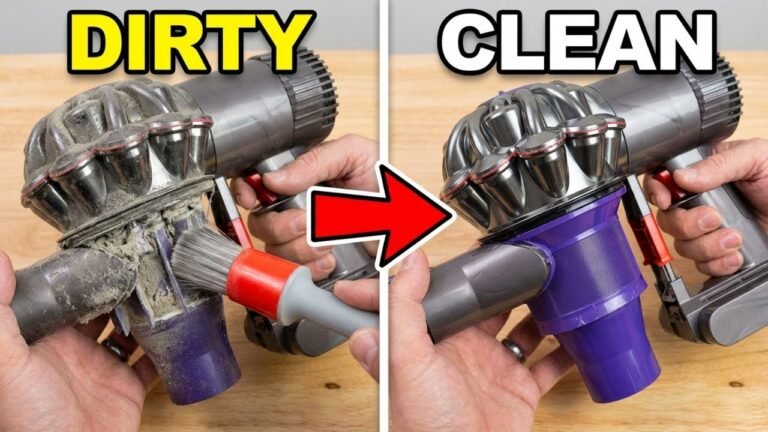
Maintenance is part of filtration performance
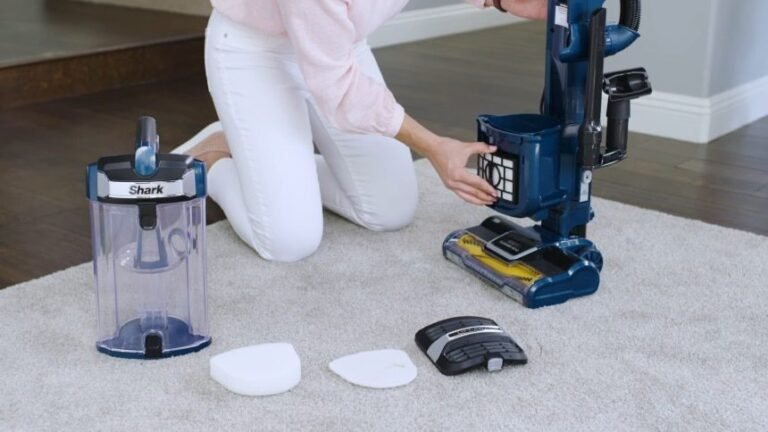
A clogged or washable filter that has not dried completely can restrict airflow and create odors. Follow the model’s instructions for:
- How often to tap, brush, wash, or replace filters
- Which filters can be washed
- How long washable filters must dry
- Whether a spare filter is recommended
- Whether the filter is available as a replacement part
Never reinstall a washable filter while it is damp unless the manual specifically permits it. Moisture can damage the machine and contribute to odor or microbial growth.
If someone in your household has severe asthma or allergies, vacuuming alone does not replace broader indoor-air-quality measures. Consider ventilation, source control, bedding care, and advice from a qualified healthcare professional when symptoms are significant.

6. Evaluate the Dustbin, Brush Roll, and Maintenance
A cordless vacuum is only as useful as its performance after several cleaning sessions. Small dustbins, tangled brush rolls, and difficult-to-clean filters can turn a convenient appliance into a high-maintenance one.
Dustbin capacity
A larger dustbin is helpful for:
- Large homes
- Multiple pets
- Heavy shedding
- Frequent cleaning after renovations or construction dust
- Users who dislike emptying the vacuum during a session
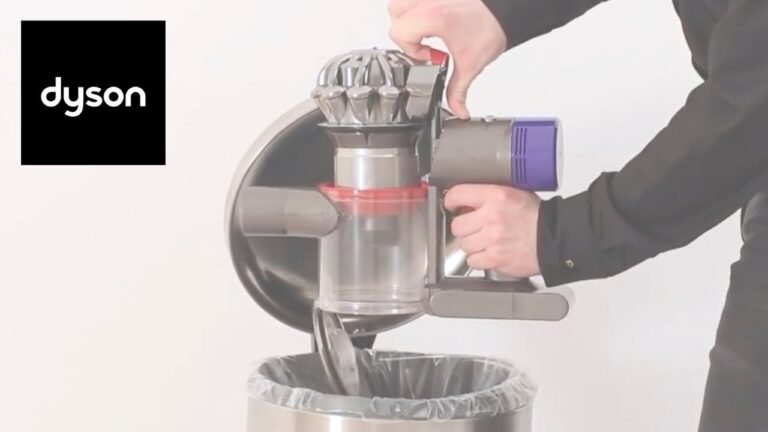
A smaller dustbin may be acceptable for apartments, kitchens, and quick daily cleaning. Empty the bin before debris reaches the fill line if the manufacturer recommends doing so. Overfilling can reduce airflow and make emptying messier.
Emptying design
Compare whether the dustbin:
- Opens from the bottom
- Requires removing the dustbin
- Keeps debris away from your hand
- Releases fine dust into the air
- Can be washed
- Has seals that are easy to inspect
A bottom-release design can be convenient, but very fine dust may remain stuck inside. For allergy-sensitive users, emptying the bin outdoors or wearing appropriate protection may reduce exposure.
Hair management
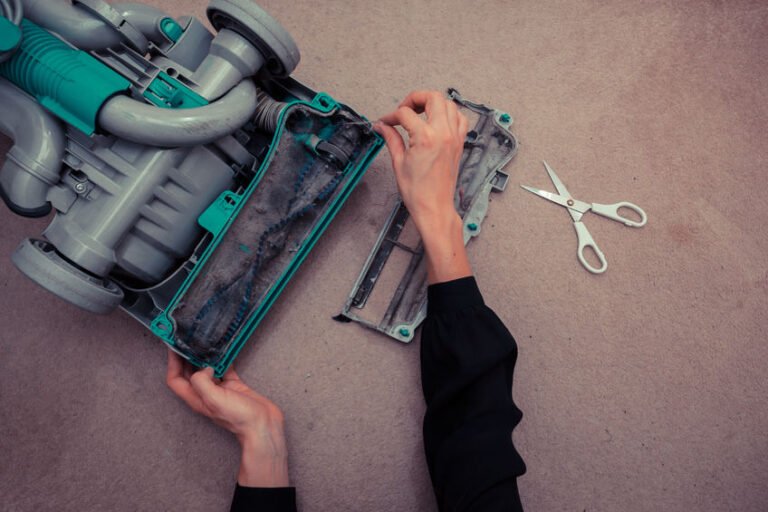
Pet hair and long human hair can wrap around the brush roll and end caps. Look for:
- A brush-roll cleaning tool
- Removable brush roll
- Access to both ends of the brush
- Anti-tangle features
- Clear instructions for removing wrapped hair
“Anti-tangle” does not mean maintenance-free. Inspect the brush roll when you notice reduced pickup, unusual noise, or increased resistance.
Signs that maintenance is needed
Clean or inspect the vacuum when you notice:
- Reduced suction
- Shorter runtime
- A burning smell
- Unusual noise
- Debris left behind
- A brush roll that stops unexpectedly
- Dust escaping from the exhaust
- The vacuum becoming unusually hot
Stop using the vacuum if it produces smoke, a strong electrical odor, sparks, or signs of battery damage.

7. Consider Weight, Balance, Noise, and Ergonomics
The listed product weight does not tell the whole story. A vacuum may be light on a scale but tiring if the motor and dustbin sit far from your hand.
Pay attention to:
- Total weight with the floor head attached
- Handheld weight after conversion
- Where the battery is positioned
- Trigger versus power-button operation
- Whether the power button must be held continuously
- Handle shape
- Wrist angle
- Ease of steering
- Ability to stand or lie flat under furniture
A trigger-style control can save battery when you use the vacuum in short bursts, but holding a trigger for a full cleaning session may tire some users. A lockable power button may be more comfortable, although the specific design differs by model.
Noise ratings are useful only when the measurement method is clear. A vacuum can sound louder on hard floors than on carpet, and maximum mode is usually louder than standard mode. If you live in an apartment or clean while others are sleeping, noise should be part of the decision rather than an afterthought.

8. Select Attachments Based on Real Cleaning Tasks
Attachments add value when they solve a specific problem. More tools do not necessarily mean a better vacuum.
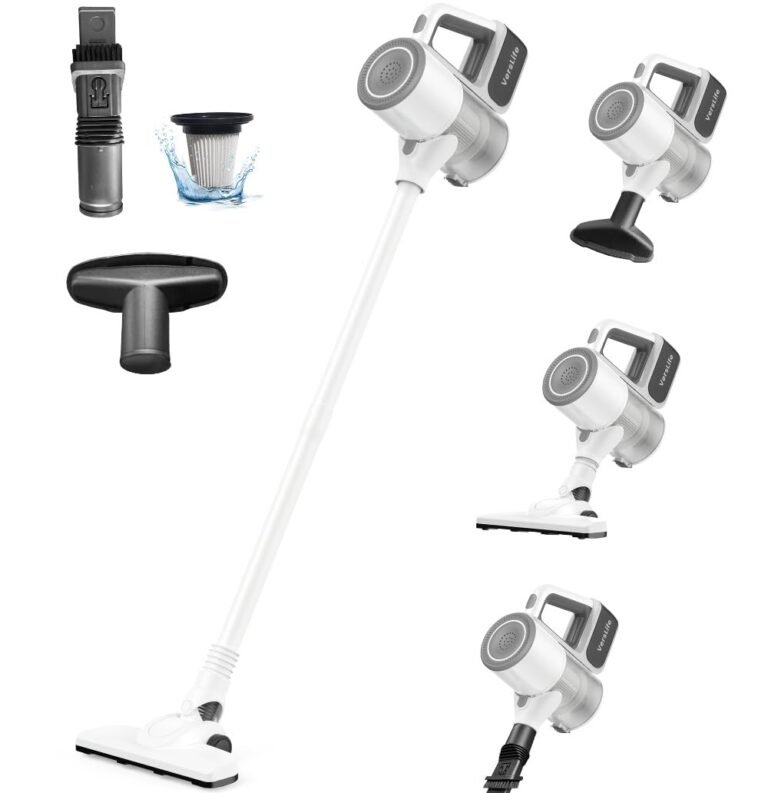
Useful attachments
- Crevice tool: Baseboards, couch gaps, car seats, and narrow spaces
- Combination dusting tool: Shelves, furniture, blinds, and delicate surfaces
- Upholstery tool: Fabric furniture and mattresses
- Mini motorized tool: Stairs, pet beds, upholstery, and vehicle interiors
- Extension wand: High areas and behind furniture
- Soft brush or soft roller: Delicate hard floors and fine surface dust
Check where attachments are stored. Onboard storage reduces the chance of losing tools, while a wall dock may require drilling or may not work in a rental home. Confirm whether the vacuum can charge without being mounted to the dock.
If you need to clean a vehicle, check the vacuum’s handheld reach and whether the hose or wand can reach between seats. A floor-focused stick vacuum may technically convert to handheld mode but still be awkward for detailed car cleaning.

9. Check Storage, Charging, Warranty, and Repair Support
A cordless vacuum should fit your storage space and your long-term maintenance expectations.
Before buying, verify:
- Whether the vacuum stands independently
- Whether it requires wall mounting
- Dock dimensions and clearance
- Charger placement
- Battery removal process
- Filter and brush-roll access
- Availability of replacement batteries
- Availability of filters and brush rolls
- Warranty terms in the United States
- Customer-service contact options
- Whether authorized repair is available
Warranty coverage may exclude normal wear items such as filters, belts, brush rolls, and batteries, or may cover them for a shorter period. Read the actual warranty rather than relying on a retailer’s summary.
A lower purchase price may not remain lower if the model has expensive proprietary batteries or difficult-to-find filters. Estimate total ownership cost:
Estimated ownership cost = purchase price + replacement batteries + filters + consumable parts + likely repair costs
This is not a prediction of what you will spend. It is a comparison framework. Use current U.S. prices and the manufacturer’s parts information before making a final decision.

10. Use This Cordless Vacuum Decision Checklist
Use the following sequence when comparing models:
- List your floor types. Separate hard floors, low-pile carpet, high-pile carpet, and delicate rugs.
- Estimate your cleaning area. Consider the rooms you clean in one session, not the total square footage alone.
- Identify your main debris. Pet hair, fine dust, crumbs, sand, long hair, and litter place different demands on a vacuum.
- Decide whether it will be your primary vacuum. A secondary quick-cleaning vacuum has different requirements from a whole-home cleaner.
- Check practical runtime. Look for runtime with the powered floor head and the mode you expect to use.
- Choose a battery type. Prefer a removable battery if long-term serviceability and extended cleaning matter.
- Inspect the floor head. Confirm brush-roll controls, carpet compatibility, and hard-floor suitability.
- Review filtration. Check whether filters are replaceable, washable, sealed, and readily available.
- Assess maintenance. Look at dustbin emptying, hair removal, filter cleaning, and brush-roll access.
- Confirm comfort. Consider weight, balance, controls, steering, and noise.
- Check accessories. Buy only the tools that match your furniture, stairs, car, and other surfaces.
- Calculate total cost. Include batteries, filters, parts, and warranty limitations.
- Read the manual before purchase when possible. The manual often reveals limits that product pages omit.
A simple priority matrix
| Your situation | Give extra weight to | Acceptable trade-off |
|---|---|---|
| Small apartment with mostly hard floors | Maneuverability, soft floor head, compact storage | Smaller dustbin |
| Home with several pets | Brush-roll design, filtration, dustbin, removable battery | More weight or noise |
| Mostly carpeted home | Powered head, carpet agitation, sustained performance | Larger size |
| Allergy-sensitive household | Sealed filtration, filter availability, clean emptying | Higher maintenance cost |
| Stairs and vehicles | Handheld balance, hose or wand reach, mini motorized tool | Smaller floor head |
| Large home | Battery replacement, second battery, dustbin size | Higher purchase price |
| Delicate rugs | Brush-roll control, gentle settings, manufacturer guidance | Slower cleaning |

Common Cordless Vacuum Buying Mistakes
Choosing by voltage alone
Battery voltage can indicate part of the electrical system, but it does not fully describe cleaning performance, airflow, brush design, or runtime. Compare the complete machine and its documented operating modes.
Trusting the maximum runtime
Maximum runtime often applies to a low-power setting without the main motorized head. Search for mode-specific figures and consider how you actually clean.
Ignoring the cost of the battery
A cordless vacuum may become expensive to maintain if its battery is proprietary, difficult to replace, or unavailable in your region. Confirm replacement support before buying.
Buying a carpet model for delicate hard floors
A strong rotating brush can scatter debris or risk damage on some surfaces. Verify that the brush roll can be disabled or that the manufacturer approves the vacuum for your floor.
Assuming HEPA means the whole vacuum is sealed
A HEPA filter is only one part of the filtration system. Seals, filter fit, dustbin design, and exhaust airflow also matter.
Overlooking the dustbin
A small dustbin may be acceptable for daily crumbs but frustrating in a pet household. Review capacity, fill-line guidance, and emptying behavior.
Treating every “wet/dry” model as a general vacuum
Many wet/dry floor cleaners are specialized appliances for hard floors. Check whether the model is approved for carpet, rugs, dry debris, and liquid pickup.
Forgetting replacement parts
A vacuum can become difficult to use when filters, brush rolls, batteries, or chargers are no longer available. Check parts support before purchase and keep commonly replaceable items in mind.

Frequently Asked Questions
How much runtime do I need from a cordless vacuum?
For quick cleaning in an apartment, a model with a modest amount of real-world powered runtime may be sufficient. For a larger home, pets, or carpet, look for a removable battery, a second compatible battery, or a model that provides usable runtime in the cleaning mode you prefer. Do not base the decision on the lowest-power runtime alone.
Are cordless vacuums powerful enough for carpet?
Some are effective on low- and medium-pile carpet, particularly when equipped with a powered brush roll and suitable suction control. Thick carpet, large homes, and deeply embedded debris may still favor a corded upright or canister vacuum. Check independent testing that identifies the carpet type and cleaning mode.
Is a cordless stick vacuum suitable for pet hair?
It can be, but prioritize a motorized floor head, hair-management design, accessible brush-roll cleaning, adequate filtration, and a dustbin large enough for your household. Long hair and fur can still require regular manual removal.
Should I choose a bagged or bagless cordless vacuum?
Most cordless stick vacuums are bagless because a dustbin keeps the machine compact. Bagless designs avoid purchasing bags but require dustbin and filter maintenance and can release dust during emptying. If minimizing dust exposure is a priority, compare the emptying design and consider whether a bagged alternative better suits your needs.
Can a cordless vacuum replace a regular vacuum?
It can replace a regular vacuum in some smaller homes and for users who mainly clean hard floors or low-pile carpet. It may not be the best sole vacuum for large homes, thick carpeting, heavy pet hair, or long cleaning sessions. Your floor type and cleaning volume should determine the answer.
How often should I replace a cordless vacuum filter?
Follow the model’s manual because replacement intervals vary. Washable filters still need routine cleaning and complete drying, while non-washable filters should be replaced as directed. Replace a filter sooner if it is damaged, permanently clogged, misshapen, or no longer seals correctly.
Is a removable battery worth paying more for?
A removable battery is often worthwhile when you clean a large home, want a spare battery, or plan to keep the vacuum for several years. It is less important when you use the vacuum briefly and can easily recharge between sessions. Confirm that replacement batteries are actually sold for the exact U.S. model.

Final Recommendation
To choose a cordless vacuum, begin with your floors and cleaning workload—not the largest motor, voltage, or runtime claim. Select a powered floor head that suits your surfaces, then verify realistic battery performance, filtration, dustbin capacity, maintenance access, replacement parts, and warranty support.
For a small U.S. home with mostly hard floors, prioritize light weight, maneuverability, a gentle floor head, and simple storage. For pets or carpet, give more attention to brush-roll design, filtration, dustbin size, and sustained performance. For larger homes, a removable battery and serviceable parts can matter more than a compact design.
Before buying, compare the manufacturer’s current U.S. specifications with independent testing performed on floors similar to yours. Then read the manual for battery, filter, carpet, rug, and maintenance limitations. That final check can prevent an expensive mismatch between the vacuum’s advertised features and the way you actually clean.
Research basis
For current safety, maintenance, and product-support information, consult:
- U.S. Consumer Product Safety Commission
- U.S. Department of Energy consumer energy guidance
- U.S. Environmental Protection Agency indoor air quality guidance
- The exact manufacturer’s U.S. owner’s manual, warranty, battery documentation, and replacement-parts page for the model being considered
3 Comments