Introduction
The Dyson V7 Trigger is a cordless handheld vacuum made for quick cleanup in American homes, apartments, cars, and workshops. It works well on crumbs, pet hair, dirt, and small spills, but its age and battery limits matter if you are comparing it with newer Dyson models.
This guide explains what the Dyson V7 Trigger can do, how to use and maintain it, where it falls short, and when a newer handheld or stick vacuum may be a better buy. Product details below are based on Dyson’s documented V7 product information and support guidance, not hands-on testing.

What Is the Dyson V7 Trigger?
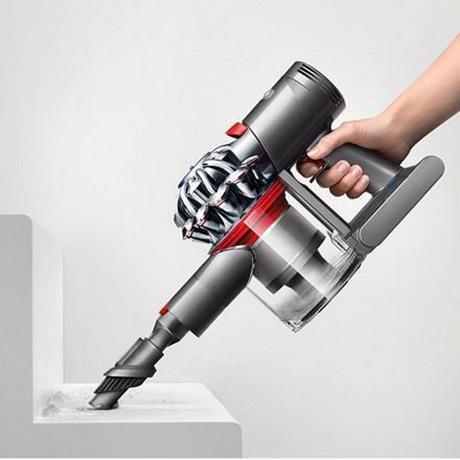
The Dyson V7 Trigger is a battery-powered handheld vacuum from Dyson’s V7 family. It has a compact body, a trigger-style power switch, a washable filter, a dust bin, and removable cleaning tools.
Unlike a standard upright vacuum, the V7 Trigger is designed for short cleaning jobs. You can use it to clean:
- Car seats and floor mats
- Sofas and chairs
- Stairs
- Kitchen counters
- Pet hair from fabric
- Crumbs around dining areas
- Small amounts of dry dirt
- Dust from shelves and corners
The word “Trigger” refers to the power control. The vacuum runs while you hold the trigger. This helps save battery power because the motor stops when you release the trigger.
The Dyson V7 Trigger is not the same as a Dyson V7 Animal or V7 Motorhead. Those models are cordless stick vacuums that can often be used as handhelds. The V7 Trigger is sold as a handheld-first model with a smaller set of tools.

Dyson V7 Trigger Specifications at a Glance
The table below summarizes the main documented features of the U.S. Dyson V7 Trigger. Exact package contents can vary by seller, production date, and region, so check the label or listing before buying a used unit.
| Feature | Dyson V7 Trigger detail |
|---|---|
| Product type | Cordless handheld vacuum |
| Power source | Rechargeable lithium-ion battery |
| Power control | Hold-to-run trigger |
| Standard runtime | Up to about 30 minutes under Dyson’s stated conditions |
| Maximum-power runtime | About 6 minutes |
| Charging time | About 3.5 hours |
| Dust-bin design | Hygienic emptying system |
| Filter | Washable filter system |
| Common tools | Combination tool and motorized tool, depending on package |
| Main use | Spot cleaning, cars, stairs, furniture, and dry debris |
| Wet cleaning | Not designed for liquids |
“Up to 30 minutes” is a best-case figure. Actual runtime changes with the tool, surface, battery age, and power mode. A motorized brush can use more energy than a simple combination tool.
The maximum-power setting gives stronger suction but drains the battery much faster. It is best for a short burst on stubborn dirt rather than for cleaning an entire home.

How Well Does the Dyson V7 Trigger Clean?
The Dyson V7 Trigger is most useful for small, targeted messes. Its cordless design makes it easy to grab without setting up a full-size vacuum.
Hard floors and counters
The standard suction tool can pick up dry crumbs, dust, rice, cereal, and similar debris from hard surfaces. Move slowly over fine dust and use the crevice side of the tool for edges.
Do not use the V7 Trigger to collect water, cleaning fluid, wet food, or damp soil. Moisture can damage the motor and filter and may create odor or mold problems.
Upholstery and pet hair
A motorized mini tool, when included with the package, can help lift hair and dirt from sofas, chairs, stairs, and vehicle seats. It may work better than a passive brush on fabric because the brush agitates the surface.
Use care on delicate fabrics. Test the tool in a hidden area first, especially on loose-weave cloth, leather, suede, or fabric with decorative threads.
Cars
The V7 Trigger is convenient for car interiors because it has no power cord. It can reach between seats and around cup holders more easily than a full-size vacuum.
Its short runtime is the main limitation. For a large SUV or a heavily soiled vehicle, charge the vacuum fully and clean in sections. A 12-volt car vacuum or a newer cordless model may be more practical for frequent vehicle cleaning.
Pet hair
The V7 Trigger can help with small amounts of pet hair on furniture and car seats. It is less suitable as the only vacuum in a home with several pets because its bin and battery are small compared with a full-size upright or cordless stick vacuum.

Dyson V7 Trigger Runtime and Charging
The Dyson V7 Trigger can run for up to about 30 minutes in its lower-power mode with a non-motorized tool, based on Dyson’s stated specifications. The motorized attachment and maximum-power mode reduce this time.
A realistic planning guide looks like this:
| Cleaning task | Battery effect |
|---|---|
| Quick crumbs with a basic tool | Lowest drain |
| Dusting shelves | Low to moderate drain |
| Cleaning upholstery with a powered tool | Higher drain |
| Maximum-power spot cleaning | Very high drain |
| Large vehicle or many stairs | May require a recharge |
The vacuum needs roughly 3.5 hours to recharge fully under Dyson’s published information. It does not function as a corded vacuum while charging.
Signs of a weak battery
A worn battery may show these symptoms:
- The vacuum stops after only a few seconds.
- Runtime drops sharply even after a full charge.
- The motor pulses or cuts out under load.
- The charger shows normal behavior, but the vacuum has little usable power.
- Maximum mode works for only a very short time.
Before replacing the battery, clean the filter and check for blockages. A clogged filter can reduce airflow and make the vacuum seem weaker. If the problem remains, the battery may have reached the end of its service life.

How to Use the Dyson V7 Trigger Correctly
Follow this simple process for normal dry cleaning:
- Charge the vacuum fully. Use the supplied Dyson charger or a compatible replacement approved for the exact model.
- Check the bin. Empty it if debris has reached the marked limit.
- Choose the right tool. Use a combination tool for general debris, a crevice tool for narrow gaps, or a motorized tool for fabric and hair when supplied.
- Hold the trigger while cleaning. Release it during pauses to save battery power.
- Use standard power first. Switch to maximum power only when normal suction is not enough.
- Work in short passes. Let the tool lift debris instead of quickly sweeping over the surface.
- Empty the bin after use. This keeps old dirt from sitting inside the machine.
- Inspect the filter if suction drops. Wash it only as Dyson instructs and let it dry fully before reinstalling.
A successful cleaning session should leave no visible loose debris and should not produce a burning smell, unusual noise, or repeated pulsing.
Stop using the vacuum if you notice smoke, a damaged cord or charger, a swollen battery, liquid inside the machine, or unusual heat. Unplug the charger and contact Dyson support or a qualified repair service.

Dyson V7 Trigger Maintenance
Regular care can improve airflow and help prevent avoidable performance problems.
Empty the dust bin often
The V7 Trigger uses a hygienic emptying mechanism intended to push dirt out of the bin. Hold the vacuum over a trash can and empty it before debris reaches the maximum line.
Fine dust can cling inside the bin. If dirt remains, follow the model’s official cleaning instructions rather than forcing parts apart.
Wash the filter correctly
A dirty filter can cause weak suction, pulsing, and overheating. Dyson’s V7 support instructions identify the filter as washable, but it must dry completely before use.
Use this general approach:
- Remove the filter as shown in the manual.
- Rinse it with cold water.
- Do not add soap or cleaning chemicals unless the manual specifically permits it.
- Shake off excess water.
- Leave it to air-dry fully.
- Reinstall it only when completely dry.
Do not dry the filter with a hair dryer, heater, oven, or direct high heat. A wet filter can damage the motor.
Check for blockages
If the vacuum pulses or sounds different, inspect the air path, tool, wand connection if included, and brush bar. Remove hair and threads from a motorized brush with the vacuum switched off and disconnected from its charger.
Do not place fingers near a moving brush bar. Use scissors carefully to cut wrapped hair, and follow the attachment instructions.
Dyson V7 Trigger Troubleshooting
Use the safest and simplest checks first. Do not open the battery pack or motor housing unless you are qualified to do so.
The vacuum will not turn on
Possible causes include:
- The battery is empty.
- The charger is not connected correctly.
- The battery has failed.
- A protection circuit has activated after overheating.
Charge the vacuum, then try it again. If it still does not start, inspect the charger and wall outlet. Do not use a charger with a damaged cable or loose plug.
The vacuum has weak suction
Check these items in order:
- Empty the dust bin.
- Clean and dry the filter.
- Look for a blockage in the nozzle or air path.
- Remove hair from the motorized brush.
- Try the vacuum without the attachment.
- Check whether maximum mode changes performance.
If suction is still weak after these steps, the battery, seal, cyclone assembly, or motor may need service.
The vacuum pulses on and off
Pulsing often points to restricted airflow. A full bin, blocked tool, or dirty filter can cause the motor to repeatedly slow and restart.
Turn the vacuum off, empty the bin, inspect the tools, and clean the filter. Let the filter dry fully before testing the vacuum again.
The brush bar does not spin
First check whether the attachment is connected correctly. Then remove trapped hair and debris while the vacuum is off.
Some surfaces or heavy debris can slow a powered brush. If the brush still does not spin after cleaning, the attachment or electrical connection may need repair.
The charger does not work
Try a known-good wall outlet and inspect the cable. Do not bend, cut, tape, or modify a damaged charging cable.
Use the model’s correct charger. A charger that fits the connector may still have the wrong electrical output.

Is the Dyson V7 Trigger Still Worth Buying in the U.S.?
The Dyson V7 Trigger can make sense as a used or refurbished handheld vacuum when the price is low and the battery condition is known. It is compact, simple to use, and useful for quick dry messes.
It is less appealing when sold near the price of a newer cordless handheld or stick vacuum. The V7 platform is older, replacement batteries may be needed, and runtime is limited compared with newer designs.
It may fit you if:
- You need a small vacuum for crumbs and stairs.
- You want a cordless tool for car cleaning.
- You can verify the battery condition.
- You are buying from a seller with a return policy.
- You already own compatible V7 tools.
Consider another model if:
- You need to clean a whole home on one charge.
- You have several pets and frequent hair buildup.
- You want a removable battery.
- You need wet-and-dry cleaning.
- You want current warranty support and easy parts access.
- The V7 Trigger costs close to a newer model.
The biggest buying mistake is judging an older V7 Trigger only by its original retail price. Compare the total cost of the vacuum, battery, charger, filters, and replacement tools.

Dyson V7 Trigger vs. a Cordless Stick Vacuum
A handheld vacuum and a cordless stick vacuum solve different problems.
| Need | Dyson V7 Trigger | Cordless stick vacuum |
|---|---|---|
| Crumbs after meals | Very suitable | Suitable |
| Car interior | Convenient | Suitable with handheld mode |
| Stairs | Easy to carry | Can be heavier |
| Whole-home floors | Limited | Usually better |
| Large debris capacity | Small | Usually larger |
| Long cleaning sessions | Limited by battery | Often better, model dependent |
| Storage | Compact | Needs more space |
| Floor-head cleaning | Limited package | Usually designed for floors |
Choose the V7 Trigger for short jobs and portability. Choose a cordless stick vacuum if you need floor cleaning, a larger bin, a longer cleaning routine, or more attachment options.
For a single-room apartment with mostly hard floors, the V7 Trigger may work as a secondary cleaner. It should not automatically replace a full-size vacuum.

Battery Replacement and Used-Buying Advice
A replacement battery can extend the life of a Dyson V7 Trigger, but compatibility matters. V7 batteries are not automatically interchangeable with every Dyson V6, V8, V10, or V11 model.
Before buying a battery, confirm:
- The exact model name and serial information
- Whether the pack is screw-in or uses another mounting design
- Voltage and connector type
- The seller’s return policy
- Whether the battery includes safety protections
- Whether installation instructions are clear
Avoid visibly swollen, cracked, leaking, or overheated lithium-ion batteries. Do not place a damaged battery in household trash. Follow your local U.S. hazardous-waste or battery-recycling rules.
When buying a used Dyson V7 Trigger, ask the seller:
- How long does it run on standard power?
- Does maximum mode work?
- Does the charger come with it?
- Are the filter and bin clean?
- Are all listed tools included?
- Has the battery been replaced?
- Is there a return period?
A video showing the vacuum running can provide useful evidence, but it does not guarantee long-term battery health.

Key Takeaways
- The Dyson V7 Trigger is a compact cordless handheld vacuum for quick, dry cleanup.
- Dyson lists up to about 30 minutes of standard runtime, but tools and power mode affect actual use.
- Maximum mode is intended for short bursts and uses much more battery power.
- The vacuum should not collect liquids or damp debris.
- Weak suction often comes from a full bin, dirty filter, blockage, or tangled brush.
- A used unit is worth considering only when its battery, charger, tools, and return terms are clear.
- For whole-home cleaning, a newer cordless stick vacuum may be a better fit.
Frequently Asked Questions
Does the Dyson V7 Trigger work on carpets?
It can handle small carpeted areas and upholstery, especially when equipped with a suitable motorized tool. It is not designed to replace a full-size carpet vacuum for large rooms or deep cleaning.
Can the Dyson V7 Trigger pick up water?
No. The Dyson V7 Trigger is a dry vacuum. Do not use it on water, spills, wet food, or damp dirt.
How long does a Dyson V7 Trigger battery last?
Dyson documents up to about 30 minutes of runtime under specified standard-power conditions. A motorized tool, maximum mode, surface resistance, and battery age can reduce runtime.
Why does my Dyson V7 Trigger keep stopping?
A full bin, blocked air path, dirty filter, tangled brush, overheating, or aging battery can cause the vacuum to stop or pulse. Empty the bin, inspect the tools, clean the filter, and let it dry fully before testing again.
Can I leave the Dyson V7 Trigger charging?
Use the charger and charging method described in the official Dyson instructions. Keep the charger and battery away from heat and moisture. Stop using the unit if the battery becomes swollen, unusually hot, damaged, or produces an odor.
Is the Dyson V7 Trigger better than the Dyson V8?
Neither is automatically better for every buyer. The V8 is a newer platform with different tools, battery behavior, and availability. Compare the exact package, condition, runtime, warranty, and total price rather than relying only on the model number.
Conclusion
The Dyson V7 Trigger remains a useful small vacuum for American homes, cars, stairs, furniture, and quick dry messes. Its main strengths are portability, simple controls, and strong spot-cleaning ability.
Its age, short high-power runtime, small bin, and possible battery wear are the main limits. If you find one at a reasonable price with a healthy battery and the right tools, it can be a practical secondary vacuum. If you need whole-home cleaning or long sessions, compare it with a newer cordless stick model before buying.