
If you use a Shark vacuum in a U.S. home, clean it often to keep strong suction and prevent odors. Most Shark vacuums need the dust cup emptied after each use, washable filters rinsed from time to time, and hair cleared from the brushroll.
The exact parts vary by model, such as Shark Navigator, Rotator, Lift-Away, Vertex, Stratos, and cordless models. Always check your model’s manual before removing a cover or washing a part. The model number is often printed near the barcode or rating label.
Quick answer: Unplug the vacuum, empty the dust cup, remove and rinse the filters with water only, clear hair from the brushroll, check the hose and air path, then let all washable parts dry fully before putting them back.

What You Need Before Cleaning a Shark Vacuum
You do not need special products to clean most Shark vacuums. Gather:
- A dry cloth
- Scissors
- A soft cleaning brush or old toothbrush
- A trash can
- Clean, cool water
- A small flashlight
- The vacuum’s model number and manual
Do not use bleach, soap, vinegar, essential oils, or other cleaners on the filters unless Shark specifically approves them for your model. Cleaning products can damage filter material or leave residue that restricts airflow.
Before you begin, turn off the vacuum and unplug it from the wall. For a cordless Shark vacuum, remove the battery if the model allows it. Never clean a powered vacuum, and never place the motor unit, battery, or electrical parts under running water.
Find the model number
Shark makes several vacuum lines with different filter locations and brushroll designs. A Shark Navigator may have a removable hose and a lift-away pod. A Shark Stratos or Vertex may use a DuoClean floorhead with two rollers. A cordless model may have a smaller dust cup and a removable battery.
Look for the model number:
- On the back or bottom of the vacuum
- Near the dust cup
- On the charging dock
- On the original box
- In the SharkClean app, if your model connects to it
Use the model number to find the correct manual on Shark’s official support site. This matters because forcing a cover or removing the wrong panel can break clips or affect the vacuum’s seal.
How to Clean a Shark Vacuum Step by Step
Follow this order: dust cup, filters, brushroll, hose and air path, then the outside of the vacuum. This order keeps loose dust from falling into parts you already cleaned.
1. Turn off and unplug the vacuum
Switch the vacuum off. Unplug it from the outlet, or remove the battery when possible.
Move the vacuum to a well-ventilated place. If you have asthma or strong dust sensitivity, wear a mask and clean the dust cup outdoors or near an open window.
2. Empty the dust cup
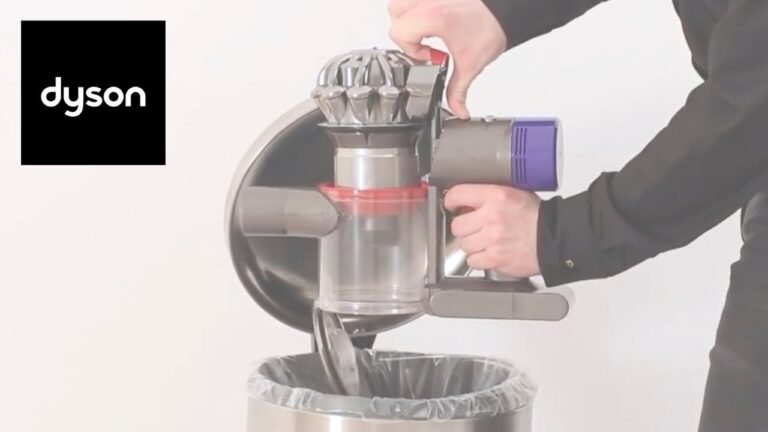
Hold the dust cup over a trash can. Press the release button or open the bottom door, depending on the model.
Tap the cup gently to remove stuck dust. Do not hit it against a hard surface. Inspect the inside for clumps of hair, paper, or damp debris.
If the dust cup looks dirty, wipe it with a dry or slightly damp cloth. If your manual says the cup is washable, rinse it with water and allow it to dry completely before reinstalling it.
Do not put the dust cup back while it is wet. Moisture can reach the motor or cause dust to stick to the air path.
3. Remove and clean the filters
Many Shark vacuums use more than one filter. Common types include:
- Foam filters
- Felt filters
- A post-motor or HEPA-style filter
The location differs by model. Foam and felt filters are often near the motor or below the dust cup. The post-motor filter may sit behind a grille.
Remove each filter carefully. Shake loose dust into the trash can. Rinse washable filters under cool or lukewarm running water until the water runs clear.
Use water only unless your manual gives different instructions. Do not scrub foam filters hard, twist them, or use a dryer.
Squeeze foam filters gently to remove extra water. Lay all washable filters flat in a clean, dry place. Let them air-dry fully, often for at least 24 hours. Some filters may need longer in humid conditions.
4. Clean the brushroll
Turn the floorhead over. Look for hair, thread, carpet fiber, and pet fur wrapped around the brushroll.
Use scissors to cut long strands. Cut parallel to the brushroll rather than toward the bristles. Pull the material away by hand.
Some Shark floorheads have a brushroll cover or access door. Open it only as shown in the manual. Some DuoClean heads contain two rollers, so inspect both.
Do not use the vacuum to pick up loose hair while you are cleaning the brushroll. Remove the debris by hand and throw it away.
5. Check the floorhead and air path
Look through the opening behind the brushroll. A blockage can reduce suction even when the dust cup is empty.
Use a flashlight to inspect:
- The floorhead opening
- The wand
- The hose
- The inlet near the dust cup
- The connection points between sections
Pull out visible debris with your fingers or a blunt tool. Do not push a sharp object deep into the hose, because it may puncture the hose or damage a flap.
If your model has a flexible hose, disconnect it only at the approved release points. Rinse it only if Shark’s manual says it is washable. Let it dry fully before reconnecting it.
6. Wipe the vacuum body
Use a dry microfiber cloth to remove dust from the handle, pod, wand, and floorhead.
A slightly damp cloth is fine for hard exterior surfaces. Keep water away from buttons, charging contacts, electrical openings, the motor, and the battery.
Check the seals around the dust cup. Dust buildup there can prevent a tight fit and reduce airflow.
7. Reassemble the vacuum
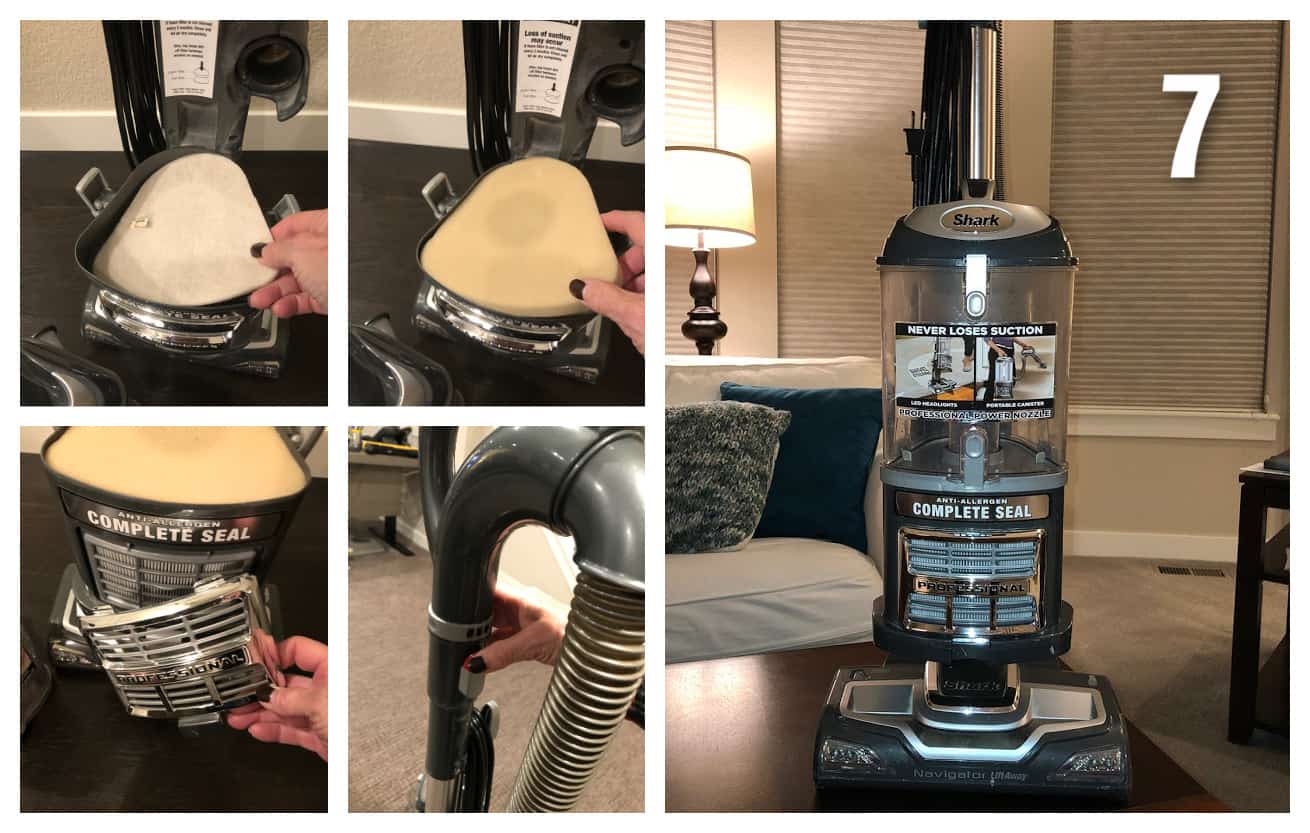
Reinstall the filters in the same order and direction. Make sure each filter sits flat and that every cover clicks into place.
Reconnect the dust cup, hose, wand, and floorhead. Do not run the vacuum without its required filters.
Turn the vacuum on for a short test. Listen for unusual rattling, check for air leaks, and see whether the brushroll turns when it should.
A successful cleaning usually produces steady airflow, normal sound, and no warning light. Some models also show a blockage or filter alert when airflow remains restricted.
How to Clean Different Shark Vacuum Parts
Each part has a different cleaning limit. The table below gives a general guide, but your model manual controls if it differs.
| Part | Usual cleaning method | Key limit |
|---|---|---|
| Dust cup | Empty and wipe; rinse only if the manual allows it | Dry fully before use |
| Foam filter | Rinse with cool water | Do not use soap or heat |
| Felt filter | Rinse gently if washable | Do not twist or scrub hard |
| Post-motor filter | Rinse only when the model manual allows it | Never reinstall it wet |
| Brushroll | Cut and pull away hair and fibers | Avoid damaging bristles |
| Hose | Remove visible blockages | Rinse only if documented |
| Wand | Check for clogs and wipe outside | Keep electrical contacts dry |
| Motor unit | Wipe the exterior | Never immerse or rinse |
Shark Navigator and Lift-Away models
Navigator and Lift-Away vacuums often have a dust cup, washable pre-motor filters, a post-motor filter, a hose, and a detachable pod.
Check the hose connection at both ends. A clog near the floorhead or pod can cause weak suction even when the hose looks clear.
Some Lift-Away parts may look similar but are not interchangeable across model families. Match each filter and cover to the model manual.
Shark Rotator models
Rotator models may collect dust in the pod and use several filter covers. Clean the brushroll housing and inspect the wand for a blockage.
If the vacuum has a powered lift-away pod, keep the pod and electrical connections dry. Do not rinse the powered floorhead unless Shark documents that procedure for your exact model.
Shark Vertex, Stratos, and DuoClean models
Many Vertex and Stratos models use a floorhead with more than one roller. Hair can collect around the ends of the rollers, not just in the center.
Remove rollers only if the manual provides a release method. Some rollers are designed for user removal, while other covers should remain closed.
Check the floorhead’s intake path after cleaning. Fine dust can pack behind the rollers and limit airflow.
Shark cordless vacuums
Cordless vacuums need the same basic care, but battery safety adds one more rule: keep the battery and charging contacts dry.
Turn the vacuum off before opening the dust cup. Remove the battery if the instructions allow it. Do not operate or charge the vacuum until washable parts are completely dry.

How Often Should You Clean a Shark Vacuum?
Clean the dust cup after every use or when it reaches the fill line. A full cup can reduce airflow and may place extra strain on the vacuum.
Use this schedule as a starting point:
| Cleaning task | Suggested timing |
|---|---|
| Empty dust cup | After each use or at the fill line |
| Remove hair from brushroll | Weekly, or more often with pets |
| Inspect hose and floorhead | Monthly |
| Wash pre-motor filters | About every 1 to 3 months, based on use |
| Inspect post-motor filter | According to the manual |
| Replace damaged or worn filters | When damaged or as the manual directs |
Homes with pets, thick carpets, remodeling dust, or several occupants may need more frequent cleaning. A vacuum that runs every day will need more care than one used once a week.
Filter timing varies by model. Follow the maintenance chart in the manual instead of relying on a general schedule.
What to Do If Your Shark Vacuum Still Has Low Suction
Low suction usually comes from a full dust cup, dirty filter, blockage, poor seal, or brushroll problem. Check the easiest and safest causes first.
- Empty the dust cup.
- Confirm that every filter is installed correctly.
- Check whether the filters are still damp.
- Inspect the floorhead, wand, and hose for clogs.
- Remove hair from the brushroll.
- Check that the dust cup and covers are fully closed.
- Test the vacuum again after the filters are fully dry.
If suction remains weak, inspect the seals and listen for a new whistle. A whistle can point to an air leak or a cover that is not seated correctly.
Stop using the vacuum if you smell burning, see smoke, notice sparks, hear grinding, or feel unusual heat. Unplug it and contact Shark Support or a qualified repair service. Do not open the motor housing yourself unless the manufacturer specifically permits it.

Common Mistakes When Cleaning a Shark Vacuum
Avoid these mistakes because they can damage the vacuum or create a new blockage.
Using soap on the filters
Soap may leave a film that blocks airflow. Water is the safer default for washable Shark filters.
Reinstalling wet filters
A wet filter can restrict airflow and allow moisture into the vacuum. Let filters dry completely before use.
Running the vacuum without filters
The filters protect the motor from fine dust. Operating without them can damage the vacuum.
Pulling hair without cutting it
Long hair may be tightly wrapped around the brushroll. Cut it first to reduce strain on the roller and its bearings.
Washing every part
Not every Shark component is washable. Keep the motor, battery, powered floorhead, electrical contacts, and wiring dry unless the manual says otherwise.
Forcing covers open
A cover may use a latch, screw, or release tab. If it does not open with light pressure, check the manual for the correct method.
Key Takeaways
- Empty the dust cup often.
- Clean hair from the brushroll before it builds up.
- Rinse washable filters with water only.
- Let filters dry completely, usually for at least 24 hours.
- Check the hose, wand, and floorhead for clogs.
- Keep the motor, battery, and electrical parts dry.
- Use the exact Shark manual for model-specific removal instructions.
- Stop using the vacuum if it smells burnt, sparks, smokes, or overheats.
Frequently Asked Questions
Can I wash Shark vacuum filters?
Many Shark filters are washable, but not every filter is. Check the filter label and the manual for your model. When washing is allowed, use cool or lukewarm water and no cleaning chemicals. Air-dry the filter fully before reinstalling it.
How long should Shark vacuum filters dry?
Let washable filters air-dry for at least 24 hours. Thick foam can take longer in a cool or humid room. The filter must feel dry all the way through before the vacuum runs.
Why does my Shark vacuum smell bad after cleaning?
A bad smell may come from trapped pet hair, a dirty brushroll, damp filters, a full dust cup, or debris stuck in the hose. Check each area. If the smell is burning or electrical, stop using the vacuum and seek service.
Can I rinse the Shark vacuum hose?
Only rinse the hose if the manual for your model says it is washable. Many hoses contain fittings or electrical connections. If rinsing is approved, dry the hose completely before reconnecting it.
How do I clean a Shark vacuum brushroll without taking it apart?
Turn off and unplug the vacuum. Cut wrapped hair with scissors, then pull it away by hand. Use a dry brush to remove loose dust. Do not force the brushroll out if your model does not provide a removal method.
Why is my Shark vacuum making a loud noise after cleaning?
Check for a blocked air path, a loose dust cup, a missing filter cover, or debris around the brushroll. If the noise is grinding, rattling, or accompanied by heat or a burning smell, stop using the vacuum.
Conclusion
The safest way to clean a Shark vacuum is to empty the dust cup, wash only approved filters, clear the brushroll, inspect the air path, and keep electrical parts dry. Clean more often if you have pets, thick carpet, or heavy daily use.
Start with your model number and the official Shark manual. Then perform the basic maintenance steps above and run a short test only after every washable part is fully dry.


One Comment