Yes, you can vacuum carpet after using baking soda, but use only a light amount and check your vacuum manual first. Baking soda may help absorb mild odors, yet it does not deep-clean carpet, remove stains, or kill germs. Fine powder can also clog filters or stress some vacuum motors.
For most homes in the United States, the safest method is simple: test a hidden spot, use a thin layer, let it sit for a short time, and vacuum slowly with a clean filter and an empty bag or canister.

Does Baking Soda Really Clean Carpet?
Baking soda can freshen carpet by absorbing some moisture and reducing certain mild odors. It does not work like a carpet detergent or a disinfectant.
Baking soda is sodium bicarbonate, a fine alkaline powder. Its particles can bind with some odor compounds. This may make a room smell fresher for a while. However, baking soda cannot pull all dirt from carpet fibers or remove the source of strong odors.
Use baking soda for:
- Light food odors
- Mild pet odors on the carpet surface
- Stale smells in rugs
- Freshening a carpet between deeper cleanings
Do not rely on it for:
- Pet urine soaked into the pad
- Mold or mildew
- Smoke damage
- Grease stains
- Large spills
- Bacteria or viruses
- Flea control
- Water damage
A fresh smell does not always mean a clean carpet. If an odor comes from the carpet pad, subfloor, or upholstery below the carpet, surface powder will not solve the cause.
Baking soda versus carpet cleaner
Baking soda is dry and easy to use. Carpet cleaner uses water or another liquid to dissolve and lift soil. These methods have different roles:
| Method | Main benefit | Main limit |
|---|---|---|
| Baking soda | Helps reduce mild surface odors | Does not remove deep soil |
| Vacuuming | Removes loose dirt and powder | Does not remove all stains |
| Carpet extractor | Flushes out dissolved soil | Can over-wet carpet |
| Enzyme cleaner | Targets some organic odors | Must match the stain and carpet |
| professional cleaning | Handles deeper or larger problems | Costs more and needs planning |
For a routine freshen-up, baking soda may help. For a stain or deep odor, use a product made for that problem.
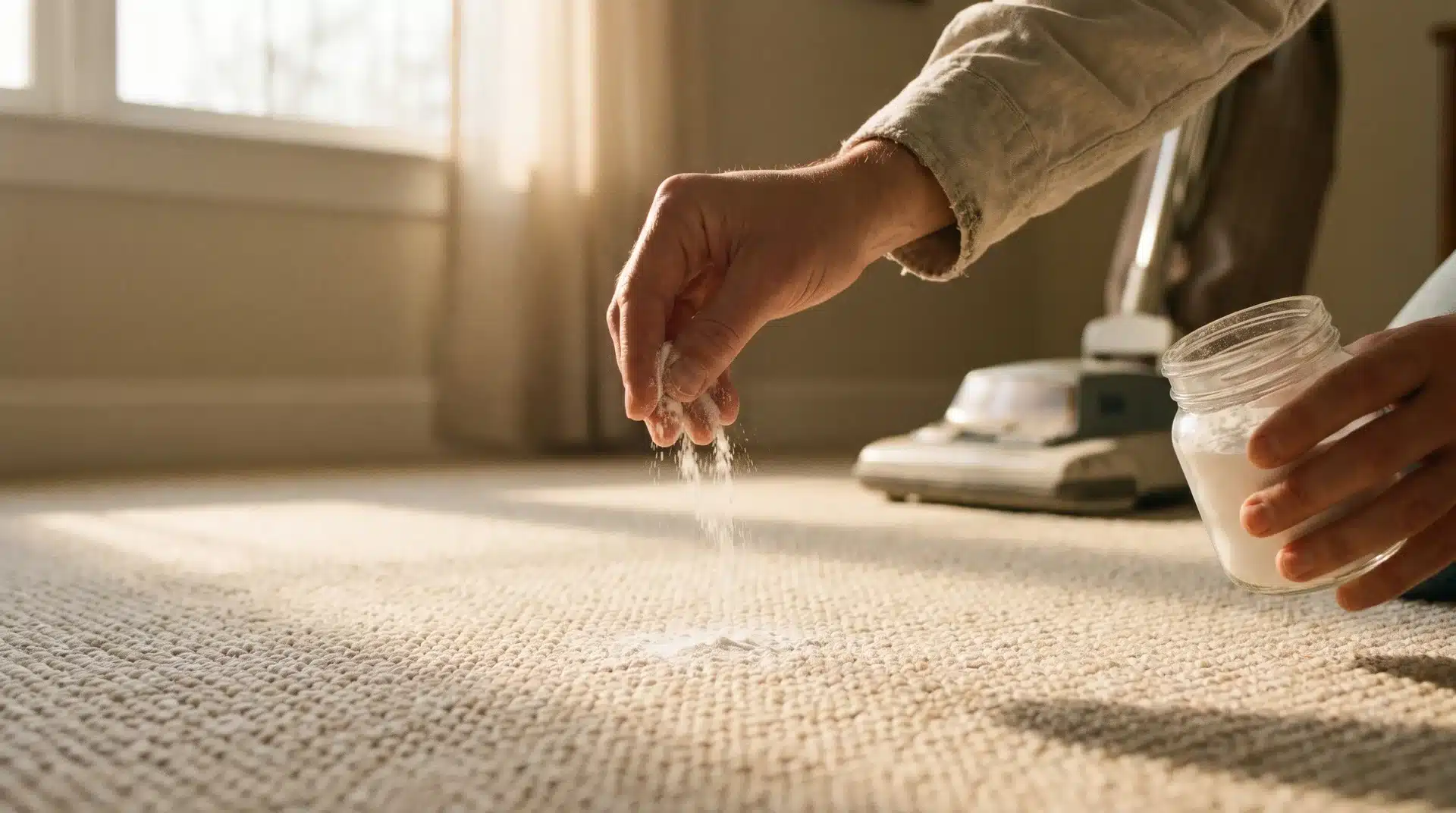
How to Vacuum Carpet With Baking Soda
The best process uses a small amount of powder and a slow, careful vacuum pass. Do not cover the carpet with a thick white layer.
What you need
Gather:
- Plain baking soda
- A clean vacuum
- A fresh or clean filter
- An empty dust cup or new vacuum bag
- A soft brush, if needed
- A small bowl or shaker
Avoid mixing baking soda with essential oils unless the product label and your vacuum manufacturer allow it. Oils can leave residue, stain carpet, or create another odor.
Step 1: Check the vacuum manual
Look for warnings about fine powders. Some manufacturers advise against vacuuming baking soda, flour, ashes, drywall dust, or similar materials. Fine particles may pass through filters, restrict airflow, or collect inside the motor area.
If the manual says not to vacuum fine powder, do not use baking soda on that carpet with that vacuum. A carpet-safe powder remover or professional cleaning may be a better choice.
Step 2: Test the carpet
Place a small amount of baking soda in a hidden area, such as beneath furniture. Leave it for about 15 to 30 minutes, then vacuum it up.
Check for:
- Color change
- White residue
- Dullness
- Stiff or rough fibers
- A new smell
- Powder trapped in the pile
This test does not prove that every part of the carpet is safe. It simply helps catch an obvious problem before wider use.
Step 3: Remove loose dirt first
Vacuum the carpet before applying baking soda. Dirt and hair can block the powder from reaching the carpet surface.
Move furniture only if you can do so without scratching the floor. Pick up small objects, cords, and pet toys. Use a crevice tool around baseboards and edges.
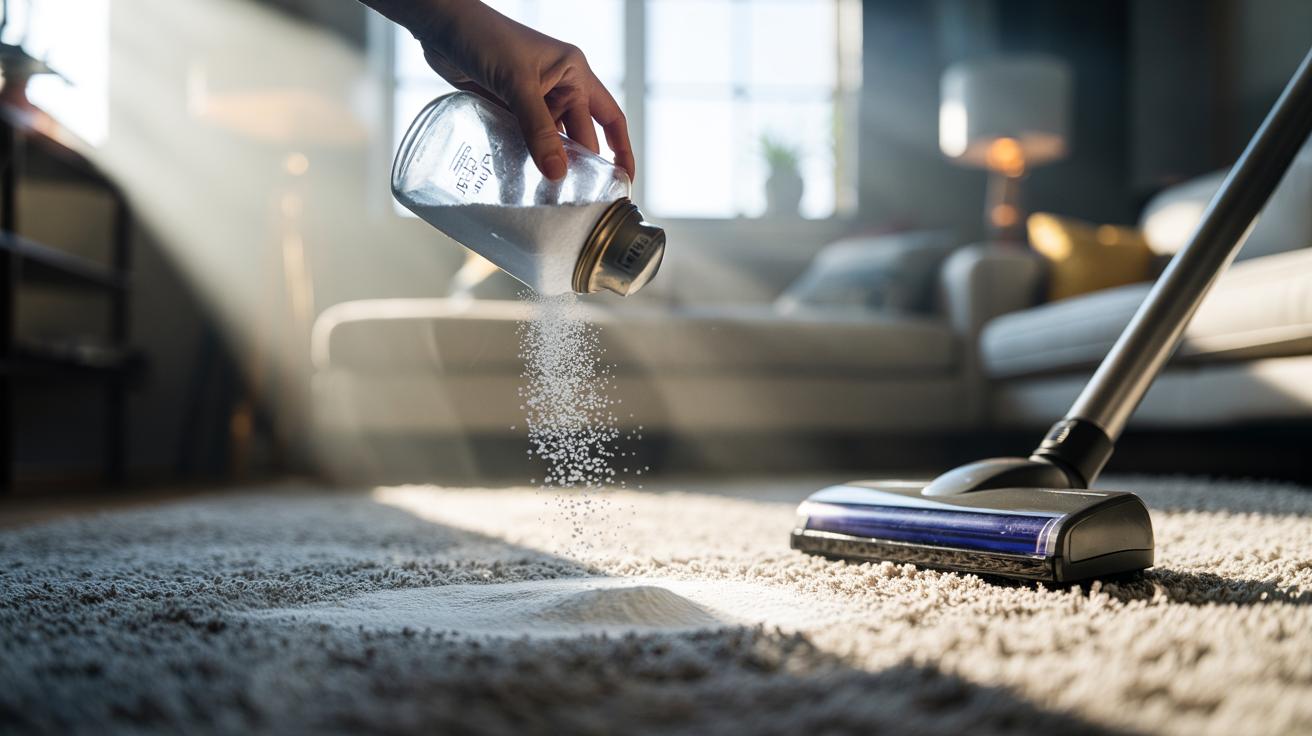
Step 4: Spread a thin layer
Apply a very light dusting. You should still see much of the carpet color through the powder.
A common mistake is to pour baking soda until the carpet looks white. That adds more dust without creating a proven cleaning benefit. Extra powder also makes removal harder.
For better control, use a shaker with small holes. You can also place a little baking soda in a bowl and sprinkle it by hand.
Step 5: Let it sit briefly
For mild odors, 15 to 30 minutes is often a reasonable starting point. Longer contact does not guarantee better results.
Avoid leaving powder overnight if:
- You have pets or small children
- The carpet is damp
- The room has poor airflow
- The vacuum is not designed for fine powder
- You are unsure how the carpet will react
Keep children and pets away from the treated area. Baking soda is a common household material, but large amounts should not be eaten or inhaled.
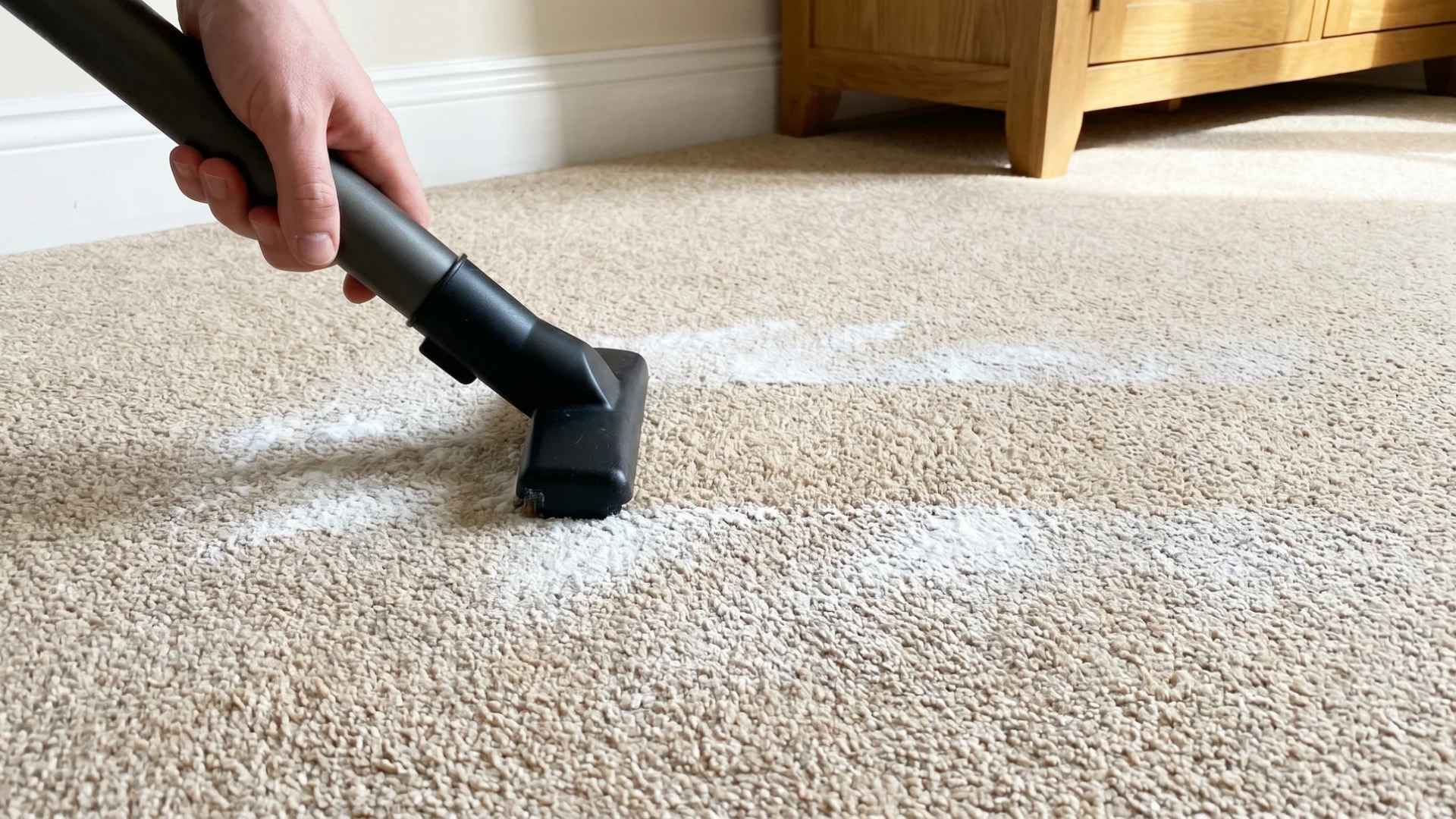
Step 6: Vacuum slowly
Use slow, overlapping passes. Make one pass in one direction, then a second pass across the same area.
Empty the dust cup or replace the bag if airflow drops. A full container can reduce suction and leave powder behind.
Do not press the vacuum head hard into the carpet. Let the machine make contact without forcing it into the fibers.
Step 7: Check the carpet and vacuum
Look for powder left near:
- Carpet edges
- Stair corners
- Under furniture
- Deep pile
- Seams
- Area rug borders
Then inspect the filter. If it looks coated or airflow is weak, stop using the vacuum and clean or replace the filter according to the manual.
How Much Baking Soda Should You Use?
Use the smallest amount that covers the surface lightly. There is no reliable universal dose for every carpet, room, or odor.
A useful rule is:
If the carpet looks coated in white, you probably used too much.
The amount depends on:
- Carpet pile height
- Room size
- Odor strength
- Carpet color
- Air movement
- Vacuum design
Hypothetical example
For a 10-by-12-foot room, the carpet area is 120 square feet. A light dusting may use only a small portion of a standard box. The exact amount depends on how evenly you spread it.
Do not calculate success by the number of boxes used. More baking soda does not equal more odor removal.
For a large room, treat one section at a time. This lets you vacuum the powder fully before it spreads into other areas.
Is Baking Soda Safe for All Carpet Types?
No. Carpet fiber, dye, backing, and moisture level can change the result.
Use extra care with:
- Wool carpet
- Silk or silk-blend rugs
- Antique rugs
- Hand-knotted rugs
- Viscose or rayon rugs
- Dark or strongly dyed carpet
- High-pile or shag carpet
- Carpet with a delicate backing
Natural and specialty fibers may need a cleaner trained for that material. Do not assume a method safe for synthetic nylon or polyester is safe for wool or viscose.
Synthetic carpet
Many common U.S. home carpets use nylon, polyester, or olefin. These fibers often tolerate dry baking soda better than delicate natural fibers, but the carpet maker’s care instructions still control.
Wool carpet
Wool can be sensitive to harsh products, moisture, friction, and residue. Vacuuming is usually part of normal wool care, but baking soda is not automatically suitable for every wool rug.
Check the rug label or contact the maker before use.
Shag carpet
Powder can settle at the base of shag fibers. A normal upright vacuum may not remove it fully. Use the vacuum setting recommended for the rug, and avoid heavy powder applications.
If you can still see or feel grit after vacuuming, stop adding powder. Residue can attract more soil and may work deeper into the pile.

Can Baking Soda Damage a Vacuum?
It can, depending on the vacuum and how much powder enters the machine.
Baking soda is very fine. Some of it may pass through a filter or collect in parts that are not designed for loose powder. The risk is higher when you use a large amount or continue vacuuming after airflow drops.
Possible warning signs include:
- Weak suction
- A hot motor smell
- The vacuum shutting off
- A coated filter
- Powder blowing from the exhaust
- Unusual noise
- Dust around seals or vents
If any warning sign appears, turn off the vacuum. Unplug it before checking the filter, hose, brush roll, and dust container.
Do not open a sealed motor housing unless the manufacturer gives clear instructions. For repeated problems, contact the manufacturer or a qualified repair service.
A shop vacuum is not automatically safe for baking soda. It also needs the correct filter and setup for fine dry material.

Baking Soda for Pet Odors: What Works and What Does Not
Baking soda may help with a mild surface odor, but it usually cannot remove urine that has soaked into carpet padding.
Pet urine can travel below the visible carpet. The odor may return when humidity rises or when the area becomes warm. In that case, surface powder only covers part of the problem.
For a fresh pet accident:
- Blot liquid with clean towels.
- Do not rub the area.
- Follow the carpet maker’s care instructions.
- Use a pet enzyme product labeled for carpet if appropriate.
- Test the product in a hidden area.
- Prevent pets from using the spot until it is dry.
Never mix cleaning products unless the labels clearly allow it. Some combinations can create harmful fumes or reduce cleaning performance.
For repeated odor, a large urine area, or damage to the carpet pad, contact a professional carpet cleaner. A landlord, restoration company, or flooring professional may be needed if the subfloor is affected.

Common Mistakes When Vacuuming Baking Soda
Avoid these errors:
Using a thick layer
A heavy layer is harder to remove and may put more powder into the vacuum. A light dusting is enough for a basic odor test.
Leaving it for too long
Long contact does not guarantee deeper odor removal. It can increase the chance of residue, especially in humid conditions.
Skipping the vacuum test
Always check whether the vacuum allows fine powder. This is one of the most useful safety steps.
Treating stains with dry powder
Baking soda may absorb some surface moisture, but it does not replace a stain treatment. Use a cleaner labeled for the stain and carpet type.
Ignoring the carpet pad
A smell that returns after several treatments often comes from below the carpet surface.
Mixing baking soda with vinegar
Baking soda and vinegar react with fizzing, but the reaction mostly neutralizes both materials. It is not a magic carpet cleaner. The mixture may also add moisture and leave residue if not removed well.
Using scented additives
Fragrance may hide an odor without removing it. Essential oils can also stain carpet or irritate people and pets.
What to Do If Baking Soda Will Not Vacuum Up
If white powder remains after several slow passes, stop adding more product.
Try this sequence:
- Empty the vacuum.
- Clean or replace the filter as directed.
- Set the vacuum to the correct carpet height.
- Use slow passes in two directions.
- Use a soft upholstery tool if the carpet maker allows it.
- Gently lift powder from deep pile with a clean, dry brush.
- Call a carpet cleaner if residue remains.
Do not add water just to dissolve the powder. Wet baking soda can form a paste and push residue deeper into the carpet.
If the carpet feels gritty, looks dull, or releases dust into the air, professional extraction may be the safest next step.
Better Alternatives for Carpet Odors
The best option depends on the odor source.
- Loose dirt: Vacuum on a regular schedule.
- Fresh liquid spill: Blot first, then use a suitable carpet product.
- Pet urine: Use a labeled enzyme cleaner and treat the padding if needed.
- Smoke odor: Seek professional odor and air-quality treatment.
- Mold or mildew: Address the moisture source and seek qualified help.
- Heavy soil: Use a carpet extractor or professional cleaning.
- General stale smell: Improve ventilation and clean nearby upholstery, curtains, and floors.
The Carpet and Rug Institute, the U.S. Environmental Protection Agency, and carpet manufacturers provide care information that can help guide product and cleaning choices. The carpet label and vacuum manual remain the most specific sources for your materials and equipment.

Frequently Asked Questions
How long should baking soda sit on carpet before vacuuming?
Start with 15 to 30 minutes for a mild surface odor. Longer time is not always better, especially on delicate carpet, in damp rooms, or around pets and children.
Can I vacuum baking soda with a Dyson or another cordless vacuum?
Check the exact model manual. Vacuum rules can differ by model, filter design, and warranty terms. If the manual warns against fine powders, do not use that vacuum for baking soda.
Will baking soda remove the smell of cigarette smoke?
Usually not by itself. Smoke odor can cling to carpet fibers, padding, walls, curtains, and furniture. A professional cleaning plan may be needed.
Can I use baking soda on an area rug?
Only after checking the rug’s fiber and care label. Use extra caution with wool, silk, viscose, antique, and hand-knotted rugs.
How often can I use baking soda on carpet?
Use it occasionally rather than as a routine replacement for vacuuming. Repeated powder use can leave residue and add strain to a vacuum, especially if removal is incomplete.
Conclusion
Vacuuming carpet with baking soda can be a low-cost way to freshen a mildly stale room. Use a thin layer, wait a short time, vacuum slowly, and follow both the carpet and vacuum care instructions.
Do not use baking soda as a substitute for stain removal, deep cleaning, or treatment of soaked-in pet odors. If powder remains, the vacuum shows stress, or the smell returns, stop the process and choose a cleaner or professional method suited to the problem.