
You can deep clean many carpets without a carpet cleaner by vacuuming well, treating stains, washing small areas with a mild solution, and drying the carpet fast. This method works best for low-pile synthetic carpet in homes across the United States. It is not safe for every fiber or backing, so check the carpet label first.
A machine-free clean takes more time than using an extractor. Yet it can remove surface dirt, food marks, body oils, and light odors with basic items you may already have at home.

What You Need Before You Start
Gather your supplies before you wet the carpet. A good setup helps you work in small areas and keeps the carpet from staying wet too long.
You will need:
- A vacuum cleaner
- Two buckets or large bowls
- Warm water
- White or clear dish soap
- White cleaning cloths
- A soft carpet brush
- A spray bottle
- A squeegee or rubber window wiper
- Dry towels
- A fan
- Baking soda, if needed for odor control
- A small bowl for testing the solution
Use white cloths when possible. Colored cloths may transfer dye to the carpet.
Check the carpet fiber
The cleaning method depends on the fiber and backing.
| Carpet type | Machine-free cleaning advice |
|---|---|
| Nylon or polyester | Usually suitable for light hand cleaning |
| Olefin or polypropylene | Often resists water-based stains, but may hold oily soil |
| Wool | Use a wool-safe product or a professional cleaner |
| Silk, viscose, or rayon | Avoid wet cleaning unless the maker allows it |
| Jute or sisal | Avoid soaking; water can cause stains, shrinkage, or damage |
| Carpet tiles | Check the maker’s care guide before wet cleaning |
If you do not know the fiber, look for a label on the carpet, under furniture, or near a room edge. You can also check the installation paperwork.
Check the warranty and care label
Some carpet makers require specific cleaning methods. The Carpet and Rug Institute recommends following the carpet maker’s care instructions and using products made for carpet when possible.
A home method may also affect a stain-resistant finish. If your carpet is new, rented, or covered by a warranty, check the care guide before using soap, vinegar, peroxide, or baking soda.
How to Deep Clean Carpet by Hand
The safest method is to clean a small area at a time. Do not flood the carpet. Water that reaches the pad can lead to slow drying, odor, or mildew growth.
1. Remove furniture and loose items
Move light furniture out of the work area. Place foil or plastic under furniture legs if you must put them back before the carpet dries.
Pick up toys, cords, paper, and other items from the floor. Small items can block the vacuum and make it harder to clean along edges.
2. Vacuum slowly in two directions
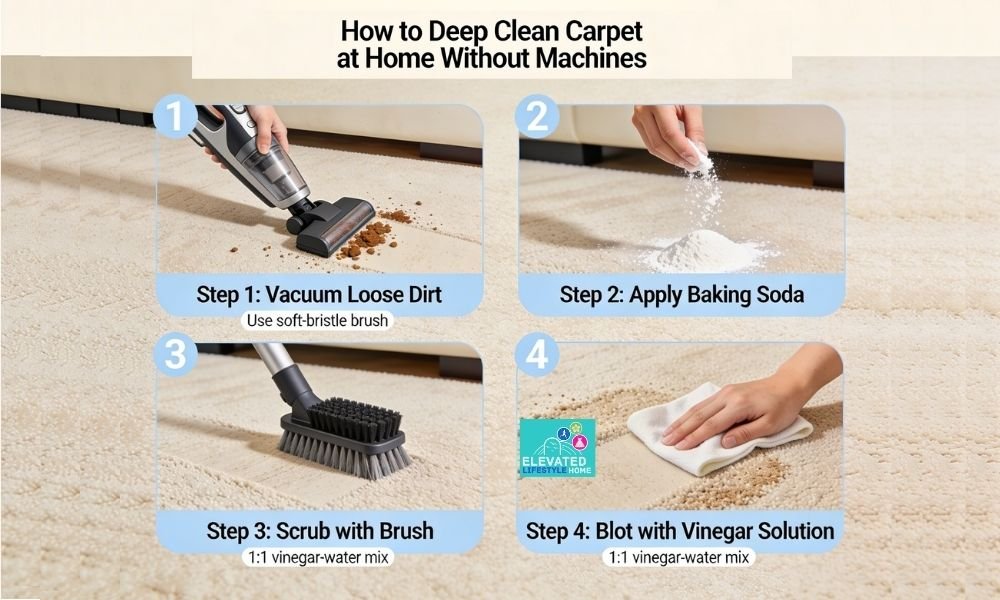
Vacuum the carpet before adding water. Move slowly in one direction, then repeat across the same area at a right angle.
Pay extra attention to:
- Doorways
- Hallways
- Under tables
- Around sofas
- Baseboards
- Pet resting spots
- Areas near outside doors
Vacuuming does not deep clean the carpet by itself. It removes dry soil so that wet cleaning does not turn loose dirt into mud.
3. Pre-treat stains
Treat visible stains before cleaning the full area. Blot liquid spills with a dry cloth. Do not rub hard, since rubbing can spread the mark and damage the pile.
For a fresh stain:
- Lift solids with a spoon or dull knife.
- Blot liquid from the outside toward the center.
- Apply a small amount of plain water.
- Blot again.
- Repeat until little color transfers to the cloth.
For grease, use a carpet-safe degreaser only if the label allows it. Dish soap can help with some oily marks, but too much soap may leave a sticky film.
4. Make a mild cleaning solution
For most washable synthetic carpet, mix:
- 1 quart of warm water
- 1 teaspoon of clear, mild dish soap
Use less soap rather than more. A thick or foamy mix is harder to rinse from carpet.
A carpet detergent made for hand cleaning is another option. Follow the product label. Do not mix cleaning products unless the label clearly says they are compatible.
Avoid mixing bleach, ammonia, vinegar, peroxide, or other chemicals. Some mixtures can create harmful fumes or damage the carpet.
5. Test the solution
Test the solution in a hidden spot, such as inside a closet or beneath a piece of furniture.
Apply a small amount with a white cloth. Wait until the spot dries. Check for:
- Color loss
- Color transfer
- Browning
- Texture changes
- A stiff or sticky feel
- Damage to the backing
If you see a change, stop. Use a product approved for that fiber or contact a carpet professional.
6. Work in small sections
Divide the carpet into sections of about 2 by 2 feet. Small sections help you control the water and keep track of your progress.
Use this process:
- Lightly mist or dab the cleaning solution onto the carpet.
- Gently brush the pile in more than one direction.
- Wait for one to three minutes.
- Blot with a clean, damp cloth.
- Blot again with a dry towel.
Do not soak the carpet. The goal is to loosen soil near the surface and remove it with the cloth. It is not to fill the carpet with water.
7. Rinse the area
Soap left in carpet can attract new dirt. After cleaning, use a clean cloth dampened with plain water.
Press the cloth onto the cleaned area. Then lift it away. Rinse the cloth often and keep using small amounts of water.
This step is especially useful when you used detergent. Do not pour water directly onto the carpet.
8. Remove as much moisture as possible
Press dry towels into the carpet. Stand on the towels for a few seconds if the carpet can handle firm pressure.
Replace wet towels with dry ones. Use a fan aimed across the carpet, not straight down at one small spot. Open windows only when outdoor air is dry and safe to bring inside.
Good airflow is more useful than heat alone. Avoid high heat from a hair dryer, since it may damage fibers or cause some stains to set.
9. Check the carpet after it dries
Let the carpet dry fully before judging the result. The color may look uneven while the pile is damp.
After drying, check for:
- Remaining stains
- A sticky feel
- White or yellow residue
- A musty smell
- Browning around the cleaned area
- Stiff or flattened fibers
If the carpet feels sticky, rinse lightly with plain water and blot again. If it smells musty or remains wet, improve airflow and stop adding liquid.
How to Remove Common Carpet Stains Without a Machine
Different stains need different care. Start with the least aggressive method. Strong chemicals are not always more effective, and they may cause permanent color loss.
Coffee, tea, and juice
Blot the spill at once. Use a small amount of clean water, then blot from the outside toward the center.
For an older mark, use a small amount of mild carpet detergent after testing it. Repeat several light treatments instead of scrubbing hard.
Pet urine
Blot fresh urine quickly. Then use an enzyme cleaner labeled for carpet and pet urine. Enzyme products need time to work, so follow the label.
Do not cover a urine odor with perfume or baking soda alone. Odor can remain in the pad beneath the carpet. Repeated accidents, strong odor, or wet padding may require a professional treatment.
Vomit or food
Remove solids first. Blot moisture and use a mild carpet-safe cleaner.
For a sour smell, an enzyme product may help if the label allows it for carpet. Avoid rubbing food deeper into the pile.
Grease and oil
Lift thick grease with a spoon. Apply a small amount of carpet-safe degreaser to a cloth rather than pouring it onto the carpet.
Blot the spot, then rinse with a clean damp cloth. Oil can spread when rubbed, so use short, gentle presses.
Mud
Let mud dry when possible. Vacuum the loose soil, then clean the remaining mark with mild solution.
Cleaning wet mud often spreads it into a larger stain.
Ink
Blot carefully with a white cloth. Do not use rubbing alcohol or solvent unless the carpet maker or product label approves it.
Ink can spread quickly and may need professional treatment. Stop if the dye begins to move.

Can Baking Soda Deep Clean Carpet?
Baking soda can help absorb some surface odors, but it does not deep clean carpet. It does not remove all embedded soil, grease, or pet urine from the backing.
If you use it, apply a thin layer to a dry carpet. Let it sit for a short period, then vacuum slowly and thoroughly.
Do not use large amounts. Fine powder can remain in the pile or pass into the vacuum. Avoid baking soda on damp carpet, since it may clump and become harder to remove.
For odor that returns after vacuuming, find the source. The problem may be in the pad, subfloor, furniture, or a hidden pet accident.
How to Clean Carpet Without Leaving It Wet
The main rule is simple: use less water and create more airflow.
These steps help:
- Clean small sections.
- Use a spray or damp cloth, not a poured bucket of water.
- Blot instead of scrubbing.
- Press with dry towels after each section.
- Run fans across the carpet.
- Keep people and pets off the carpet until it is dry.
- Avoid replacing furniture too soon.
- Check the carpet near walls and furniture edges.
Drying time depends on room temperature, humidity, carpet thickness, and how much water you used. A thin synthetic carpet may dry in a few hours. A thick carpet or damp pad can take much longer.
If the carpet still feels wet the next day, do not add more cleaner. Increase airflow and consider professional help if the smell changes to musty.

Common Mistakes to Avoid
Using too much soap
More soap does not mean cleaner carpet. Extra soap can stay in the fibers, attract dirt, and leave a stiff feel.
Scrubbing too hard
Hard scrubbing can fuzz carpet, spread stains, and harm the pile. Use a soft brush and light pressure.
Soaking the carpet
Water can move into the pad and backing. This creates a longer drying time and may cause odor or damage.
Skipping the rinse
A soapy carpet can look clean at first. Residue may later make the carpet look dirty again.
Using colored towels
Dye from a towel may transfer to wet carpet. White cotton cloths are a safer choice.
Mixing cleaning chemicals
Never mix bleach with ammonia, vinegar, or other cleaners. Chemical reactions can release dangerous gases.
Using vinegar on every carpet
Vinegar is acidic and may affect dyes, finishes, or backing. It is not a universal carpet cleaner. Use a product made for the carpet type instead.
Cleaning without a test patch
A stain treatment that works on one carpet may damage another. Always test first.
Cleaning moldy or water-damaged carpet yourself
Professional assessment is safer when carpet has stayed wet for a long time, has visible mold, or was affected by sewage, floodwater, or contaminated water.

When You Should Hire a Professional Carpet Cleaner
Hand cleaning is useful for routine care and small areas. Professional cleaning is a better choice when the carpet has deep soil, widespread stains, or moisture damage.
Consider professional help when:
- The carpet has a strong odor after drying.
- Water reached the pad or subfloor.
- The carpet has visible mold.
- A large area has pet urine.
- The fiber is wool, silk, viscose, or another delicate material.
- The carpet has browning, shrinking, or loose seams.
- A stain may contain dye, bleach, rust, or unknown chemicals.
- The carpet is covered by a warranty with specific cleaning rules.
- Someone in the home has a serious allergy or breathing condition and the carpet is heavily soiled.
Ask the cleaner what method they use, how they protect the carpet, and how they plan to dry it. A professional should inspect the fiber and condition before applying a solution.

Hand Cleaning vs. Renting a Carpet Machine
Cleaning by hand costs less when you already have towels, a brush, and mild soap. It also gives you good control over small stains and small rooms.
A rented carpet extractor can remove more dirty water when used correctly. It may be more useful for a large room or heavily soiled synthetic carpet. However, poor technique can still over-wet the carpet or leave detergent behind.
| Situation | Better starting choice |
|---|---|
| One or two small stains | Hand cleaning |
| Small room with light soil | Hand cleaning |
| Several large rooms | Machine or professional service |
| Thick carpet with deep soil | Machine or professional service |
| Delicate natural fiber | Fiber-specific professional care |
| Water damage or mold | Professional assessment |
The key trade-off is moisture control. Hand cleaning uses less water but may not reach deep soil. A machine can extract more water, but only when operated and maintained correctly.

Key Takeaways
- Vacuum first and clean in small sections.
- Use a mild, low-sudsing solution.
- Test every product in a hidden area.
- Never flood the carpet.
- Rinse away soap with a clean damp cloth.
- Use towels and airflow to speed drying.
- Treat wool, silk, viscose, jute, mold, and water damage with extra care.
- Hire a professional when the carpet stays wet, smells musty, or has deep contamination.
Frequently Asked Questions
Can I deep clean carpet with only water?
Water can remove some fresh, water-soluble spills, but it will not remove all grease, soil, or sticky residue. Use a small amount of carpet-safe cleaner when the care label permits it.
How often should I deep clean carpet without a machine?
Clean spills as soon as they happen. For general cleaning, many homes can use light hand cleaning between regular vacuuming and deeper professional or machine cleaning. The right schedule depends on foot traffic, pets, children, allergies, and the carpet maker’s instructions.
Can I use laundry detergent on carpet?
It is usually better to avoid laundry detergent unless the carpet maker approves it. Laundry products may create too much foam or leave residue. Choose a cleaner labeled for carpet instead.
Why does my carpet look worse after cleaning?
The carpet may have soap residue, uneven moisture, pile distortion, or a stain that moved to the surface while drying. Let it dry fully, then vacuum. If it feels sticky, rinse lightly with plain water and blot.
Can I use a clothes iron to remove carpet stains?
Do not place a hot iron directly on carpet. Heat can melt synthetic fibers, flatten the pile, or set some stains. Use gentle blotting and a carpet-safe treatment instead.
How do I make carpet smell fresh without soaking it?
Vacuum slowly, remove the odor source, and improve airflow. A light application of baking soda on dry carpet may help with mild surface odors, but it will not fix odor in the pad or subfloor.
Final Recommendation
For most washable synthetic carpet, the best machine-free method is slow vacuuming, careful spot treatment, light moisture, gentle brushing, clean-water rinsing, and fast drying. Work in small sections and stop if the carpet changes color, texture, or smell.
When the carpet is delicate, badly stained, moldy, or water-damaged, avoid trial-and-error cleaning. Check the care label or contact a qualified carpet cleaner before adding more products or water.

One Comment