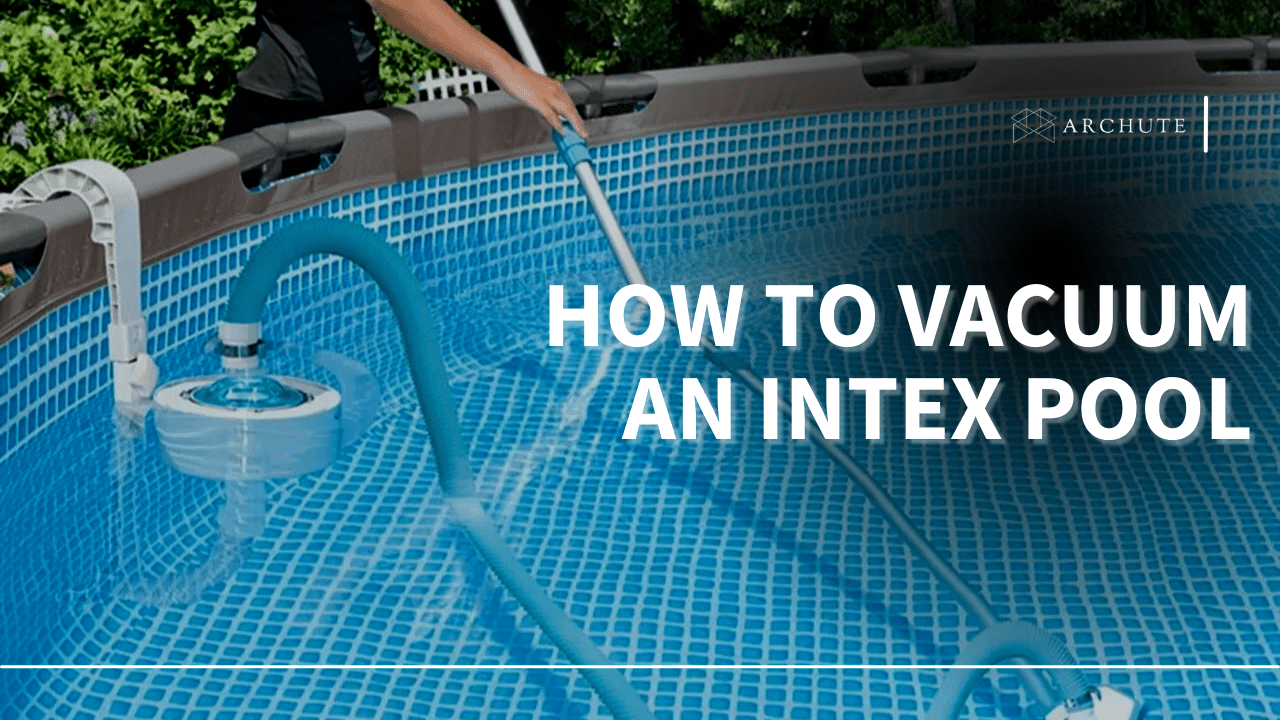
For most Intex above-ground pools in the United States, you can vacuum the pool with a manual vacuum head, telescoping pole, flexible pool hose, and the pool’s filter pump. The basic process is simple: connect the vacuum to the suction side of the pump, remove air from the hose, vacuum slowly, then clean the filter.
Always check the manual for your exact Intex pool and pump model first. Intex connection sizes and filter settings can differ between models.

What You Need to Vacuum an Intex Pool
Before you start, gather the correct tools:
- A pool vacuum head that fits your telescoping pole
- A telescoping pool pole
- A flexible vacuum hose long enough to reach the whole pool
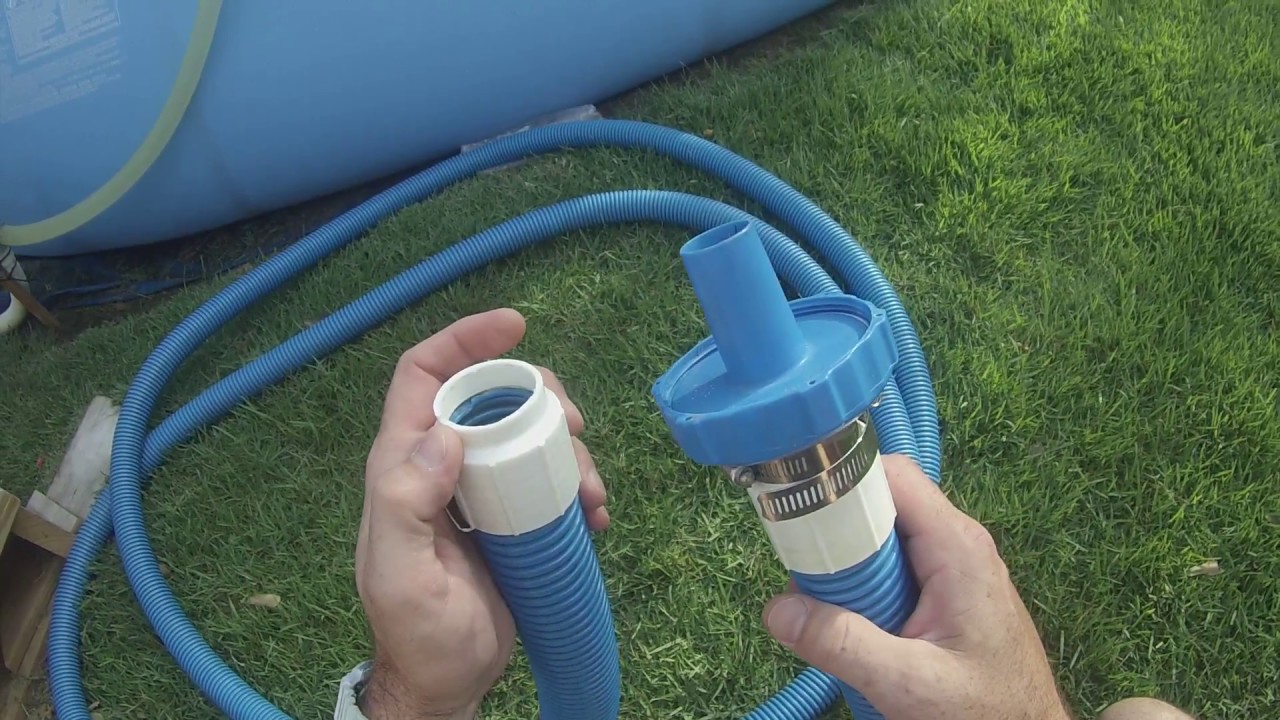
- The correct Intex hose adapter, if your model requires one
- A clean or reasonably clean filter cartridge
- A garden hose for rinsing the filter or cleaning the pool deck
- A skimmer net for removing leaves and large debris
Some Intex pools use a vacuum head that connects to the suction inlet inside the pool. Other setups connect through a wall fitting, surface skimmer, or dedicated vacuum port. The correct connection depends on the pump and pool package.
Intex manuals are the best source for model-specific instructions. You can find product manuals through the official Intex support page.
Check the pump before connecting anything
Turn the pump off before attaching or removing hoses. Keep the pump filled with water, and make sure the water level is high enough for the skimmer or suction inlet to work correctly.
Do not let the pump run without water. Running a pump dry can damage the motor and seals.
How to Vacuum an Intex Pool Step by Step
The most reliable method is to connect the manual vacuum to the pump’s suction line, fill the hose with water, and move the vacuum head slowly across the pool floor.
1. Remove large debris first
Use a skimmer net to remove leaves, insects, twigs, and other large debris from the water.
Large pieces can clog the vacuum head, hose, strainer basket, or filter cartridge. Removing them first also helps the vacuum collect fine dirt more effectively.
2. Assemble the vacuum head and pole
Attach the vacuum head to the end of the telescoping pole. Make sure the pole locks into place.
Connect one end of the vacuum hose to the vacuum head. Push the hose firmly onto the fitting so it does not pull loose while you work.
Do not force a hose onto a fitting that does not match. Some Intex systems use a 1.25-inch hose, while others use a 1.5-inch hose or a model-specific adapter.
3. Fill the hose with water
Air in the vacuum hose can make the pump lose suction or stop moving water.
To remove the air:
- Hold the vacuum head under the water.
- Keep the free end of the hose above the water.
- Lower the hose into the pool gradually.
- Watch for bubbles leaving the hose.
- Continue until the hose is full of water.
- Keep both the vacuum head and hose underwater.
You can also hold the open hose end in front of a return outlet until water flows through the hose. Stop the pump first if your setup requires you to connect the hose to a suction fitting.
4. Turn off the pump and make the connection
With the pump off, connect the free end of the water-filled hose to the suction port, skimmer inlet, or adapter specified by your Intex system.
Some Intex pools use a floating surface skimmer. In that case, the vacuum hose may connect to the skimmer’s suction fitting rather than directly to the pool wall.
The hose must stay full of water. If the hose end rises above the water, air can enter the system.
5. Turn on the pump and check the suction
Turn on the pump. Place your hand near the vacuum head or briefly check the hose for water movement.
A working system should show steady suction. The pump should sound normal, and water should continue returning to the pool through the return outlet.
If the pump makes a loud rattling or gurgling sound, turn it off and check for air in the hose or pump system.
6. Vacuum the floor slowly
Move the vacuum head across the pool floor in slow, overlapping passes.
Start at one side and work toward the other side. Use slow strokes instead of quick back-and-forth movements. Fast movement can stir dirt into the water before the filter captures it.
Pay special attention to:
- The center of the pool
- Areas beneath ladders
- Corners and wall edges
- Areas below return jets
- Spots where wind pushes leaves and dust
- Wrinkles or low places in the liner
Keep the vacuum head flat against the liner. Do not press down hard, as excessive force can damage the liner or make the head difficult to move.
7. Watch the water flow
Stop if the pump loses prime, the return flow becomes weak, or the water level drops near the suction opening.
A clogged cartridge, blocked strainer basket, air leak, or full debris load can reduce suction. Running the pump with poor water flow can increase stress on the system.
8. Finish and disconnect safely
When the floor looks clean:
- Turn off the pump.
- Remove the hose from the suction fitting.
- Take the vacuum head and pole out of the pool.
- Remove leaves or debris from the vacuum head.
- Clean the pump strainer basket, if your system has one.
- Rinse or clean the filter cartridge as needed.
- Reconnect the normal circulation hoses.
Do not leave the vacuum hose connected when the pool is not being cleaned unless the pump manual specifically allows that setup.
How to Vacuum an Intex Pool Without a Filter Pump
A manual vacuum can sometimes be used without an operating filter pump, but the method depends on the vacuum design.
Some small pool vacuums use a hand-operated pump, battery power, or a garden hose to create suction. These devices collect debris in a bag or chamber instead of sending it through the Intex filter system.
This option can work well for:
- Small Intex pools
- Light dirt
- Quick spot cleaning
- Pools with a pump that is temporarily disconnected
- Situations where the filter cartridge is already clogged
A garden-hose vacuum can remove dirt, but it may add fresh tap water to the pool. In areas with water restrictions or expensive municipal water, use it sparingly.
A hand or battery vacuum may be slower, but it can avoid sending fine debris into the main filter. Follow the vacuum manufacturer’s instructions and never use a device that is not rated for pool water.

How to Vacuum Fine Dirt and Algae From an Intex Pool
Fine dirt and dead algae are harder to remove than leaves because they can pass through or quickly clog a small cartridge filter.
If the water is cloudy or the floor has a fine powder-like layer, first confirm that the water chemistry is within the range recommended for your pool-care products. Vacuuming removes settled material, but it does not correct poor sanitizer or pH balance.
Use these steps:
- Let the water become still.
- Brush the walls and floor gently if the debris is stuck.
- Wait for the material to settle.
- Vacuum very slowly.
- Check the filter often.
- Stop and rinse the filter when flow drops.
- Repeat the process if needed.
Do not stir up settled algae with fast vacuum strokes. Move slowly enough that the vacuum head lifts as little debris as possible.
Can an Intex cartridge filter remove all fine particles?
Not always. A cartridge filter can capture many suspended particles, but very fine debris may pass through, clog the cartridge quickly, or remain cloudy in the water.
If the filter cannot keep up, consider using a pool clarifier only if the product label says it is compatible with your pool and filter. Follow the label carefully. Some products cause particles to clump, which can make them easier to filter, but incorrect dosing can worsen cloudiness.
For heavy algae, vacuuming alone is not a complete treatment. The pool may need proper brushing, sanitation, filtration, and water testing.

Vacuum Settings for Intex Cartridge and Sand Filters
The correct pump setting depends on the type of filter system attached to your Intex pool.
| Filter system | Usual vacuum destination | Important point |
|---|---|---|
| Cartridge filter | Filter cartridge | Stop and rinse the cartridge when flow drops |
| Sand filter | Filter setting for normal vacuuming | Follow the pump manual |
| Sand filter with waste option | Waste setting for certain heavy debris jobs | Water leaves the pool, so monitor the water level |
| Small manual or battery vacuum | Collection bag or chamber | No main pump connection may be needed |
Cartridge filter pumps
Most basic Intex cartridge systems send vacuumed water through the cartridge. Fine dirt remains in the filter media.
A cartridge filter may need cleaning several times during one heavy vacuuming session. Turn off the pump before opening the filter housing, and release pressure according to the manual.
Rinse the cartridge from top to bottom with a garden hose. Avoid using excessive pressure, which can damage the filter pleats. Replace the cartridge when it remains dirty, damaged, or unable to maintain normal water flow after cleaning.
Sand filter pumps
Some Intex sand filter pumps include multiple valve settings. The correct setting depends on the amount and type of debris.
For ordinary dirt, the normal filter setting may be suitable. For a large amount of settled debris, a waste setting may send the dirty water out of the system instead of through the sand.
The waste method lowers the pool water level. Stop before the water falls below the suction inlet. Never allow the pump to run dry.
Do not change a multiport valve setting while the pump is running. Turn off the pump first.

Why Is My Intex Pool Vacuum Not Working?
Most vacuum problems come from air in the hose, a clogged filter, a blocked inlet, or an incorrect connection.
| Symptom | Likely cause | What to check |
|---|---|---|
| No suction at the vacuum head | Air-filled hose or wrong port | Refill the hose and confirm the connection |
| Weak suction | Dirty cartridge or blocked basket | Clean the filter and strainer basket |
| Pump sounds loud | Air leak or low water level | Check water level, hose ends, and pump lid |
| Vacuum head floats | Air trapped in the head or hose | Submerge the head and purge air |
| Dirt blows back into pool | Filter problem or poor connection | Check the cartridge, seals, and fittings |
| Pump stops moving water | Clogged system or loss of prime | Turn off the pump and inspect safely |
| Hose keeps disconnecting | Incorrect adapter or loose fitting | Use the correct Intex connector |
| Water gets cloudy | Debris is too fine or chemistry is off | Test water and filter slowly |
Weak suction
Start with the easiest checks:
- Confirm the water level is high enough.
- Make sure the pump is on the correct setting.
- Check that the hose is completely full of water.
- Clean the cartridge or pump strainer basket.
- Inspect the hose for cracks.
- Check the suction fitting for blockage.
- Confirm that valves are open as directed by the manual.
If the return flow is weak even when the vacuum is disconnected, the issue may be in the pump, filter, or plumbing rather than the vacuum head.
Air bubbles or a noisy pump
Air can enter through a loose hose connection, damaged O-ring, low water level, or poorly sealed pump lid.
Turn off the pump before inspecting connections. Make sure the hose ends are fully seated and that the pump housing is filled correctly before restarting.
Do not keep operating a pump that repeatedly loses prime or makes a grinding sound. Disconnect power and consult the pump manual or a qualified pool-service professional if the problem continues.
Dirt returns to the pool
Dirt may return if:
- The cartridge is damaged
- The cartridge is installed incorrectly
- The filter housing seal is dirty or damaged
- The hose connection is bypassing the filter
- The filter is overloaded
- The debris is too fine for the current setup
Inspect the cartridge and sealing surfaces. Replace damaged parts with components intended for the specific Intex pump model.

How Often Should You Vacuum an Intex Pool?
Vacuum when dirt is visible on the floor or after events that add debris, such as strong wind, storms, heavy use, or nearby lawn work.
Many above-ground pool owners vacuum about once a week during regular use, but the right schedule depends on the pool’s surroundings and water quality.
Vacuum more often when:
- The pool sits near trees
- The pool is uncovered
- Dust or pollen is common
- Swimmers bring in dirt
- The pool floor feels gritty
- Algae or cloudy water has appeared
Use a pool cover when practical. A cover can reduce the amount of leaves and dust that reach the water, although it does not replace filtration or cleaning.
Skim the surface regularly and brush walls and steps before vacuuming. This routine keeps debris from settling and reduces the amount of work required.
Vacuuming Safety for an Intex Above-Ground Pool
Follow these safety rules every time:
- Turn off the pump before changing connections.
- Keep electrical plugs and connections away from standing water.
- Use only equipment rated for swimming-pool use.
- Do not swim while handling electrical equipment.
- Never run the pump dry.
- Keep children away from the pump and hoses during cleaning.
- Do not use a cracked hose, damaged cord, or broken fitting.
- Do not stand on or pull sharply against the pool liner.
- Do not change sand-filter valve settings while the pump runs.
- Maintain the water level above the suction opening.
- Keep chemicals away from children and follow product labels.
A pool vacuum is not a substitute for safe water care. Test the water with a suitable pool test kit and follow the instructions for your sanitizer and other treatment products.
If the pump repeatedly trips a breaker, shows electrical damage, leaks near wiring, or behaves abnormally, stop using it and contact a qualified professional.

Quick Takeaways
- Use a vacuum head, telescoping pole, hose, and the correct Intex adapter.
- Remove large debris with a skimmer net first.
- Fill the hose completely with water before connecting it.
- Vacuum slowly in overlapping passes.
- Clean the filter when suction or return flow drops.
- Use the correct method for a cartridge or sand filter.
- Turn off the pump before changing hoses or filter settings.
- Stop immediately if the pump runs dry, loses prime, or makes unusual noises.
Frequently Asked Questions
Can I vacuum an Intex pool with the regular filter pump?
Yes. Many Intex pools are designed to use the filter pump for manual vacuuming. The hose must connect to the correct suction port or adapter for that pool and pump model.
Do I need to remove the Intex filter cartridge before vacuuming?
Usually, no. A cartridge filter normally remains installed because it catches the dirt removed by the vacuum. Remove or clean it only as directed by the pump manual.
Why does my Intex vacuum lose suction?
The most common causes are air in the hose, a low water level, a clogged cartridge, a blocked strainer basket, a loose connection, or a cracked hose.
Can I vacuum algae directly into the filter?
You can vacuum light, settled algae through a suitable filter system, but heavy algae may quickly clog the cartridge and may return to the water. Treat the underlying water-quality problem and clean the filter as needed.
Should I vacuum before or after adding pool chemicals?
For visible settled dirt, vacuuming first can remove material before chemical treatment. If the pool has an algae or sanitation problem, follow the product label and water-testing guidance. Do not mix chemicals in the pool unless the label specifically permits the treatment.
What should I do if the vacuum head floats?
Check for trapped air. Submerge the vacuum head fully, allow air to escape, and refill the hose with water. If it still floats, inspect the head for a damaged or missing part.
Conclusion
To vacuum an Intex pool, connect the vacuum head and hose to the correct suction point, fill the hose with water, run the pump, and clean the floor with slow overlapping passes. The filter type determines how debris is handled, so cartridge and sand systems should not be treated the same way.
If suction is weak, check the hose for air, clean the filter and strainer basket, confirm the water level, and inspect every connection. Always turn off the pump before changing hoses or filter settings, and use the manual for your exact Intex model when fittings or settings are unclear.